
Integrating Science and Art
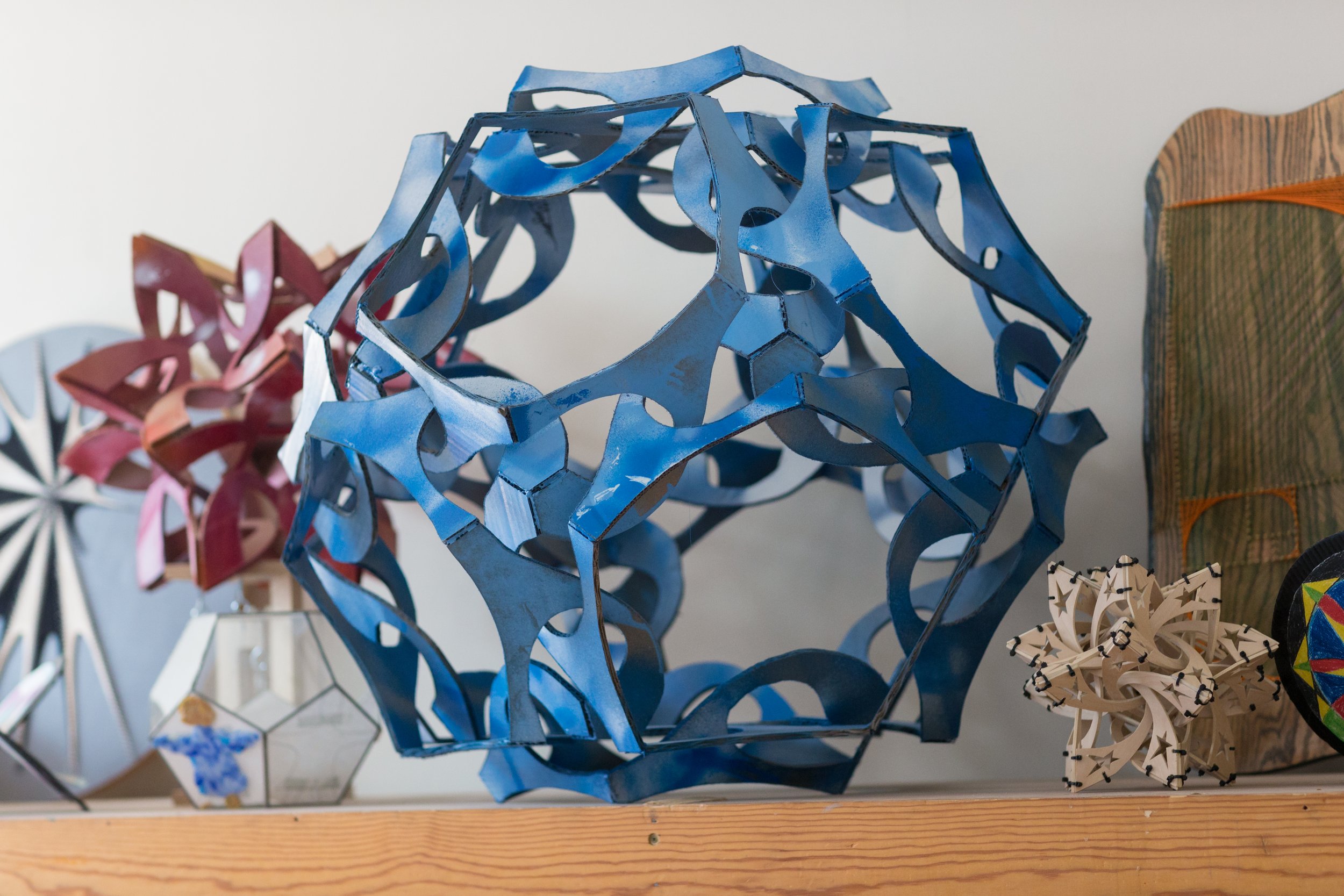
Match sculpture in the studio of Artist-in-Residence Hans Schepker.
In the seventh grade physics block, students explore the concept of acoustics. One of the key experiments involves a monochord, a long, hollow wooden box with a violin string stretched across its length. The students begin by measuring the length of the string and plucking it to hear the pitch. Next, they shorten the string and pluck it again, listening carefully to identify the pitches corresponding to each interval of the major scale. Through this process, they discover that each interval corresponds to a specific fraction of the original string's length. To deepen their understanding, the students document their findings by drawing the apparatus and writing a scientific report. This investigation blends art, science, and math, reflecting the interdisciplinary approach that is central to the Waldorf curriculum.
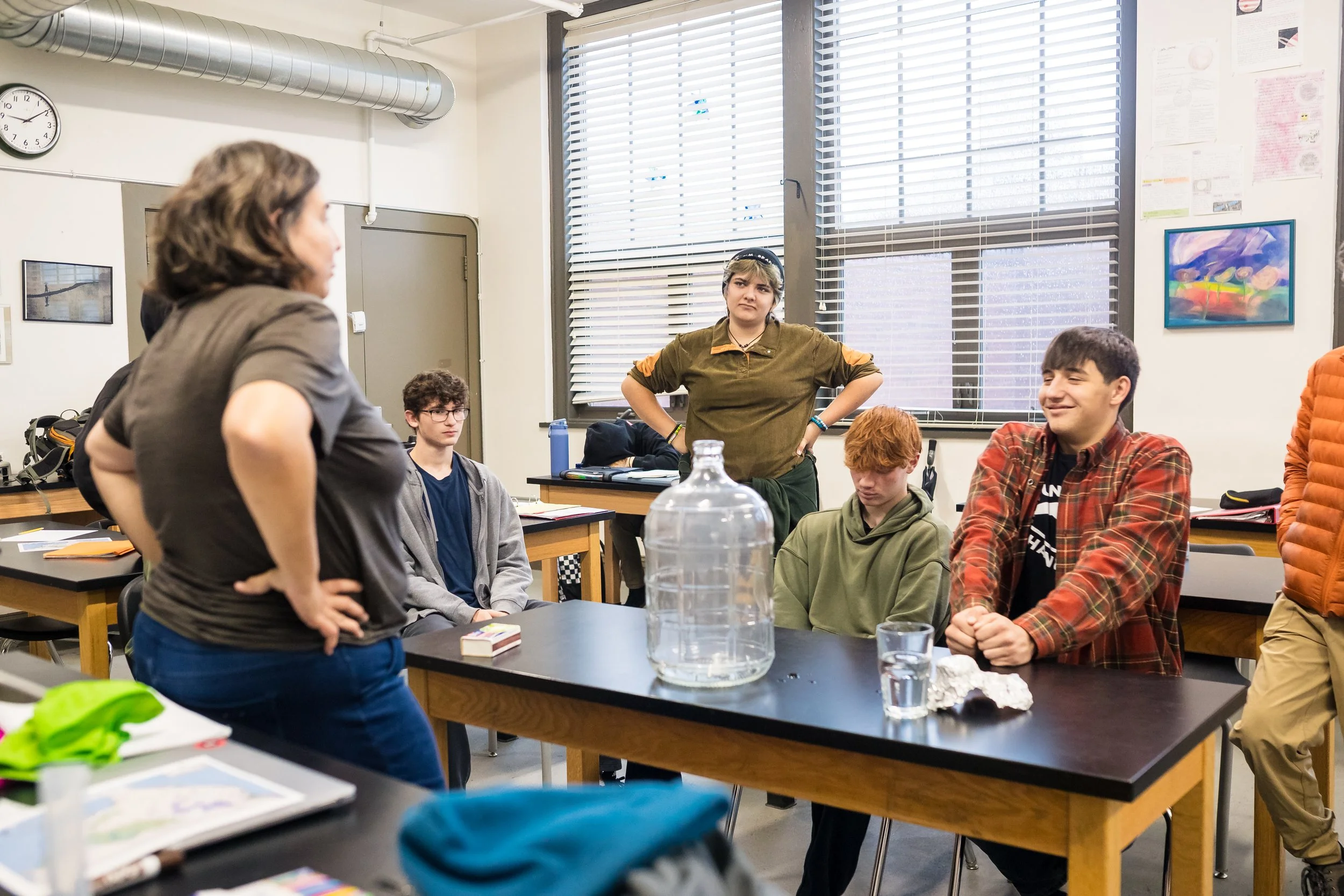
10th grade considers what was observed in their latest experiment with Ms. Gomez.
In fact, one main feature of the Waldorf curriculum is the integration of diverse subjects. Whether it is human anatomy and physics or handwork and math, our teachers weave various threads and concepts together in ways that help students make cross-discipline connections.
Both art and science require keen observation skills as well as openness to thinking creatively. They both call on the student to engage fully, to be present, to pay attention.
A fifth grade student studying botany will observe the plant through drawing it. A sixth grader will paint the phases of the moon with watercolors in astronomy. A kindergarten student might explore the shapes and forms of leaves and trees, not just through drawing, but by experiencing them firsthand through tactile exploration.
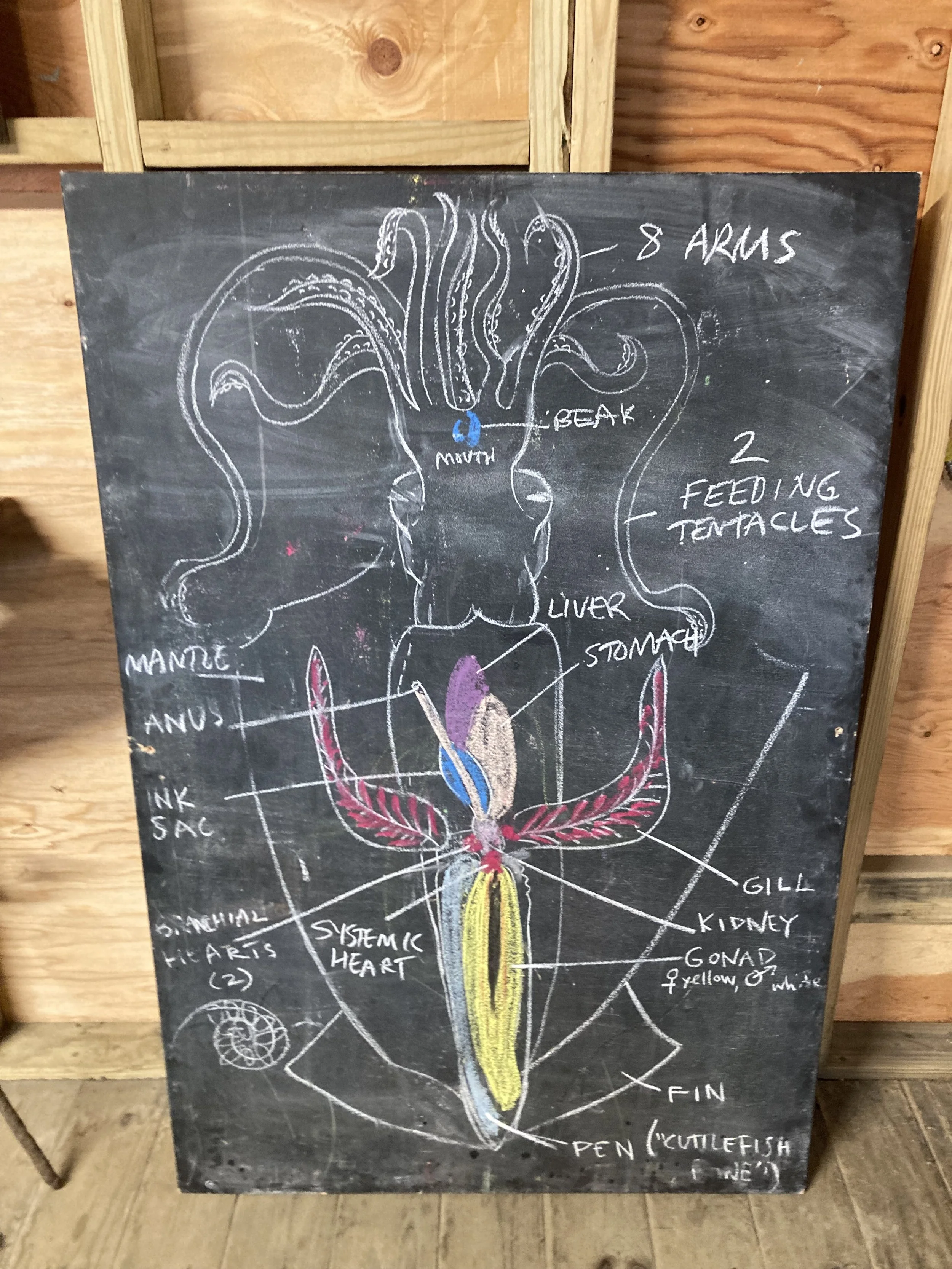
On the Maine coast for zoology studies, the 12th grade diagrams peculiar sea creatures.
In Waldorf education, art and science are interconnected pathways to understanding and self-expression. Science, when experienced through the lens of art, comes alive—becoming not just facts to be memorized, but a living process to be experienced and imagined. Conversely, art, when viewed through a scientific framework, gains depth and clarity, grounded in the observation of nature's patterns. This approach nurtures the full development of the student's mind, body, and spirit, preparing them to meet the challenges of the world with confidence and a sense of purpose.
– Dan Foster, Waldorf Class Teacher