
Learning that fosters curiosity, confidence, and a growing sense of responsibility
K–12 EXPERIENCE
KINDERGARTEN
LOWER SCHOOL (1–5)
MIDDLE SCHOOL (6–8)
HIGH SCHOOL (9–12)
COLLEGE & BEYOND
FESTIVALS
The middle school years at Gathering Waters build on earlier foundations with increasing independence, deeper thinking, and a stronger sense of responsibility. Students take up more complex academic work while continuing to learn through discussion, projects, movement, and artistic practice. They begin to see themselves in new ways—as curious thinkers, capable creators, and active participants—with teachers offering steady guidance as they grow into these roles.
Sixth Grade
Sixth grade is a year of noticeable physical, social, and intellectual growth. Students become more grounded and ready for greater responsibility, and they’re no longer content with simply experiencing things—they want to understand how and why things work. Teachers meet this curiosity across math, science, history, and language arts with work that invites close observation, clear questions, and well-reasoned conclusions. Sixth graders also grow in independence as they manage their time and responsibilities and practice cooperative, inclusive habits within the community.
-
(subject to change)
Geology/Mineralogy
Roman History
Mathematics: Business Math, Percentage
Geometry & Geometric Drawing
Physics: Light, Sound, and Warmth
Middle Ages & Medieval Ceremony and Games
Mathematics: Ratio & Proportion
Geography of South America
Astronomy
-
In sixth grade, language arts is woven into everything students are learning. A physics block might call for clear scientific descriptions, business math brings practice in writing formal letters, and geography offers topics for research and reports. Each week, students write in different forms—creative pieces, factual explanations, and responses to questions—building clarity, flexibility, and confidence as writers.
Over the year, students strengthen their grammar, spelling, and vocabulary; read several assigned books; and work with sentence structure, parts of speech, and all six verb tenses. They practice self-editing, write in both creative and factual styles, learn the basics of scientific writing, and prepare written and oral reports. By June, they are becoming more independent writers who can approach an assignment, organize their thoughts, and revise their own work with growing assurance.
-
Math builds steadily on what sixth graders already know while opening the door to more practical and engaging applications. Students revisit fractions, decimals, and division, then use those skills in new ways through ratio, proportion, and percentage work. Their study of economics introduces ideas like currency, value, profit and loss, tax, and commission, giving them a concrete sense of how numbers show up in daily life. Students also begin working with simple formulas and variables, which helps prepare for the shift into algebra in seventh grade.
Geometry becomes more hands-on and precise. With a compass and straightedge, students learn to construct accurate forms and start to recognize the patterns and relationships within each shape. Sixth graders learn to describe what they notice clearly and logically, strengthening both spatial reasoning and steady work habits. By the end of the year, they’re more confident problem-solvers who can think logically, work with growing independence, and bring a thoughtful approach to increasingly complex math.
-
Sixth grade science leans into students’ growing curiosity and their new ability to ask “why” and look for real explanations. They study astronomy by tracing how early civilizations understood the night sky and by making their own observations of the sun, moon, and stars. In physics, students explore sound, heat, light, and simple forces, learning to describe what they notice and to sort out cause and effect from real phenomena rather than formulas alone.
Work in geology and mineralogy broadens their sense of the natural world. Through hands-on observation of rocks, minerals, and crystals, and by connecting this work to geography, students begin to understand how the earth’s landscape is formed. Throughout the year, science encourages sixth graders to look closely, think carefully, and build a more grounded relationship to the world around them.
-
Social studies broadens sixth graders’ sense of the world and the people who have shaped it. They begin with the geography and cultures of Latin America, looking at how the land itself influenced traditions, economies, and ways of life. Their study of Rome picks up threads from fifth grade and carries them through the monarchy, the republic, and the empire, giving them a window into daily life, key historical figures, and the rise of new religious and cultural movements. The year concludes with medieval Europe, where students explore themes of community, leadership, honor, and service—and consider how these values echo into the present day.
-
Homework in sixth grade becomes more varied in pace and format, with some assignments completed overnight and others unfolding over several days or weeks. Spelling tests, quizzes, steady reading work, and periodic research projects create a regular rhythm, often blending written work with hands-on or artistic elements.
Teachers follow each student’s development through ongoing review of main lesson books, daily classroom observations, and a range of short assessments. Midyear and year-end narrative evaluations, along with scheduled conferences, offer families a clear window into student growth. Block tests are a regular part of sixth grade, and students begin receiving letter grades alongside written feedback to help them understand their progress. For students receiving outside support, teachers maintain close communication with those specialists to keep the experience cohesive and supportive.
-
Spanish
Cyber Civics
Leadership
Movement
Instrumental Music & Chorus
Fine Arts
Handwork & Fiber Arts
Practical Arts & Woodworking
Seventh Grade
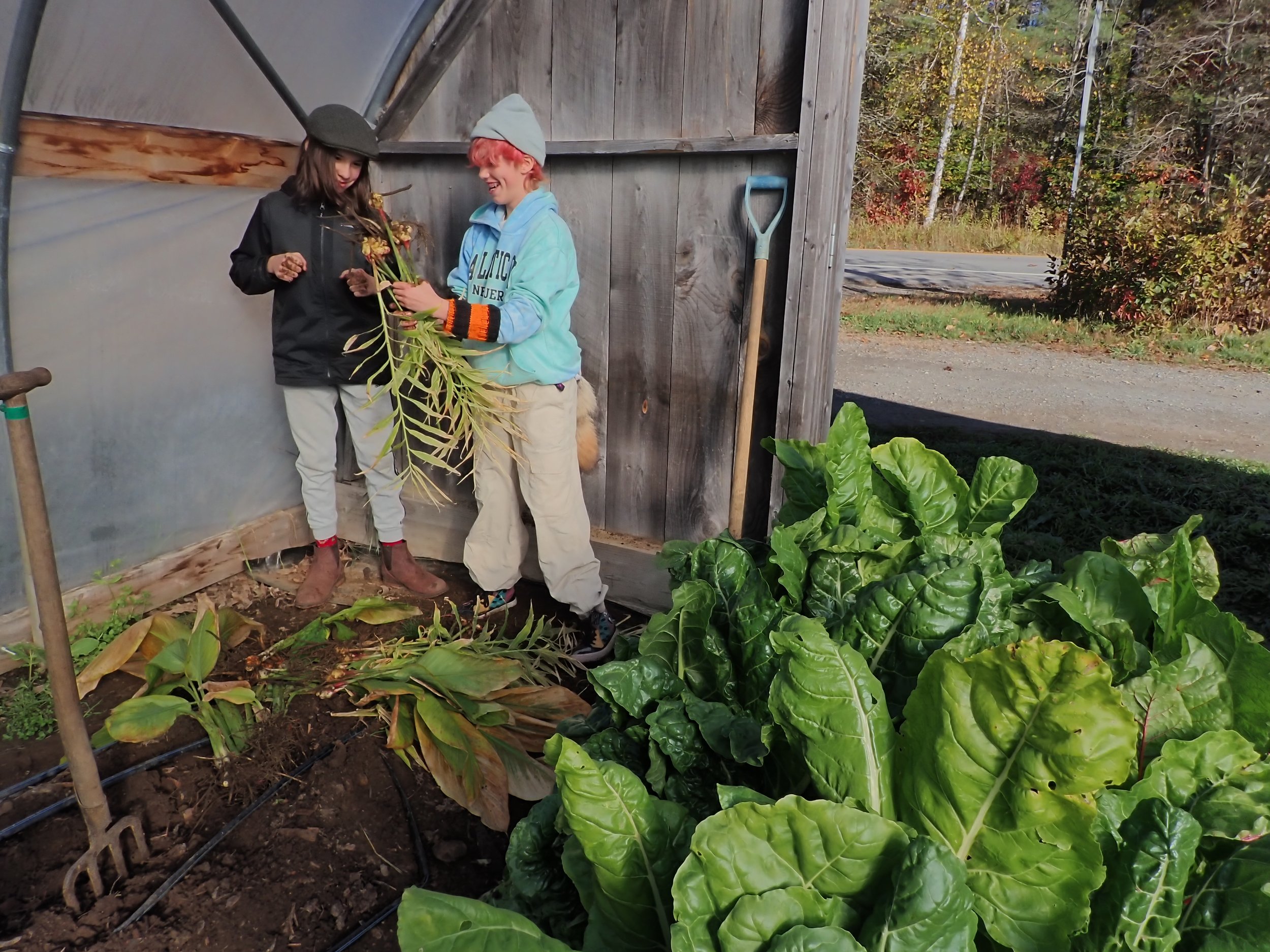
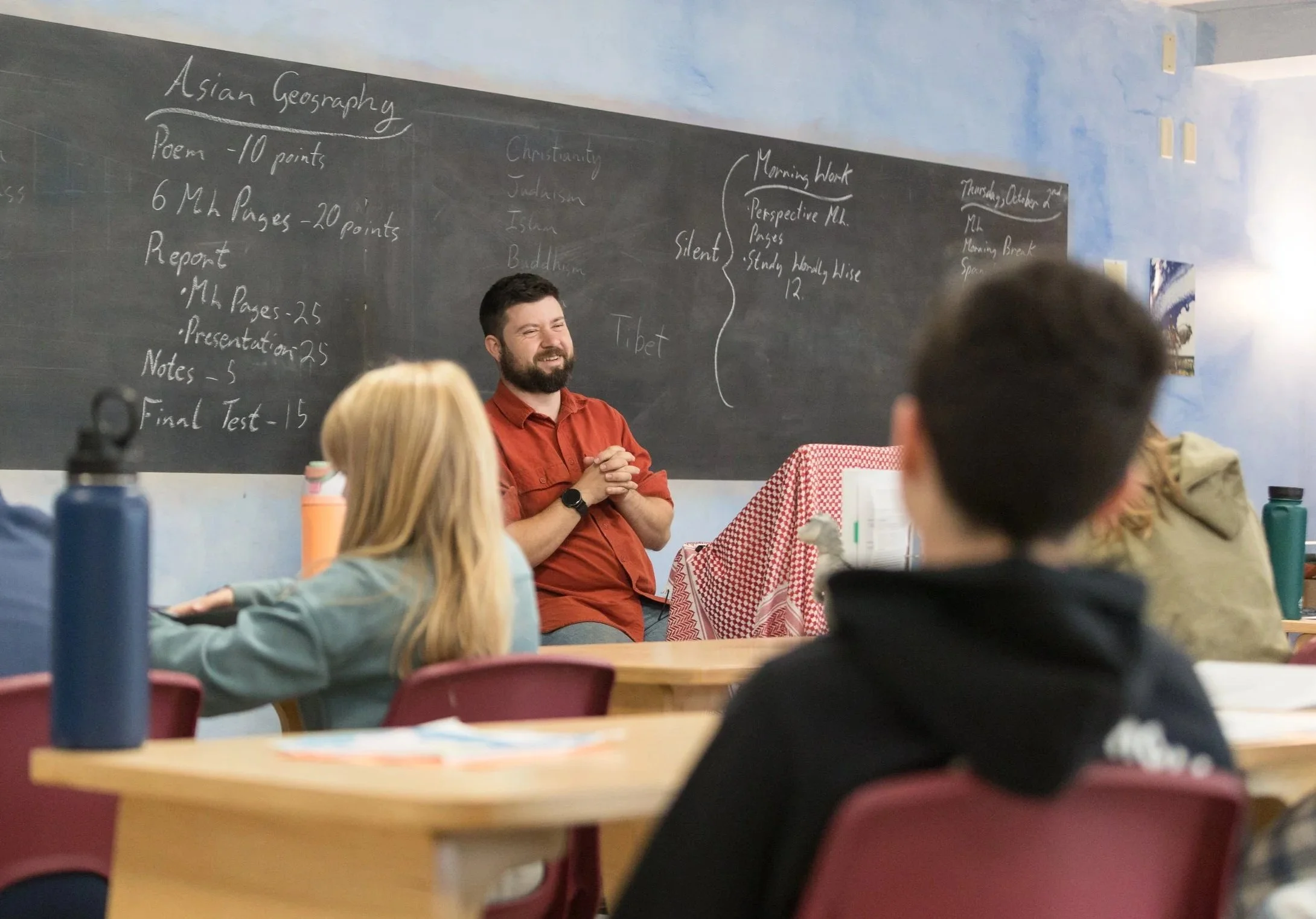
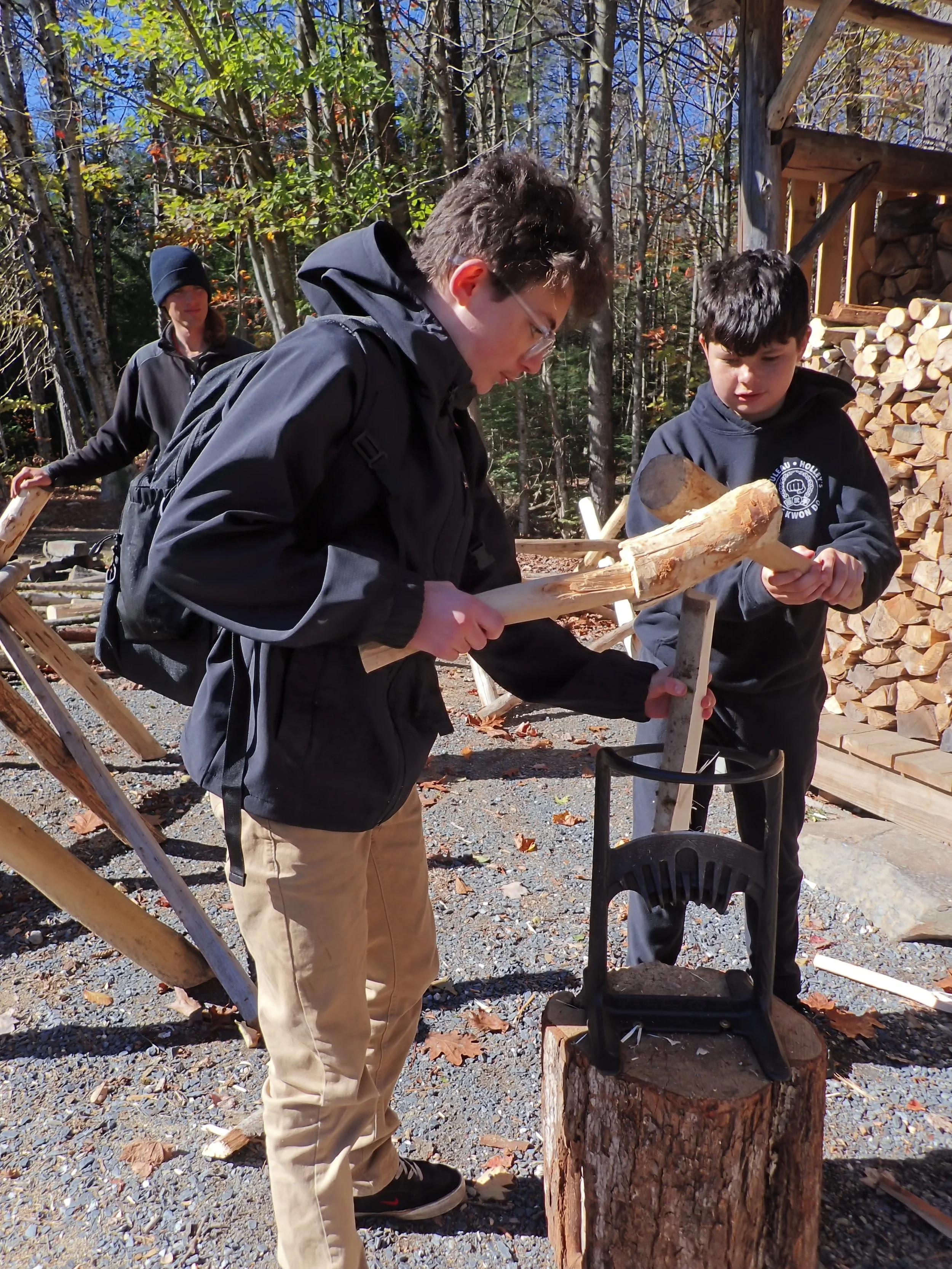
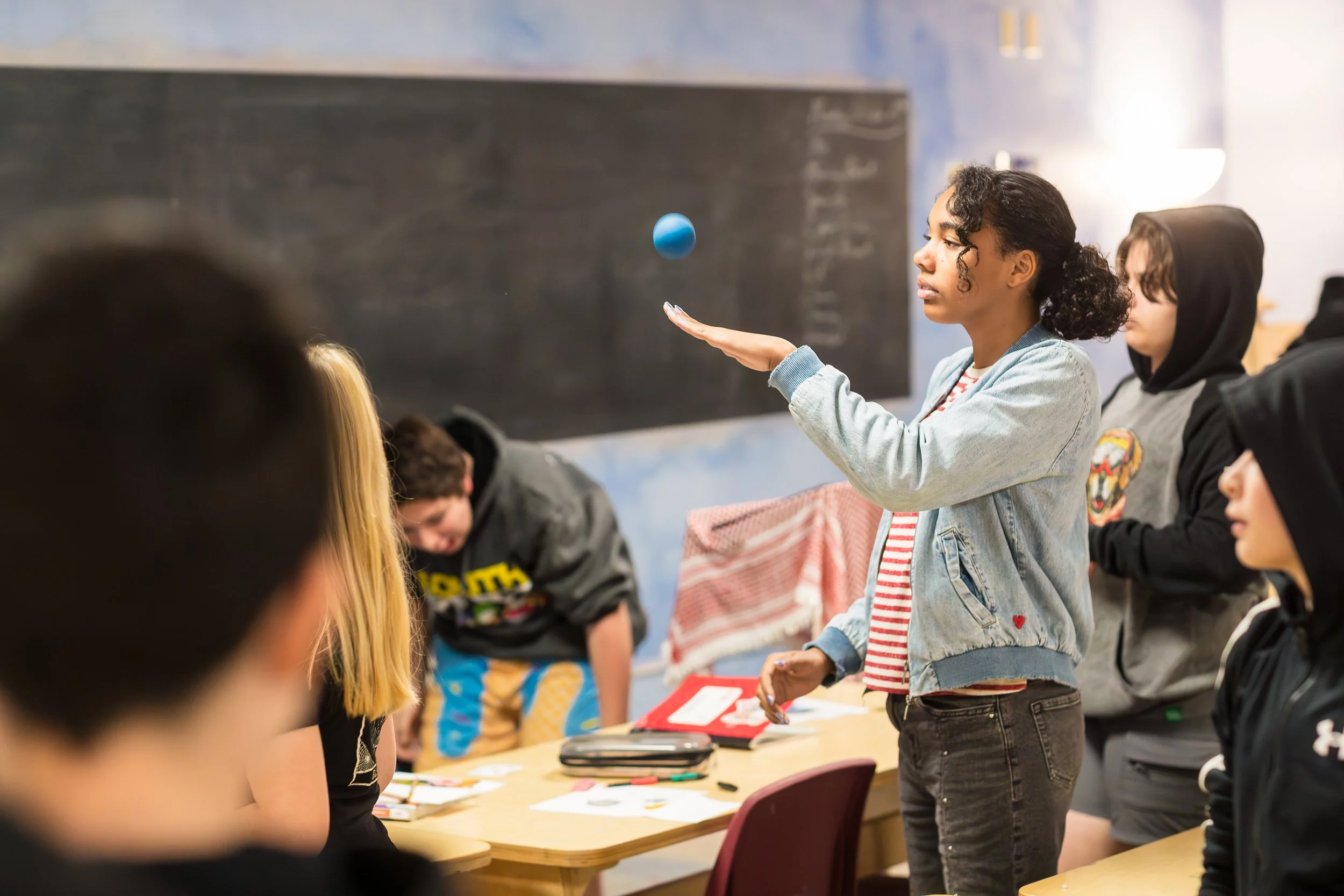
Seventh graders are eager to reach further into the world, and the Renaissance invites them into new ideas across science, religion, philosophy, politics, and art. Through projects like perspective drawing, they connect geometry with the artistic discoveries of the time. As their reasoning develops, students take a more active role in their work—asking questions, staying organized, and collaborating more intentionally with their teachers.
-
(subject to change)
Physics
Inorganic Chemistry
Renaissance History & Perspective Drawing
Algebra
Geometry & Geometric Drawing
World Geography
Age of Exploration & Reformation
Physiology
Creative Writing
-
Seventh graders continue to grow as writers and communicators across all subjects. Science blocks call for clear, objective description, while social studies work builds strong note-taking habits and more organized, precise writing. Students take increasing responsibility for revising their own work and begin to use tone and style with greater intention. A creative writing block encourages exploration in both prose and poetry, inspired by class material and the work of established authors.
By year’s end, students can discuss literature with insight, craft outlines, handle longer dictations, and produce clear, legible writing. They also complete a substantial research project that weaves together written, oral, and artistic work, bringing many key skills into one meaningful challenge.
-
Building on a solid arithmetic foundation, the seventh grade begins moving into more abstract work. The year includes practice with the order of operations, negative numbers, simple equations, exponents, ratios, and a wider range of graphing and measurement tasks. Algebra becomes a natural next step, with growing comfort using variables, combining like terms, and thinking more systematically about numerical relationships.
Geometry also expands this year. Using a straightedge and compass, students take on more precise constructions, explore triangle congruence and the Pythagorean theorem, and deepen understanding of circles and pi. The golden ratio, the Fibonacci sequence, and early ideas about irrational numbers also appear in age-appropriate ways.
By year’s end, students are ready to tackle multi-step problems with greater confidence, explain their reasoning, and apply mathematical thinking to both practical and more conceptual challenges.
-
Seventh grade takes a more analytical step into science. Physics lessons continue through hands-on demonstrations that students observe closely and describe in clear, structured writing, while chemistry is introduced for the first time through simple experiments that reveal how substances change.
A major focus is human physiology—digestive, respiratory, circulatory, and sensory systems—giving students a chance to think about their own health and growing independence.
Astronomy returns through the stories of Copernicus, Kepler, and Galileo, helping students see how scientific ideas develop and how curiosity can reshape our understanding of the world.
-
Social studies opens up a wider and more interconnected view of the world for seventh graders. Students begin with an in-depth study of Africa—its landscapes, histories, and cultural traditions—to build a strong foundation before taking up Europe’s Age of Exploration. A similar study of Latin America helps broaden their global perspective.
From there, the focus moves to the Renaissance, a period when art, science, and new ideas reshaped life in Europe. Through biographies, students meet the artists, inventors, thinkers, and leaders who defined the era. The study of the great explorers brings these threads together, as students examine early navigation tools, mapmaking, and the expanding sense of the world during this time.
-
Homework in seventh grade becomes more varied and intentional, with a blend of short daily tasks and longer projects that ask students to plan ahead, balance reading and research, and prepare for quizzes and block tests. Research assignments often include both written and artistic elements, and teachers introduce online sources as students are ready.
Assessment remains steady and personal: teachers review main lesson books, observe class work, and use quizzes, written work, and tests to understand each student’s progress. Families receive midyear and year-end narrative reports, along with block-specific evaluations, and conferences offer space to discuss growth and next steps.
-
Spanish
Leadership
Movement
Instrumental Music & Chorus
Fine Arts
Handwork & Fiber Arts
Practical Arts & Woodworking

Eighth Grade
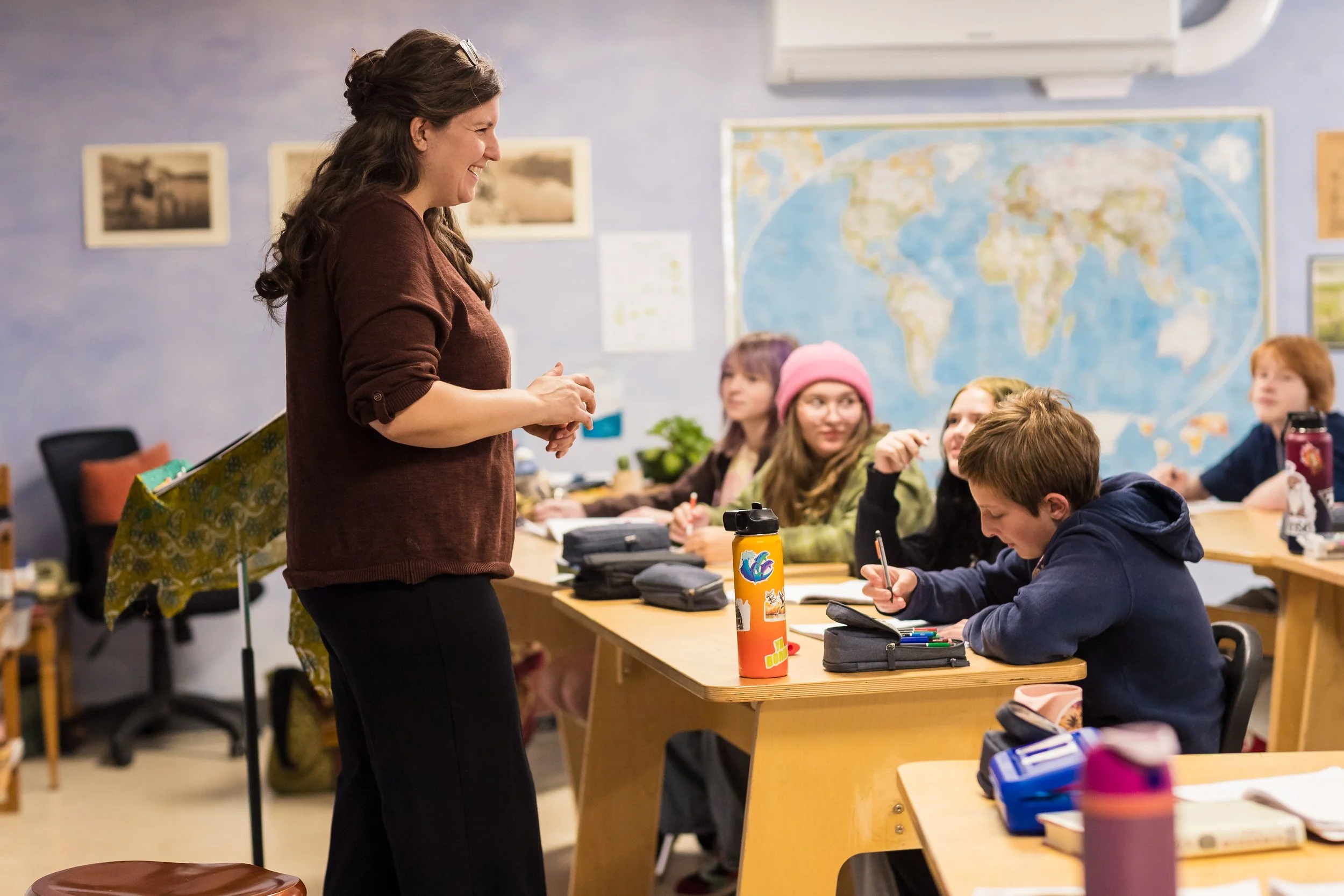
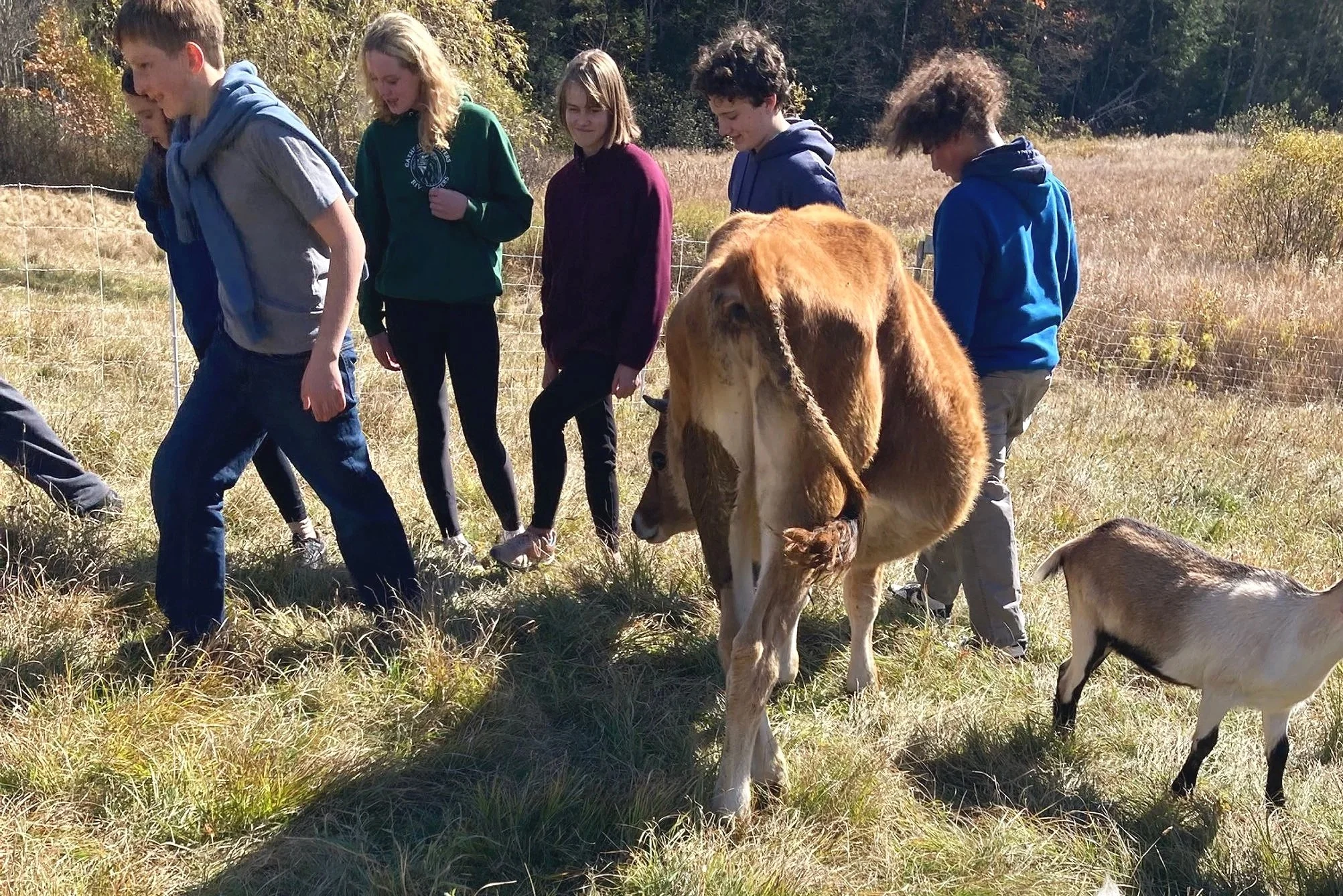
Eighth grade guides students toward a clearer sense of their own abilities as they approach high school—academically, socially, and as emerging young adults growing steadily in independence. The class teacher remains a steady anchor while subject teachers bring new challenges and fresh perspectives. Written work becomes more self-directed as students learn to ask questions, plan ahead, and follow through with care. Eighth graders also deepen their social awareness by working well with others, including peers, and handling conflicts with thoughtfulness and respect.
-
(subject to change)
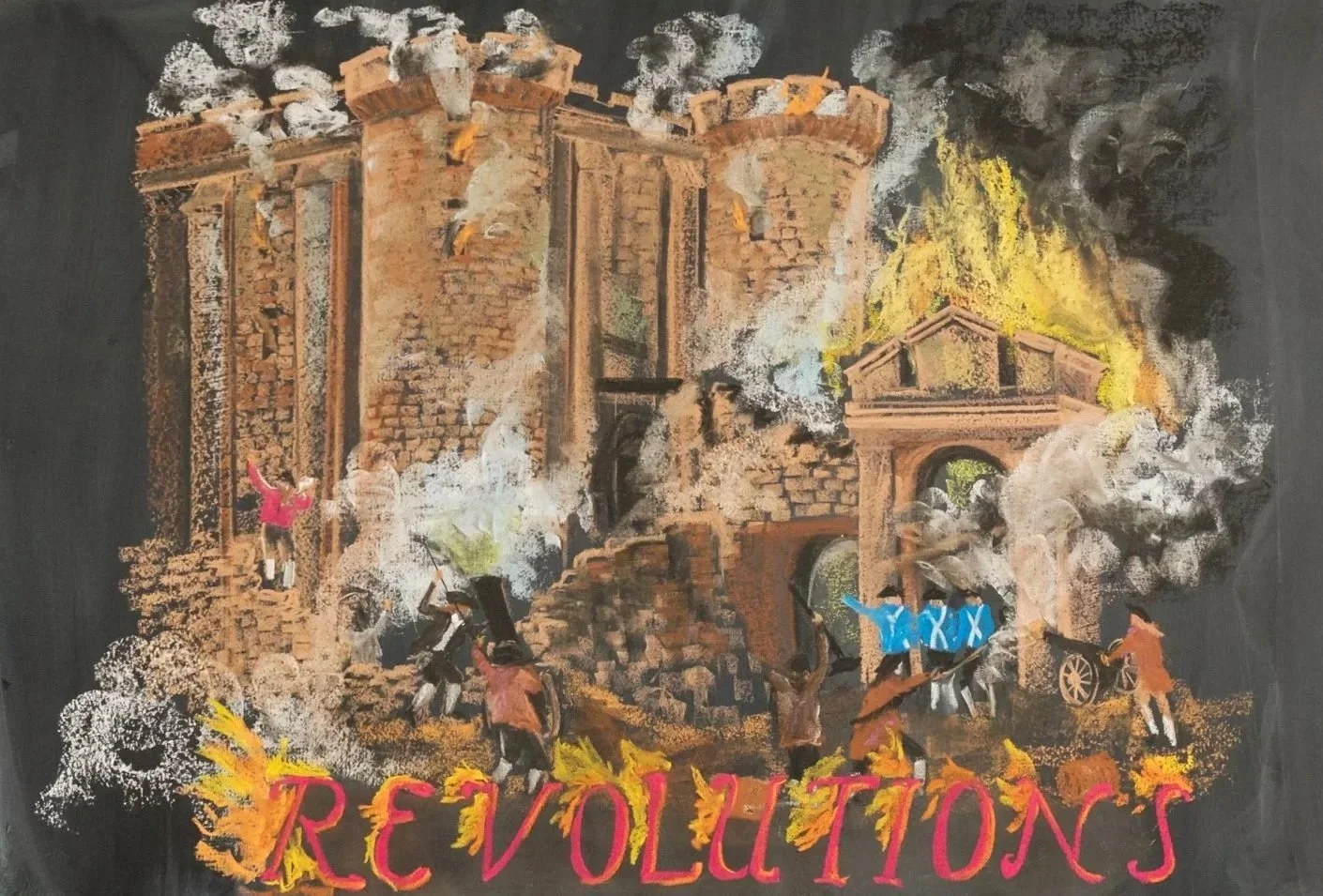
Revolutions
Meteorology
Algebra
Physics
Geometry: Platonic Solids
Anatomy
Modern History
Organic Chemistry
Asian Geography
-
In eighth grade, language arts gives students steady practice with the kinds of writing they’ll use across subjects. Compositions, creative pieces, reports, and short research assignments help build stronger revision habits, clearer handwriting, and a growing sense of voice. Students learn to outline from memory, pay closer attention to style and tone, and take part in literature discussions that explore plot, theme, and character.
Over the year, they also memorize and recite selected poems or passages, complete an independent research project with written, oral, and artistic components, and write an original short story. These experiences become milestones in their growing independence as readers and writers.
-
Math brings together the algebra and geometry skills eighth graders have been building over the past two years. Algebraic work becomes more confident as students practice solving multi-step equations, working with variables and signed numbers, and recognizing patterns in expressions. Geometry shifts toward the Platonic solids and volume, giving students a chance to construct models, explore nets, and apply formulas for area and surface area. Throughout the year, students also work with graphs, averages, ratios, exponents, prime factorization, and the coordinate plane. These experiences strengthen problem-solving skills and prepare students for the transition to high school math.
-
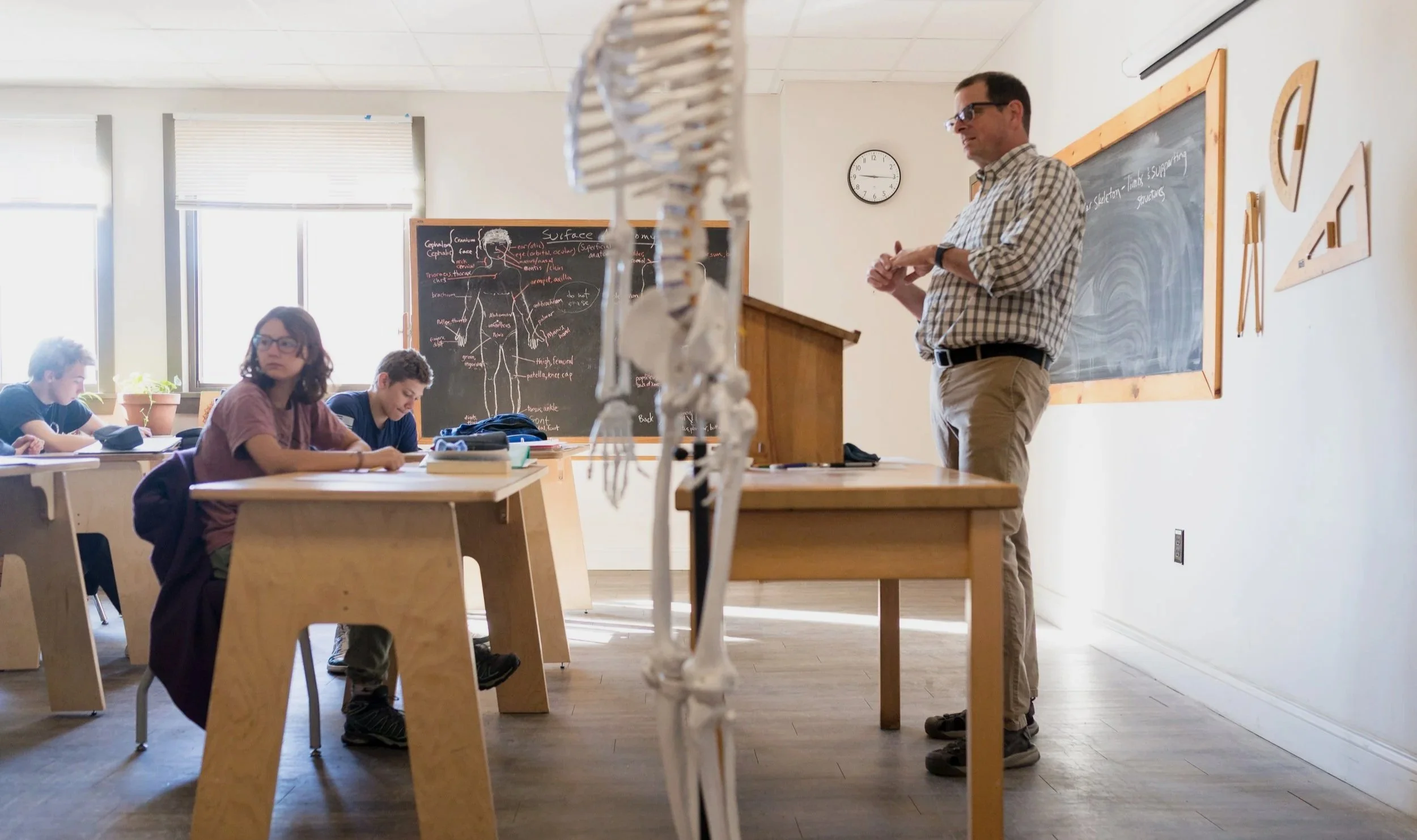
Eighth graders come to science ready for hands-on work and bigger questions. In physics, students investigate hydraulics and pressure through experiments that invite close observation. Organic chemistry offers a first look at how living substances change and react, and anatomy deepens understanding of how the skeletal, muscular, and nervous systems work together in everyday movement and sensation. Meteorology adds another layer of inquiry as students explore how clouds form, what influences wind and storms, and how to read weather maps.
Across all of these studies, eighth graders practice observing carefully and recording materials, procedures, and results with clarity—skills that lay strong groundwork for high school science.
-
Social studies invites eighth graders to look closely at how people and societies respond to change. The year opens with the early European settlement of the eastern United States and the evolving tensions that shaped the thirteen colonies, the Declaration of Independence, and the Revolutionary War. Students then look at how questions of rights continued to surface in American history, including the forced removal of Native peoples and the complex story of slavery leading up to the Civil War. As eighth grade explores the French and Industrial Revolutions and the civil rights movement, students gain an even wider view of how societies respond to injustice and transformation.
Geography brings an extended study of Asia, drawing together earlier work in meteorology, geology, botany, creative writing, and biography to build a fuller picture of this large and culturally diverse part of the world.
-
In eighth grade, homework becomes more varied and independent. Students juggle nightly assignments, longer-term projects, regular reading, and preparation for spelling tests, quizzes, and block tests. Research reports are a significant part of the year and often include both written work and a creative presentation element.
Assessment remains continuous and individualized: teachers review main lesson books, observe daily work, and use frequent written assignments to track progress. Families receive midyear and end-of-year narrative reports, along with evaluations for each academic block, and meet with teachers twice yearly. When students receive outside support, teachers coordinate with those providers to ensure consistent, effective guidance.
-
Spanish
Leadership
Movement
Instrumental Music & Chorus
Fine Arts
Handwork & Fiber Arts
Practical Arts & Woodworking
Fine & Practical Arts
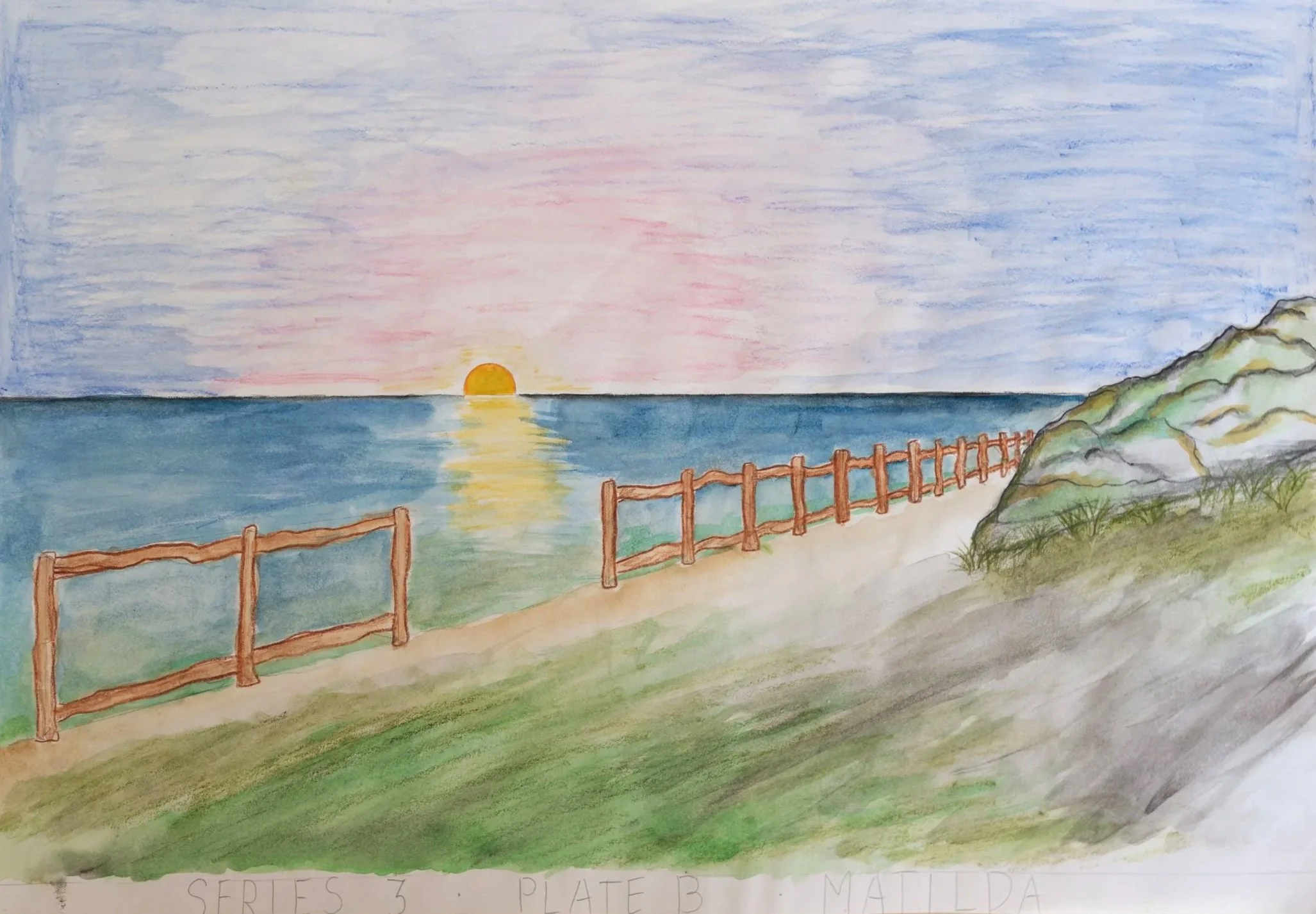
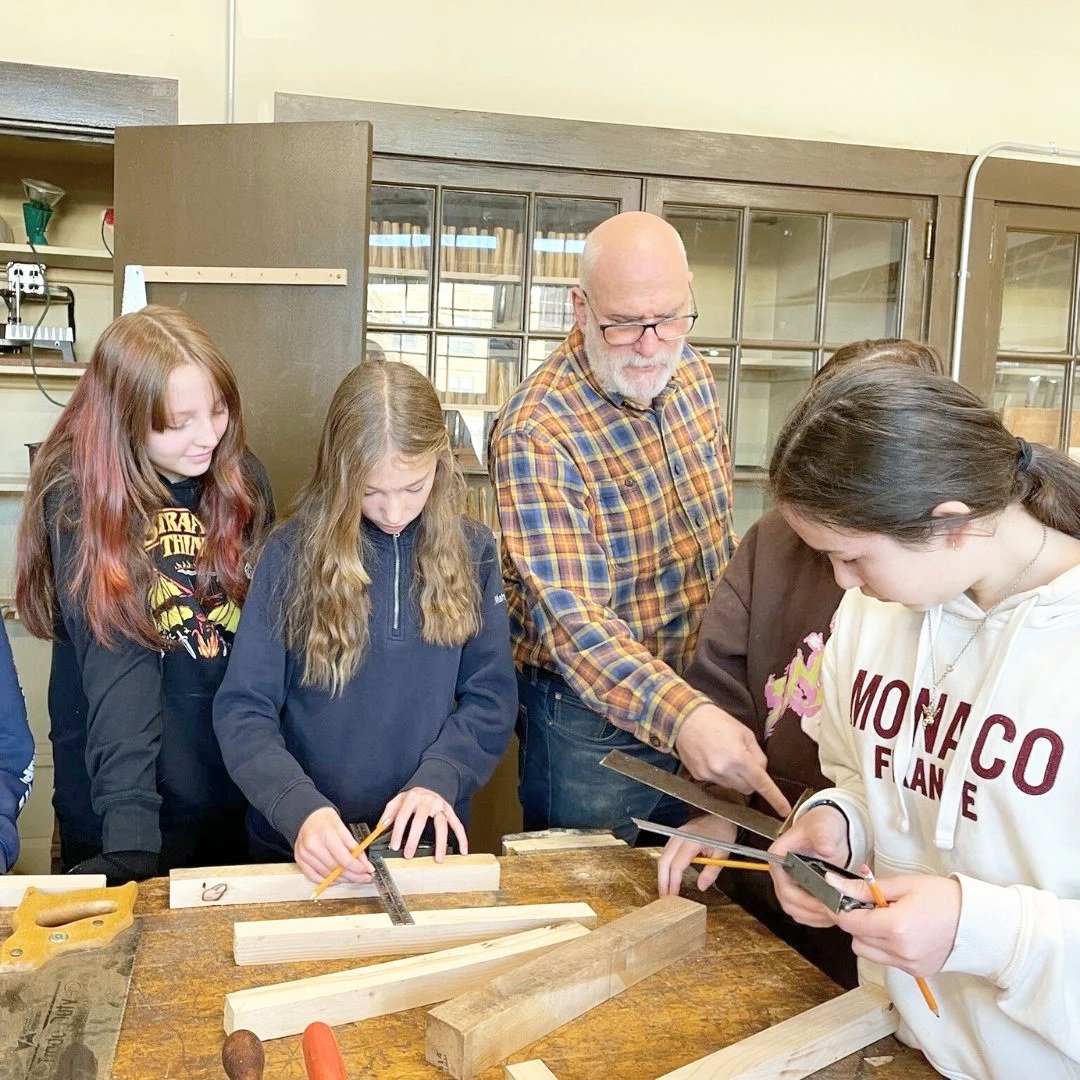
In middle school, the Fine and Practical Arts give students a rich balance of creativity and hands-on learning. Through drawing, painting, handwork, woodwork, and other crafts, students learn to observe carefully, work with intention, and take pride in creating something meaningful. These experiences strengthen focus, confidence, and practical skills, while offering a supportive way for students to express themselves and develop their abilities.
-
In the middle school years, the fine arts curriculum becomes both more technical and more expressive. Students learn skills in drawing, painting, and sculpture that build patience and confidence—while also giving them a creative outlet during a time of tremendous inner growth.
-
Middle School handwork deepens students’ connection to the natural world as they work with materials inspired by the human being, animals, and plants. Creating useful, beautiful items helps students experience their relationship to the earth while building patience, skill, and pride in their craftsmanship. As projects grow more complex, students strengthen their ability to think ahead, work carefully, and bring artistic intention into practical work—foundational skills for any future vocation.
Grade 6
Students sew an animal of their choosing, a project that requires imagination, patience, and the ability to translate a flat pattern into a three-dimensional form.Skills: 3-D pattern making, cutting and pinning, backstitch and zipper stitch, firm and even stuffing, visualizing a design in three dimensions
Grade 7
Students learn the art of felting—an activity that calls for sensitivity, focus, and careful control of materials. Some classes may also explore felt juggling balls, slippers, or even leatherwork by crafting moccasins using their own feet as a template.Skills: patient control of water and wool, shaping and finishing felt; leatherworking techniques such as hole punching, measuring, and use of an awl
Grade 8
As students study the Industrial Revolution, they are introduced to machine sewing. They learn machine care and safe operation while creating simple, wearable clothing and practical items like pajama bottoms or a tote bag with batik pocket.Skills: cutting, pinning, basting, ironing, seam ripping, threading and operating a sewing machine, bobbin winding
-
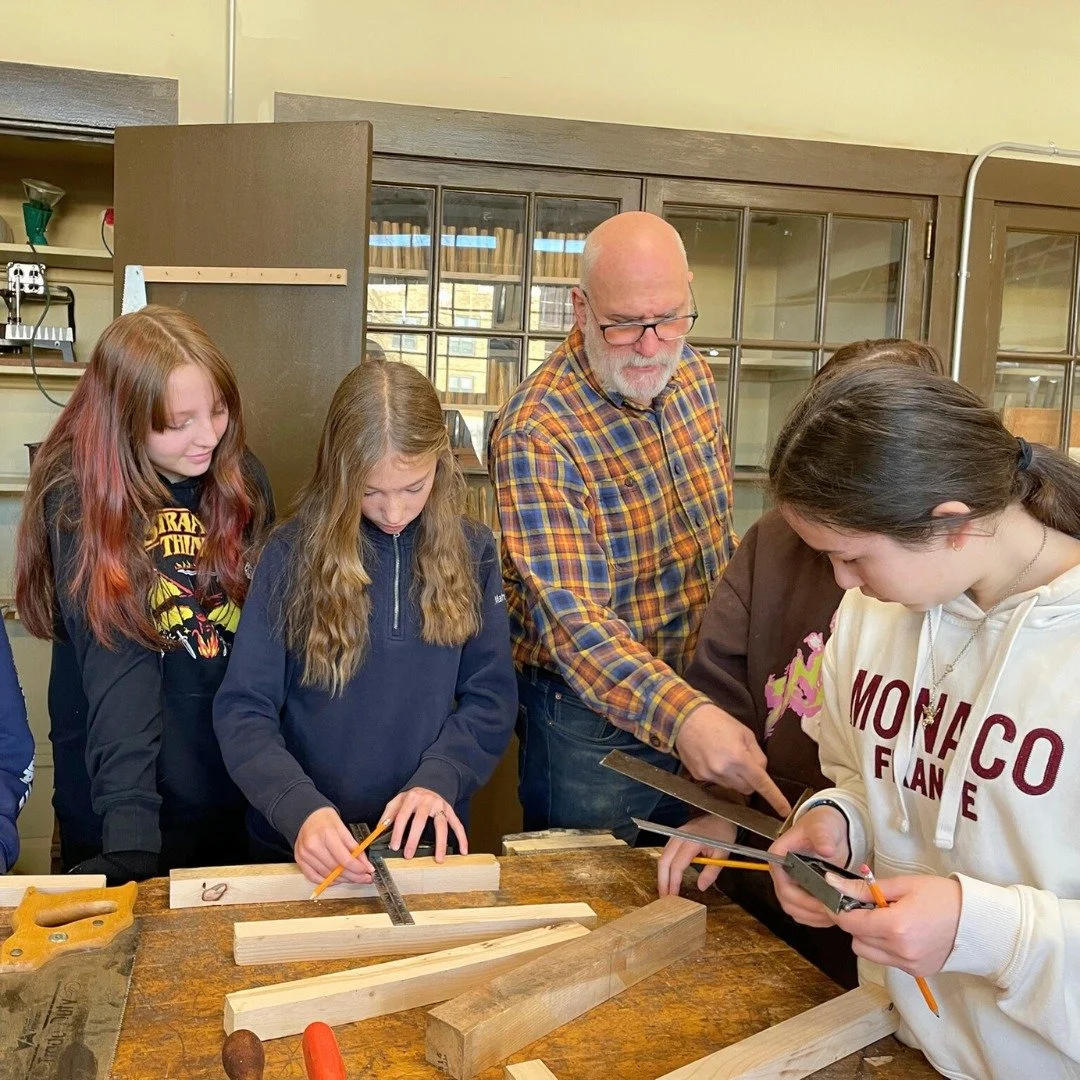
6th Grade: Butter knife, fork, the Waldorf egg. Rasping, filing, sanding
7th Grade: Fret saw work, starting with a jigsaw puzzle, going on to Nautilus gears with moving parts and interior patterns.
8th Grade: Spoon carving, from trunk to spoon.
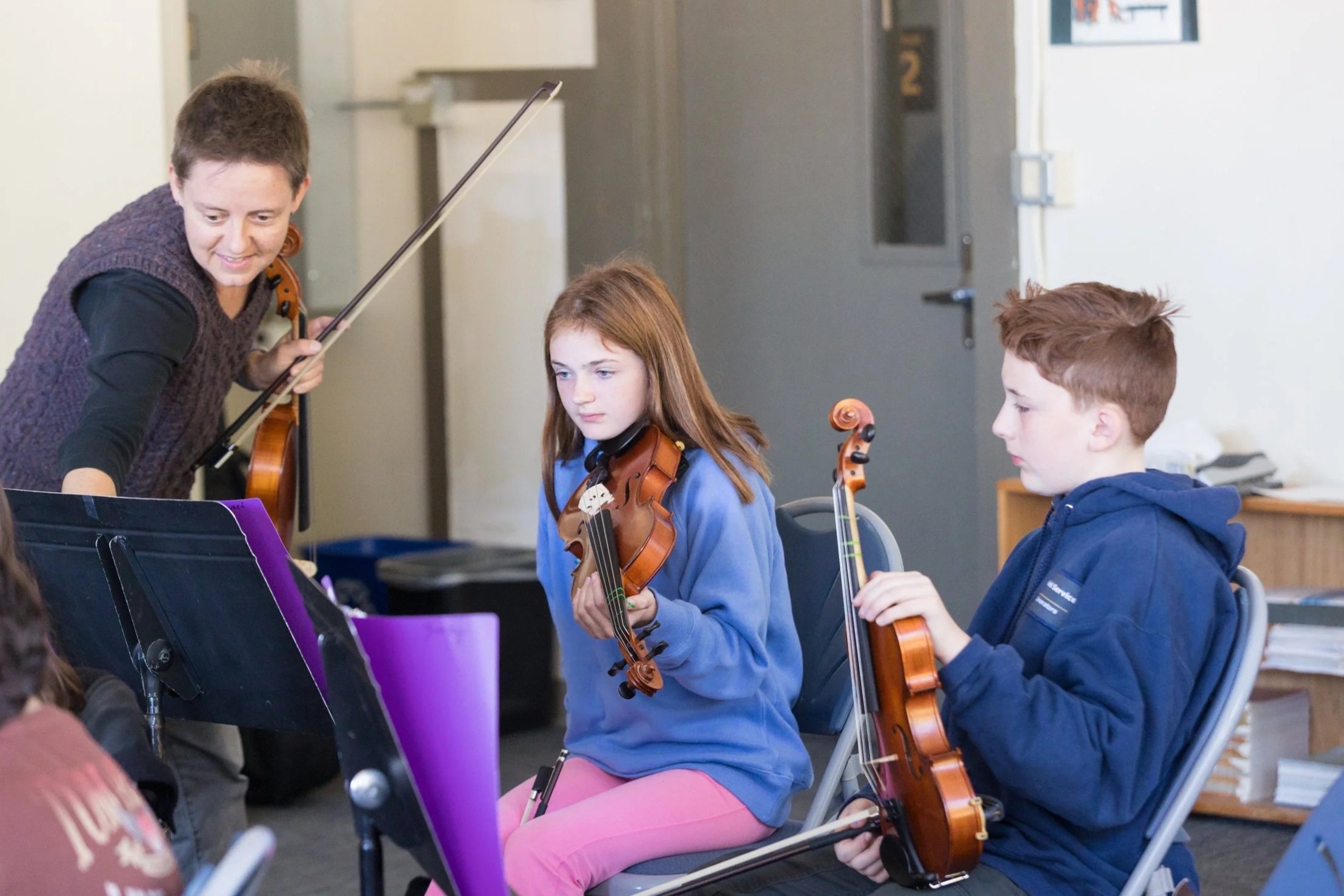
Music & Theater
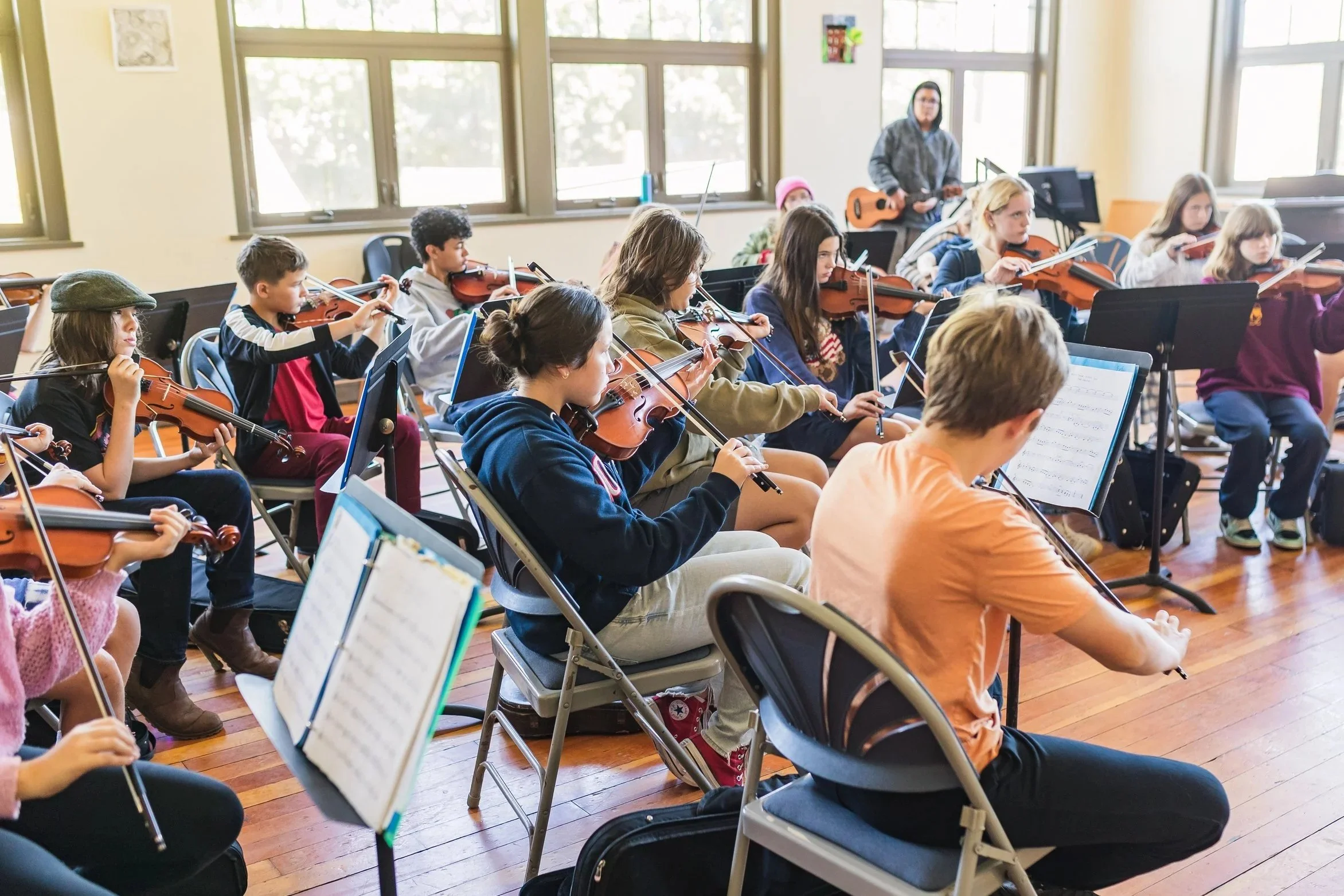
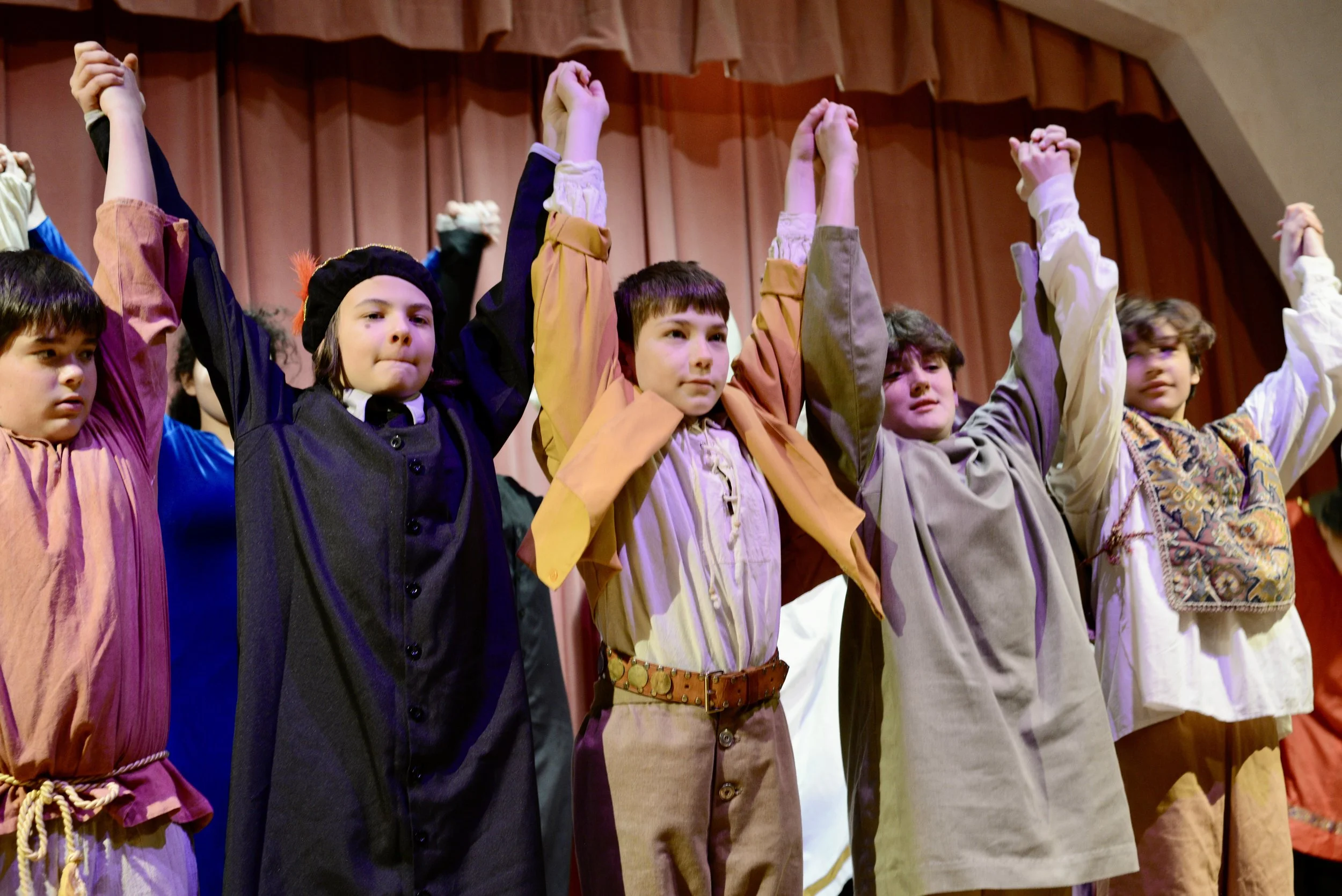
Music and theater are essential parts of the middle school experience, giving students ways to express themselves and work together. In music, students deepen skills in singing, instruments, and ensemble work, learning to listen closely and contribute to a shared sound. Theater invites them to bring stories to life through movement, voice, and imagination, while strengthening collaboration and clear communication. Together, these arts help students grow creatively and socially, offering joyful, memorable experiences.
-
-
-
Theater is an important part of middle school in Waldorf education. It gives students a chance to explore storytelling, build confidence, and work together in a creative, lively way. Through rehearsal and performance, they strengthen clear speech, practice memorization, develop empathy, and discover the joy of bringing a story to life as a group.
Sixth Grade Class Play
The sixth grade play is drawn from the year’s curriculum and invites students to stretch into new roles. As they experiment with character, voice, and movement, they strengthen clear speech, practice collaboration, and build their imaginative capacities.Seventh Grade Class Play
In seventh grade, students deepen their work with drama. The play offers a chance to take on more complex characters, speak with clarity and confidence, and continue building the teamwork and creativity that support a successful performance.Eighth Grade Class Play
By eighth grade, students bring growing maturity and skill to the stage. Their class play challenges them to step fully into character, work closely as an ensemble, and refine their speech, expression, and imagination as they prepare for high school drama work. -
Learning to Lead from Within
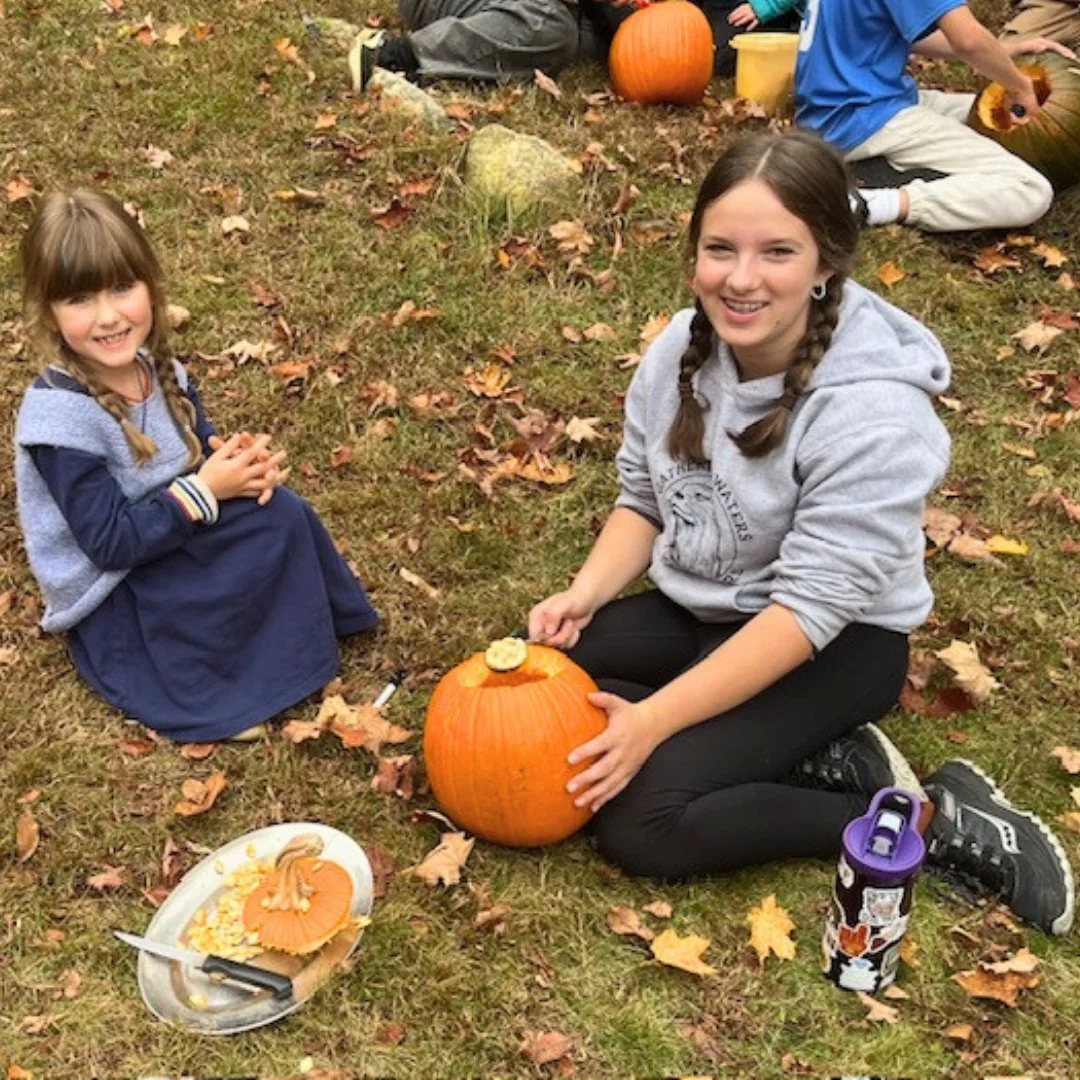
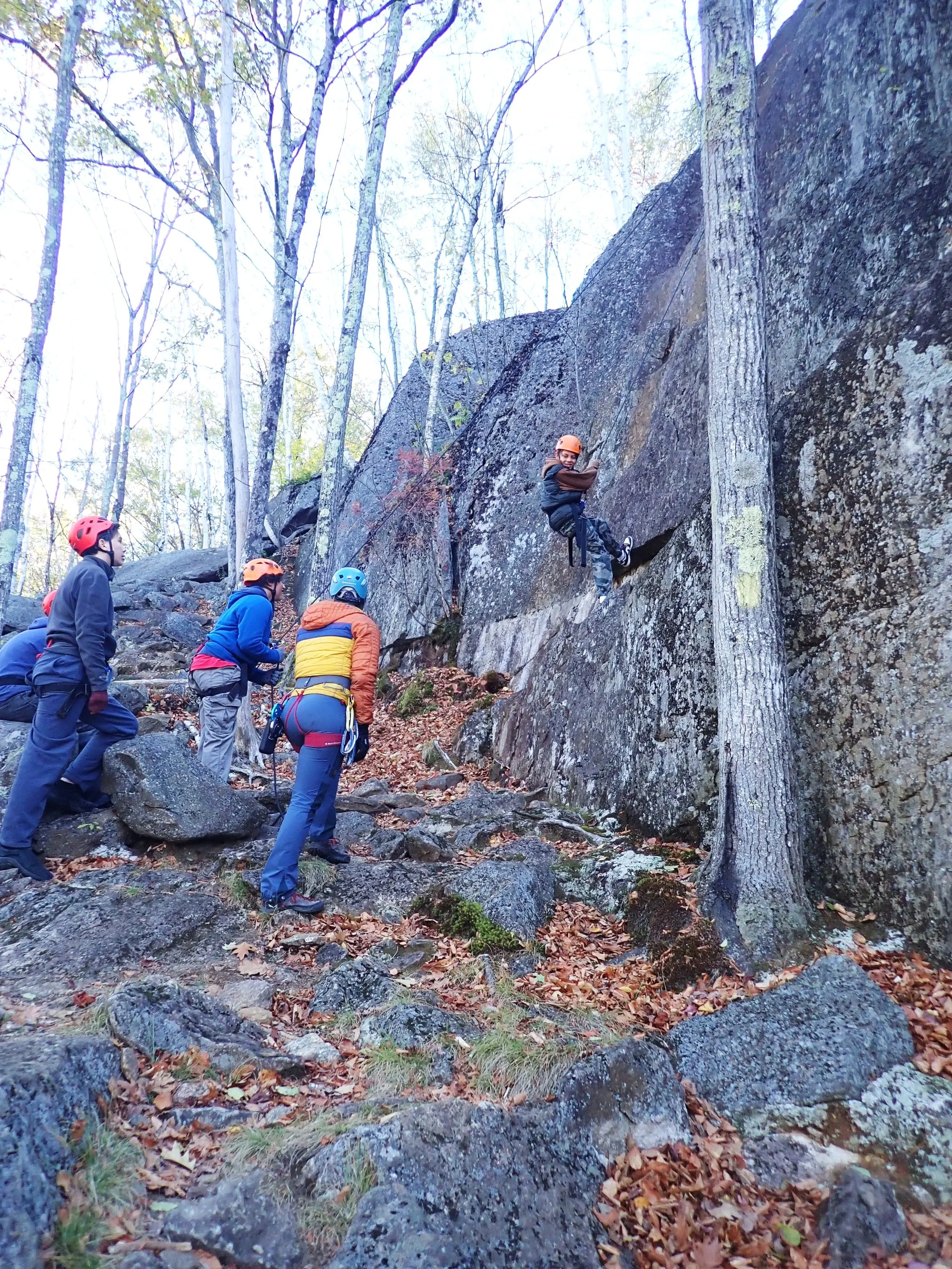
At Gathering Waters, students practice the kind of awareness that helps them look beyond their own perspective and understand what a moment or a group truly needs. Through experiences and stories that illuminate courage, empathy, and practical skill, they build genuine self-leadership: the ability to slow down, read a situation with clarity, and respond with care. Over time, students learn to hold both their own goals and the needs of others, growing into young people ready to meet the wider world with responsibility, compassion, and confidence.
-
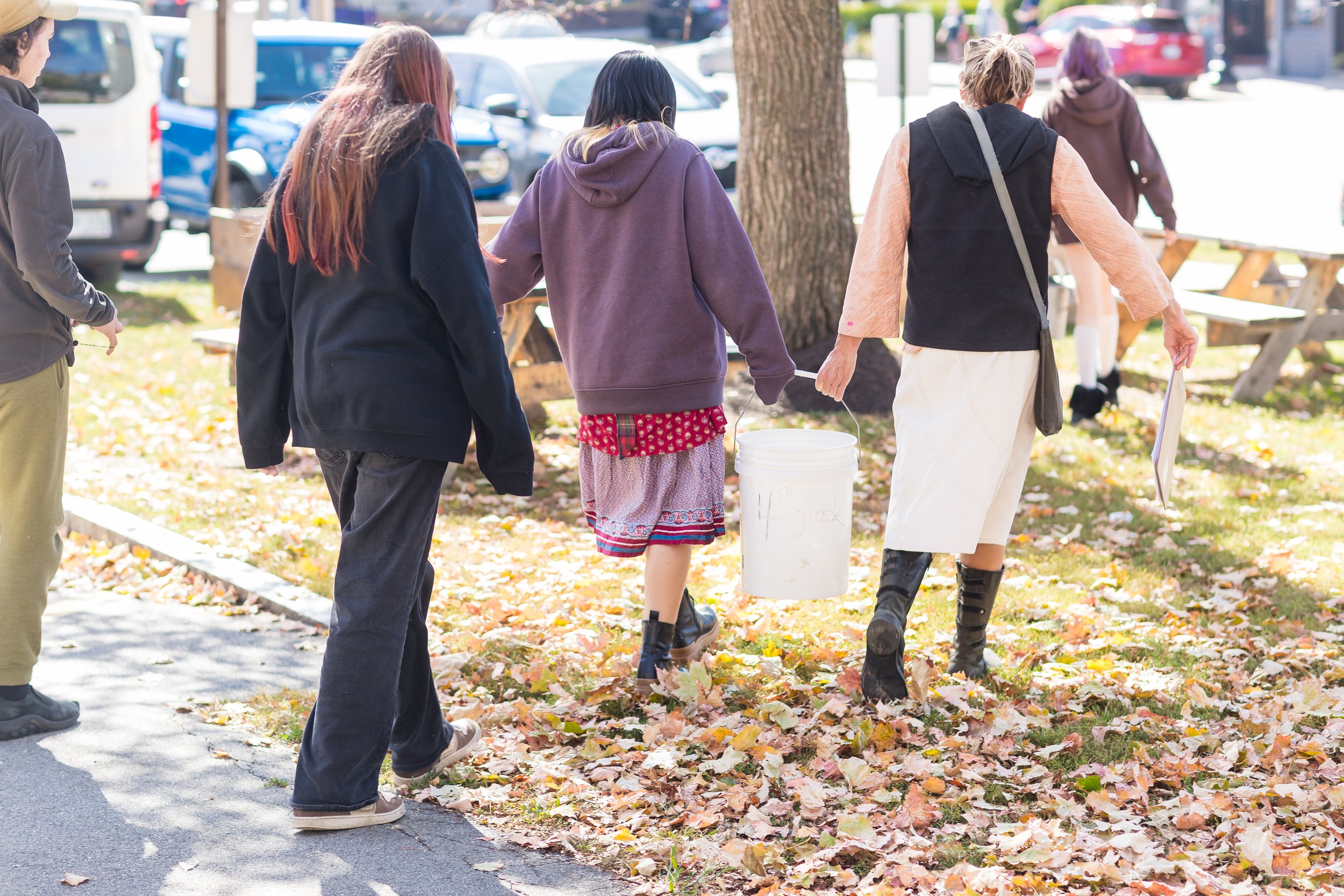
As part of our budding leadership program at Gathering Waters, the Leadership & Movement class involves physical exercise, community-building, and service-oriented activities. This means active engagement with each other, local organizations, and individuals.
-
In Middle School, students take part in Cyber Civics—an award-winning, research-based digital literacy program. Through three thoughtfully sequenced levels, students learn digital citizenship, information literacy, and media literacy, all with an emphasis on ethical decision-making and critical thinking. The curriculum aligns with Common Core Standards and helps students become responsible, thoughtful participants in the digital world.
-
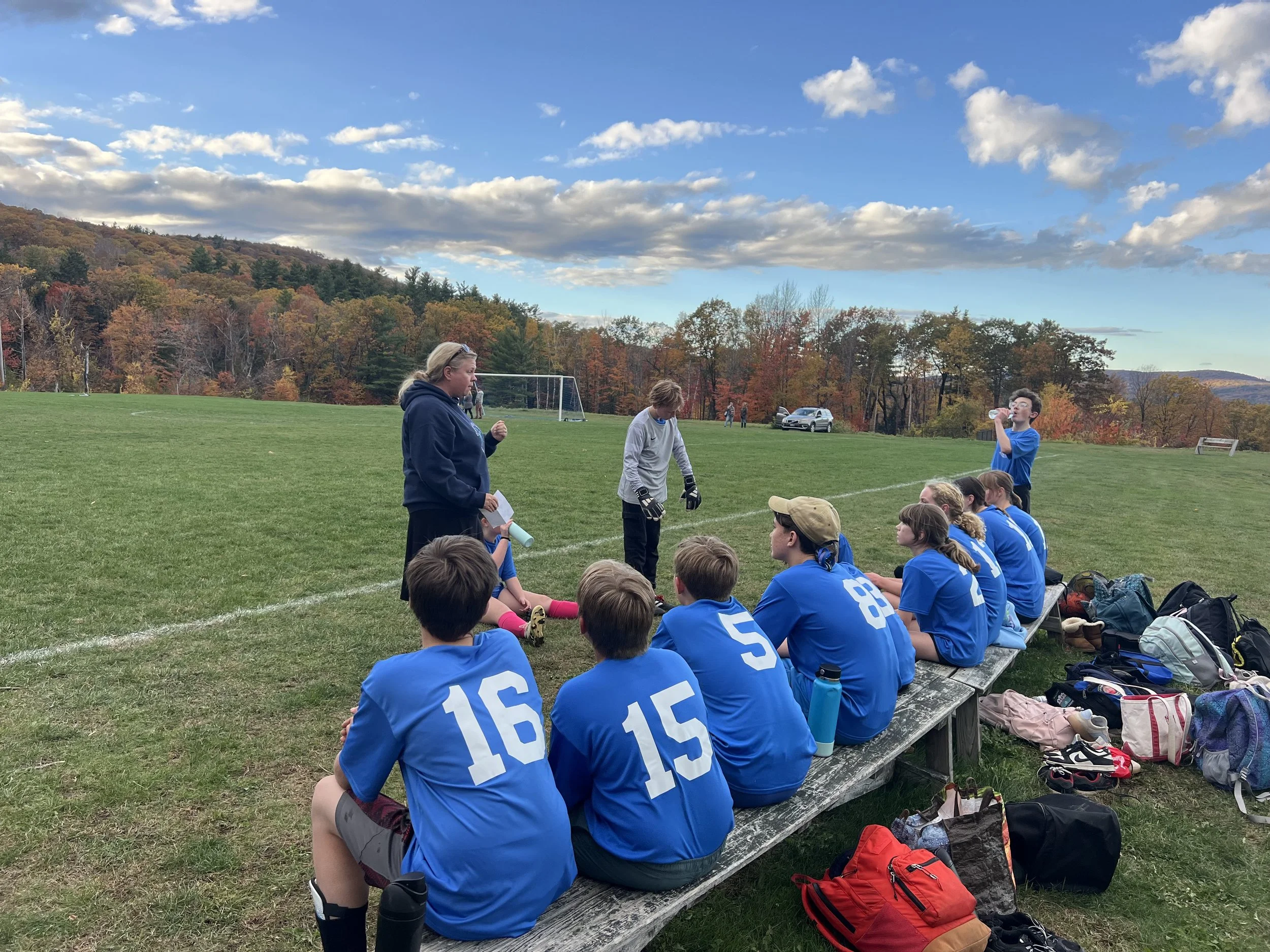
Athletics and clubs are all about healthy movement, friendship, and finding joy in shared interests. Our sports—soccer, basketball, and track & field—focus on teamwork, skill-building, and staying active. Students of all experience levels are welcome, and the emphasis is always on supporting one another and having fun.
Clubs like Math Club and Dungeons & Dragons give students space to explore what excites them, try new things, and connect with peers who share their passions. Whether on the field, around a table, or in the classroom, these activities help students grow confidence, collaboration, and a sense of belonging.
-
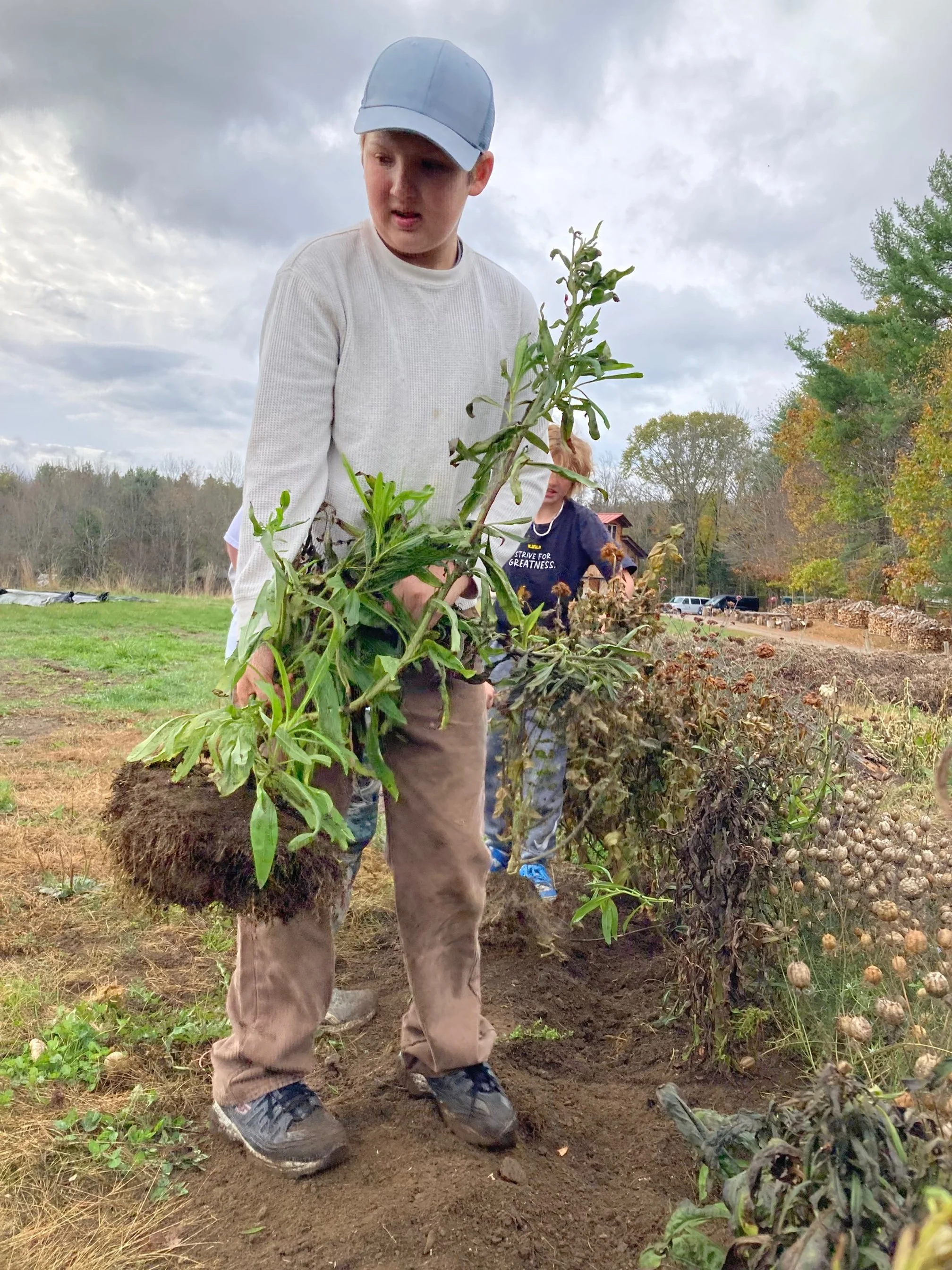
Community service is an important part of our middle school experience. It gives students a chance to step beyond their usual routines and connect with the people and organizations in our town. Through projects with local businesses and service groups, students learn how their efforts can support others and make a real difference. These experiences help them understand their place in the wider world and begin to see themselves as capable contributors to their community.
-
School festivals are an important part of life at a Waldorf middle school. They mark the seasons, celebrate traditions, and bring the whole community together in a joyful way. As students move through the middle grades, they begin taking on more responsibility—helping with music, art, performances, and special activities. These celebrations give students a chance to contribute, try new roles, and enjoy time together, all while strengthening their sense of belonging at school.
“Our daughter loves that she has several wholesome artistic opportunities during the day, every single day! The learning style really suits her, and as a family we like the fact that it is a close community where we get to know the teachers and families.”
— Jeronima C., Parent
High School: Completing the Arc of a Waldorf Education
TRANSITION TO NINTH GRADE
High school builds on the Waldorf approach students have grown up with—creativity, movement, real work, and teachers who truly know them. Classes become more challenging and more connected to real life, with purposeful projects and practical skills woven in. Students make more choices, speak from their own point of view, and gain confidence in their own thinking. It’s a stage where everything they’ve learned starts to take shape as self-understanding, capability, and a sense of where they want to go next.