
Learning that develops capacity,
self-knowledge, and emerging purpose
K–12 EXPERIENCE
KINDERGARTEN
LOWER SCHOOL (1–5)
MIDDLE SCHOOL (6–8)
HIGH SCHOOL (9–12)
COLLEGE & BEYOND
FESTIVALS
At GWHS, students become capable thinkers, clear communicators, and responsible young adults prepared for college and beyond. Each day blends academic, artistic, and practical work that encourages them to meet the world with curiosity and integrity. As they study human ideas, take up hands-on work, and grow in responsibility, they gain confidence in their abilities and a sense of how they want to contribute—so they can step into the world with purpose.
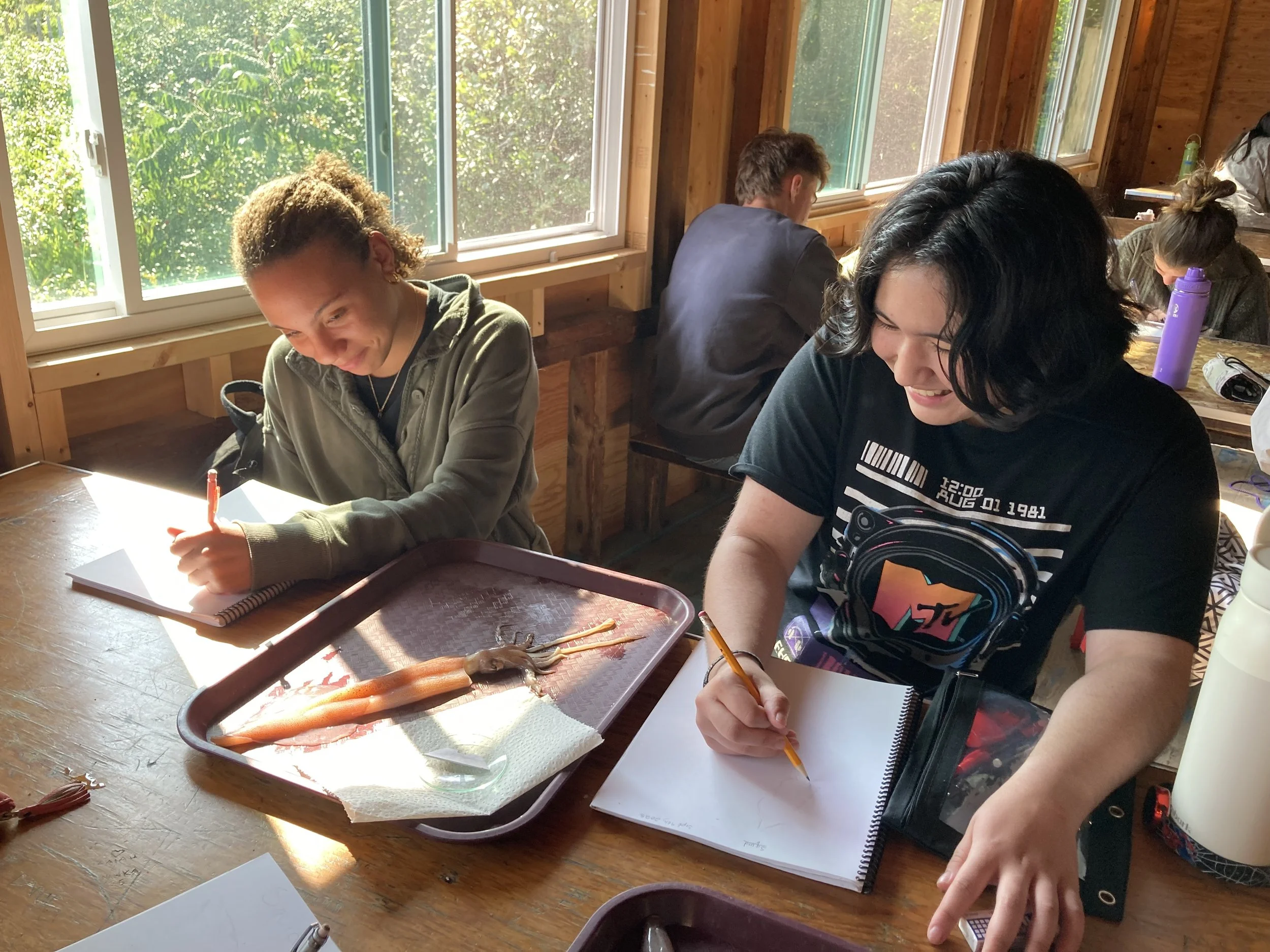
Ninth Grade
What is truly here?
Ninth grade begins with learning to slow down and really notice the world. Students meet strong contrasts in science, literature, and history, and those polarities mirror the changes they’re experiencing themselves. By practicing careful observation and clear recollection, they build confidence in their own thinking and gain steadiness during a year that can feel full of motion.
OBSERVATION
Tenth Grade
How do things relate?
Tenth graders develop the ability to compare and connect. They explore balance—how systems work, how processes unfold, and how different viewpoints can stand side by side. As they search for balance in their own lives, they study it in the wider world, learning to look closely at similarities and differences with accuracy and respect.
COMPARISON
Eleventh Grade
Why does this happen?
In eleventh grade, students take on more abstract ideas and begin to ask deeper questions. They practice independent reasoning, look for underlying causes, and follow ideas beyond the surface. This naturally leads them to consider purpose, responsibility, and the beginnings of their own direction as they step more fully into young adulthood.
ANALYSIS
Twelfth Grade
Who am I becoming?
Senior year brings everything together. Students draw on all they’ve learned—skills, experiences, and interests—to form a clearer sense of themselves. The capstone project asks them to research deeply, create something original, and present their work publicly. It’s a meaningful way to recognize how far they’ve come and to step forward with confidence into what’s next.
SYNTHESIS
Learning with Depth, Rhythm, and Balance
THE BLOCK SCHEDULE
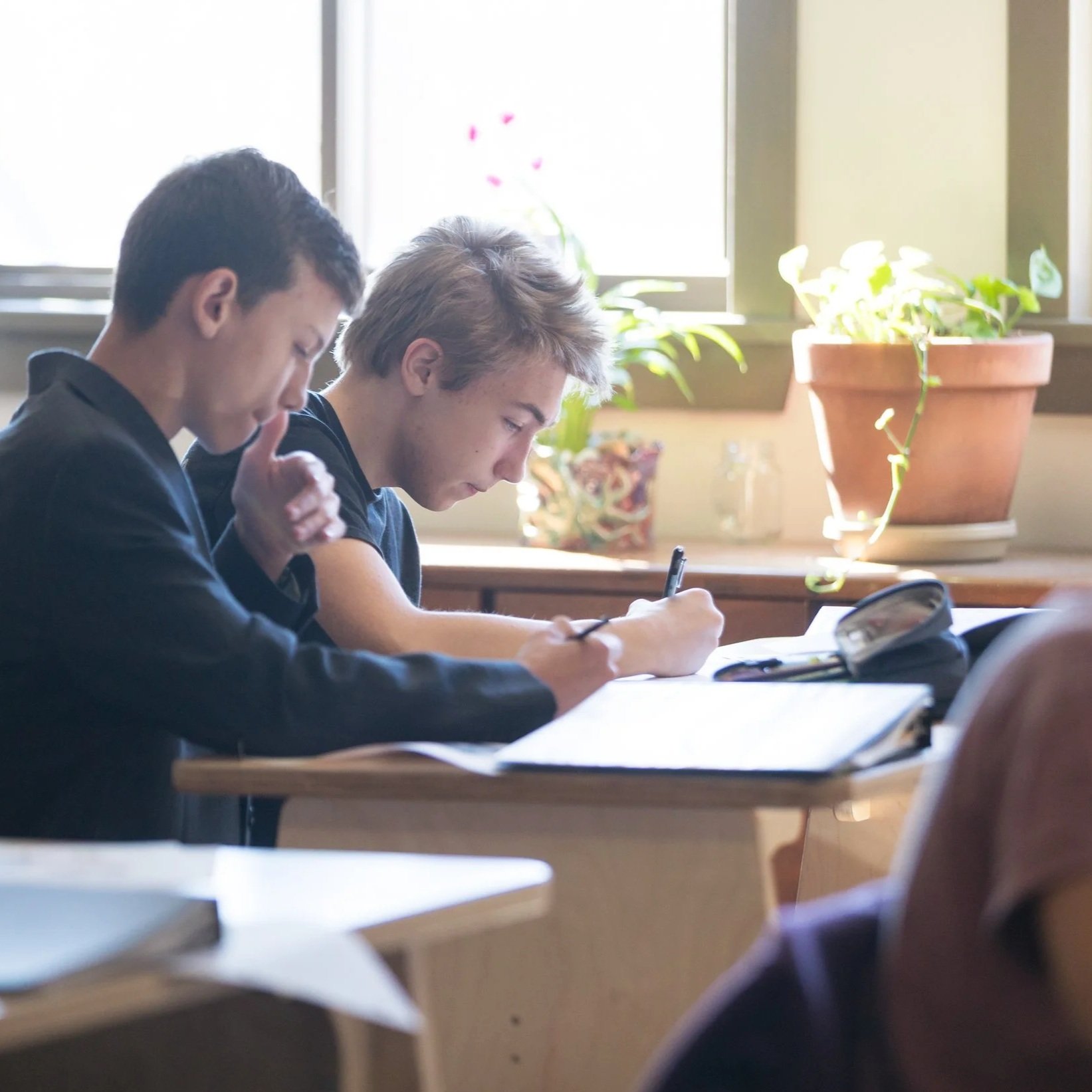
Each day begins with a 90-minute Morning Lesson block, where students study one subject in depth for several weeks through discussion, observation, writing, and artistic work. The rest of the day brings skill classes, world languages, seminars, movement, music, and practical arts. Together, this rhythm builds strong academic habits, supports healthy balance, and offers a full college-prep program rooted in whole-human learning.
Over the four years of high school, students engage with all of the core courses in our program, though the specific year a class is taken may vary slightly from one cohort to the next, as we respond to student development and scheduling.
Advisory: Structured Support for Growth & Staying On Track
COLLABORATING WITH FACULTY
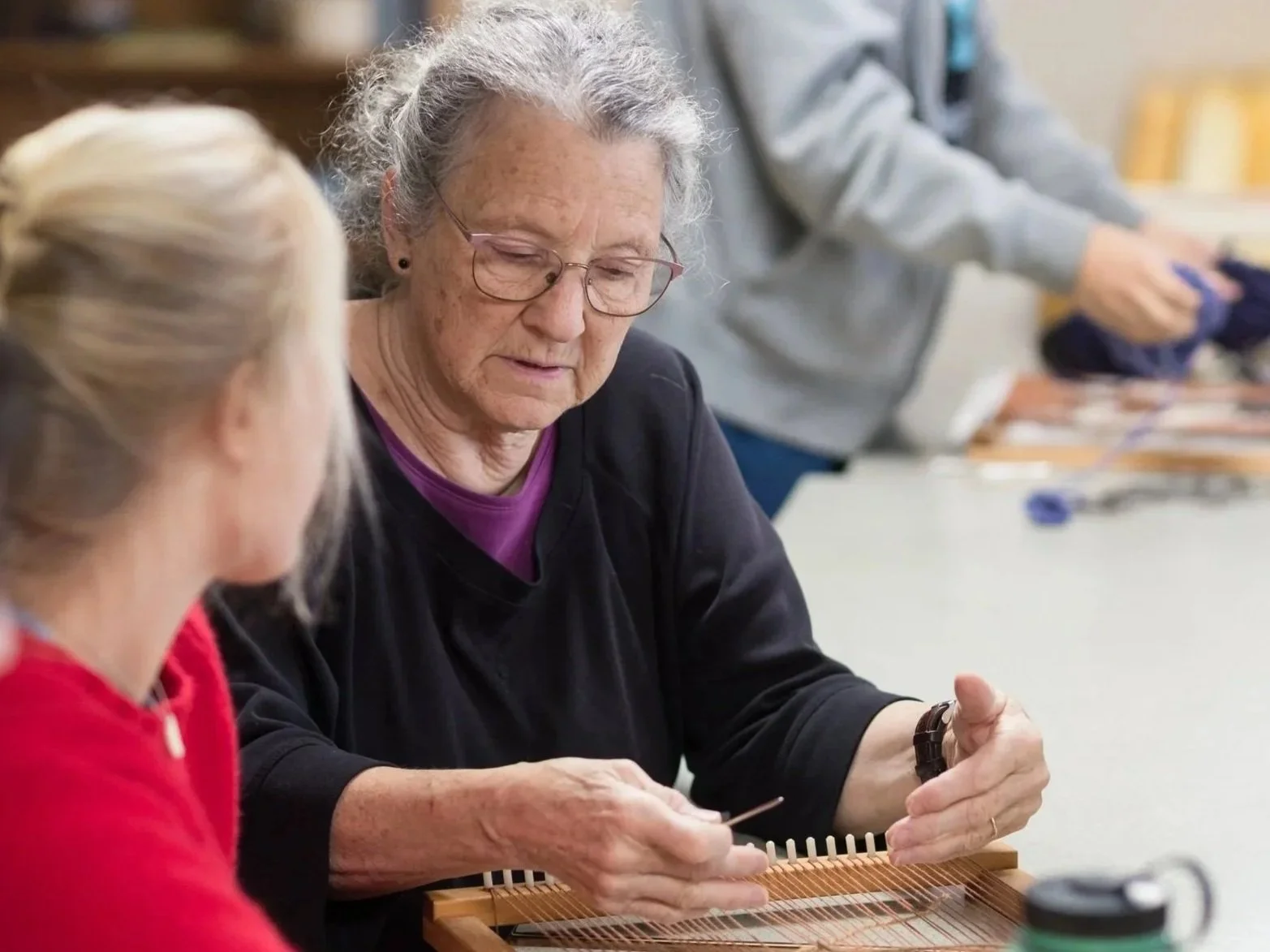
Students connect consistently with teachers who are attentive, dependable, and open to real conversation. The advisory relationship offers a trusted adult who helps them plan, problem-solve, and grow their own sense of purpose as they move through high school.
Language Arts
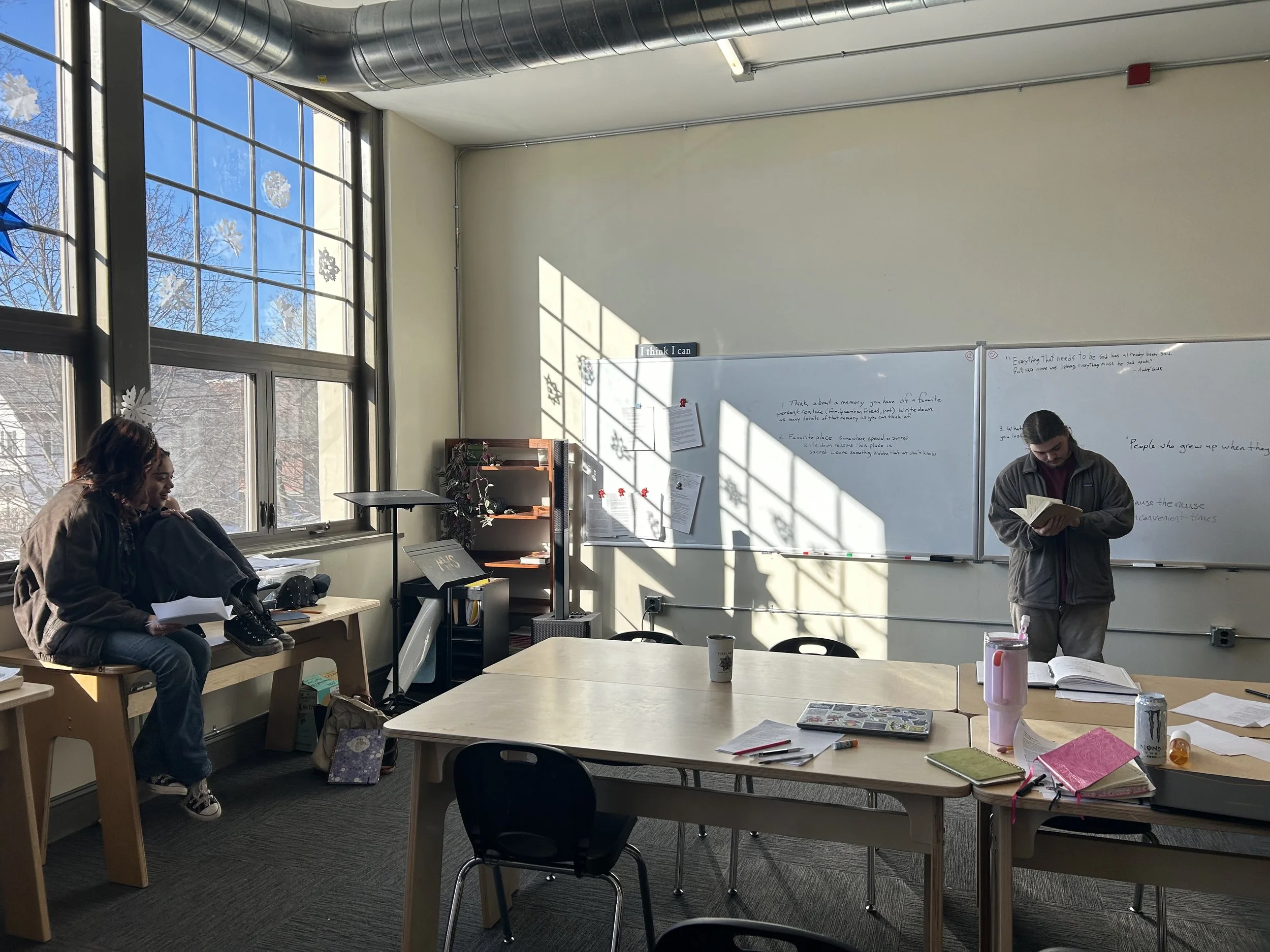
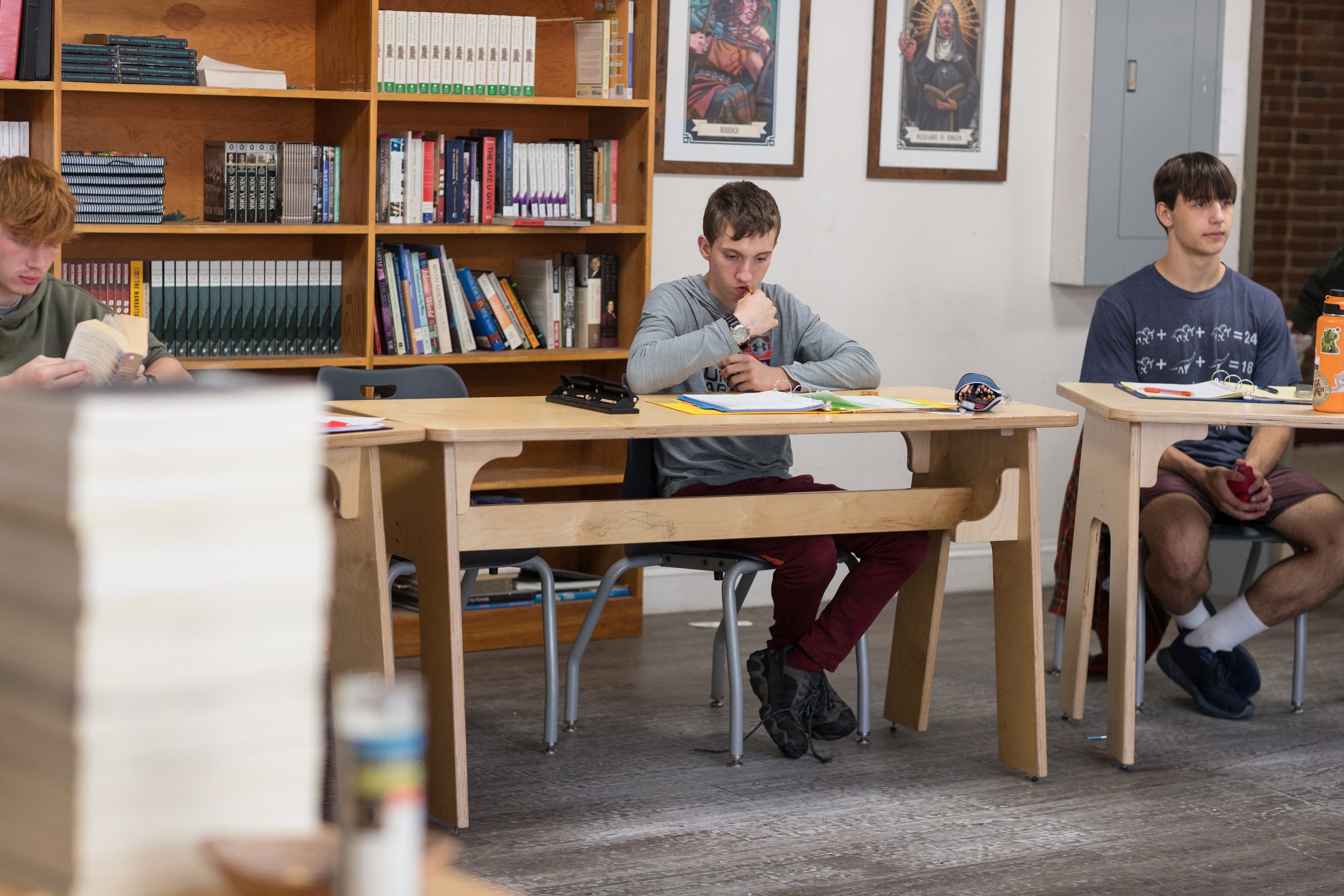
The language arts program invites students into deeper reading, thoughtful discussion, and clear, purposeful writing. Each year strengthens a different aspect of their thinking—observing, comparing, analyzing, and finally bringing ideas together across subjects and experiences. Through close work with literature, steady practice in writing, and conversations that ask them to form and articulate their own views, students develop confidence in their voice and a growing understanding of themselves and the world.
-
Comedy & Tragedy
Students explore the origins and evolution of theater—from Greek tragedy to modern drama—through works by Sophocles, Shakespeare, Hansberry, and others. They study how comedy and tragedy reveal changing worldviews and reflect the inner polarities of adolescence, while practicing dramatic reading, speech work, essay writing, and creative illustration. The course concludes with a final exam and an independent project.The Novel: Moby-Dick
(novel selection ubject to change)Students engage Moby-Dick through sustained reading, discussion, and writing. Focusing on Ishmael, Queequeg, Starbuck, and Captain Ahab, they examine how Melville portrays friendship, conflict, and authority aboard the Pequod. Class work includes close reading of key passages, descriptive and analytical writing, artistic projects, and learning essential nautical knots. Students may also visit Mystic Seaport, the New Bedford Whaling Museum, or take a whale-watching trip. Throughout the block, they keep a vocabulary glossary and participate actively in discussions.
Language Arts Skills
Ninth graders strengthen both the technical and expressive sides of writing through steady practice in grammar, composition, and close reading. This combined approach helps students write with greater clarity, confidence, and discipline as they move into the rest of high school.Review core grammar and punctuation skills, including sentence structure, capitalization, comma use, and possessives.
Build accuracy in spelling, vocabulary, and the correct use of names and titles.
Practice summary and précis writing by distilling longer passages into clear, concise explanations.
Write and revise a structured multi-paragraph essay that develops a central theme.
Engage in class discussions that deepen understanding of character, personal responsibility, and the pressures young people may face.
-
Aesthetics: The Art of Poetry
Tenth graders explore poetry from the inside out, beginning with the power of the word itself. Through daily reading, discussion, journal work, and their own writing, students study how diction, tone, and form shape a poem’s meaning and mood. They read widely, select pieces for group recitation, and compose a small collection of original poems. The block culminates in each student reciting and analyzing a poem of their choice.The Odyssey
The Odyssey meets tenth graders at a moment when they are beginning to navigate their own inner journeys. Through Homer’s epic—and, often, a multi-day wilderness water trip that mirrors Odysseus’s challenges—students consider themes of self-restraint, courage, temptation, and finding one’s “way home.” Daily reading, discussion, and reflective writing deepen their understanding, while artistic work, chapter summaries, and a final essay help them synthesize the story. Students also memorize and recite the opening lines in Ancient Greek. -
Dante’s Inferno
Students enter the imaginative and moral world of Dante’s Commedia, exploring the medieval understanding of sin, intention, and the ordered structure of the cosmos. They study Dante’s life and times, read the Inferno with selections from the Purgatorio and Paradiso, and engage in daily discussion and memorization.Wolfram von Eschenbach’s Parzival
Through the intertwined stories of Parzival and Gawain, students consider themes of empathy, sorrow, idealism, failure, and the search for purpose. Class work centers on daily roundtable discussions—often guided by student-generated questions—that encourage thoughtful engagement with the text.Shakespeare: Hamlet
Students explore Hamlet through the lens of the Elizabethan worldview—Ptolemy’s cosmos, the Great Chain of Being, and Humanist thought—deepening their understanding of the play’s questions of identity, doubt, and responsibility. They read closely, respond to focused questions, and rehearse selected scenes. -
The Birth of American Literature
Students explore the emergence of a distinctly American voice through writers such as Emerson, Douglass, Fuller, Thoreau, Whitman, and Dickinson. Through reading, journaling, and discussion, they examine individuality, identity, and the relationship between self and society. The block culminates in a short Lyceum-style presentation.Faust
Goethe’s Faust anchors an exploration of modern striving—between appetite and ideal, experience and ambition. Students complete nightly reading, written responses, an essay, an artistic project, and memorize a short passage for recitation.Russian Literature
Through fairy tales and works by Pushkin, Gogol, Tolstoy, Dostoyevsky, Pasternak, Akhmatova, Solzhenitsyn, and others, students encounter the themes and historical context that shape Russian literature. They journal, discuss, and reflect on cultural identity and the “Russian soul.” -
Slam Poetry
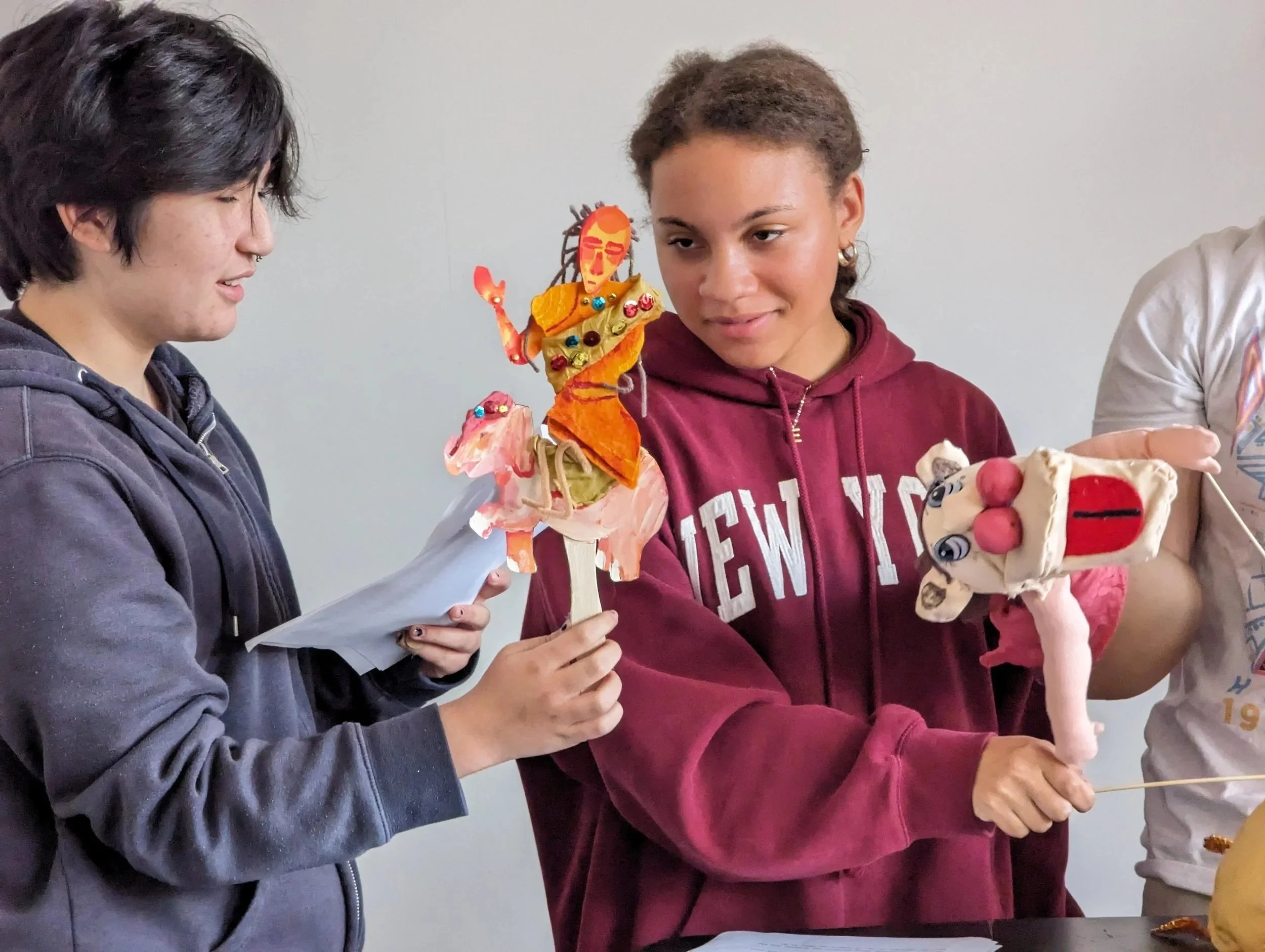
Commedia dell'Arte
History & Social Studies
History classes follow the unfolding story of humanity, helping students see both the diversity of the world’s cultures and the common human experiences they share. Through primary sources, discussion, and writing, students learn to weigh evidence, consider multiple perspectives, and understand the forces that shape human communities. This approach supports them in forming their own insights about society, responsibility, and their place in the world.
-
Revolutions
The Revolutions course asks the question, “What is a revolution?” By studying the American, French, Haitian, the Russian, Indian, as well as the Industrial and Technological Revolutions, the students gain insight into the current conditions and context of our present world. Readings from Paine, Dickens, Marx, and Orwell help students experience the thinking behind these changes and build connections between the readings and history.American History
Crevecoeur’s question in 1751, “What is this New Man, this American?” is the theme of this course. Students examine who came to this ‘new world’, for what reasons, and how that began to forge a new kind of society, unique in history. They explore the 17th century footprints of great powers on the North American continent, the settling of the southern and northern colonies and the distinct cultures they produced (emphasizing geographic & economic factors), Loyalist and Patriot arguments for the Revolution, the failures of the Articles of Confederation, and early continental expansion up to the Mexican War. Students review the rise of conscience in the 1830’s and 40’s (abolition, women’s rights, etc.) and begin to address the paradox embedded in the founding of America that “all men are created equal,” and the events leading up to the Civil War and in the Civil Rights movement of the 20th century with its philosophy of non-violence.Comparative Government and Modern History
Students concentrate on the U.S. Constitution, beginning with the story of its genesis, examining its compromises, and work toward a full understanding of the basic principles that underlie the American democratic republic, the functioning of its government, and how it compares to parliamentary systems. They spend time on research techniques, evaluating information, issues of attribution, and basic word processing and proper computer skills. Students write the first of four major research papers (one each year in their social studies skills classes) and make an oral presentation on a topic of their choice from modern (post WWII) U.S. history—such as the Marshall Plan, the Little Rock School Crisis, Woodstock, Rachel Carson, or 9/11. -
Ancient Cultures
Students examine the origins of culture, society and civilization and the development of human consciousness. After an introduction to pre-history as revealed through pre-historic cave art of France, the “Great Transition” from hunter/gatherers to agriculturalists, and the “first city” of Catal Hoyuk in Turkey, students concentrate on five ancient cultures—hunter/gatherers (the still-extant Mbuti pygmy tribe of central Africa), India, Persia, Mesopotamia and Egypt.Students explore the values and ways of life of these cultures, with special emphasis on views of the material world, creation, death, the afterlife, the purpose of existence, and what it means to be a “right-living” human being. Readings include excerpts from Colin Turnbull’s The Forest People, the Bhagavad Gita, the Zend Avesta, Gilgamesh in its entirety, and Isis and Osiris.Greek History
An exploration of Ancient Greece from the Trojan War—the genesis of the Greek cultural identity—to the death of Socrates, which is generally considered the end of that extraordinary period known as the Golden Age of Athens, and ending with the dissemination of Greek culture through Alexander and Greek thought through Plato and Aristotle. Over the course of the block, the students read many original sources: The Iliad, Hesiod, Herodotus, Plutarch on Lycurgus and Solon, Thucydides on Pericles, and many sections of Plato’s dialogues of Socrates and the Allegory of the Cave. Students learn how Greece received through Crete the gifts of the great civilizations of Egypt and Mesopotamia, which were transformed into something altogether new in the world—an interest in what was inside the human being, and a sense of the individual. Students contrast Egypt and Greece, Athens and Sparta, and become familiar with the rise of the polis and democracy, the Persian Wars, the wonder of Periclean Athens and, the gadfly Socrates with his question: “How do I know what I know?”Civil liberties & the American legal system
Students will study the Bill of Rights, the workings of American law and the structure of U.S. legal system. Class discussions will consider the rules that make for a civil society and the ever-shifting boundary between individual rights and those of the group. Students greatly increase their vocabulary of legal terms and understanding of legal concepts. Frequent readings are drawn from current news articles on civil liberty issues and the Supreme Court’s current sessions. Students also review research techniques, how to formally attribute information, and how to evaluate it (especially on the Internet) for extensive research papers on modern civil liberties topics of their choosing. They view two powerful films in class: Twelve Angry Men about the jury system and how to evaluate evidence “beyond the shadow of a doubt,” and The Exonerated about capital punishment. The class takes trips to a courtroom to observe an actual trial. -
Medieval and Islamic History
In this 11th-grade block, students explore how the modern Western world emerged from the thousand-year crucible of the Middle Ages. They examine the major forces that shaped this era—classical Rome, the Germanic tribes, Christianity, and Islam—and trace their lasting influence on today’s cultures, institutions, and global relationships. Through primary sources, class discussions, and related field experiences, students study everything from the fall of Rome and the rise of monasticism to the flourishing of Islamic civilization, the Crusades, the Norman Conquest, and the growth of medieval art, architecture, and language.Rise of the West
This 11th-grade block traces how “the West” emerged and diverged from the rest of the world between the 14th century and the Industrial Revolution. Building on Medieval History, students explore major cultural shifts—from the Black Plague and Reformation to the Renaissance, Age of Exploration, and Enlightenment—and follow four key threads: Philosophy and individuality, science and exploration, the arts, and the rise of nations. Through original texts, historical case studies, and class discussions, students grapple with big questions at the heart of Western thought: Where do I stand? Who is my neighbor? What is a nation? What is progress?Latin America & Africa
In this block, students widen their global perspective by studying the histories, cultures, and contemporary realities of Latin America and Africa—regions often overlooked in North American curricula. Through readings from original sources, biographies of key revolutionaries, excerpts from Things Fall Apart, documentary films, and geographical study, students gain a fuller understanding of the forces shaping these diverse societies. This block strengthens global awareness, cultural understanding, and the ability to see world events from multiple viewpoints.Aesthetics: History Through Music
The origins of our music lie veiled in myths about the Ancient Greek gods and their muses. Through them, music was bestowed not only as an art form, but also as a key to practicing mathematics, astronomy, medicine, architecture, and ethics. From these lofty beginnings, this block traces the course of music from Ancient Greek to modern American times. At each major moment of transition––Medieval, Renaissance, Baroque, Classical, Romantic, and the 20th century leading into contemporary times––we pause to listen for differences and innovations that point to changes in human consciousness. -
Economics
Students are introduced to economics thorough study and discussion of the capitalist market of Adam Smith as compared to Marxist socialism and Rudolf Steiner's associative economics. Topics include price and value, division of labor, motivation for work, distribution of wealth, land and labor, capital, threefold social order, and the story of money. In addition, students follow the life cycle of a t-shirt as a way to view the global economy at work, and hear about socially responsible organizations like Fair Trade and B Corporations. The main work in this block is exploring entrepreneurship—students imagine themselves as producers of products or services that meet perceived needs in the community. The product or service will be student choice inspired by student's talents and interests. Over the course of three weeks, this planning touches on such topics as: creating a vision/mission, determining forms of ownership, establishing price, raising capital, developing industry, understanding the market for the item or service, socially responsible business practices, and creating financial projections for income and expenses and a balance sheet. Through this practical activity, basic concepts of accounting are introduced.China and the Rise of Asia
Students look back through Chinese history, from the early dynasties through the glorious years of the T'ang and Song dynasties and on up through the period of foreign dominance that led to the tumultuous 20th century. They survey the wonders of Chinese art, philosophy, and technology and also compare each period with what was happening simultaneously in Europe and other parts of the world. A major theme is the way Confucianism, Buddhism, Taoism, and artistic impulses have washed in and out of China from as far afield as India and Japan—and how these countries all view one another today.Modern World History
In this class, students solidify a comprehensive grasp of recent world history. The course emphasizes a symptomatological approach—discernment of the great patterns working beneath surface events. Students explore the “isms” that dominated the last century (nationalism, colonialism, totalitarianism, etc.), and experience specific events and times more directly through poetry of witness and films as original historical documents: Triumph of the Will (fascism), Night and Fog (the Holocaust), Hearts and Minds (Vietnam), Dr. Strangelove (Cold War paranoia), and Hotel Rwanda (the 1994 genocide). Each student produces a research paper on a current topic. -
TBD
Mathematics
Math builds steadily from concrete understanding to abstraction. Students explore algebra, geometry, trigonometry, statistics, and calculus in ways that reveal patterns, relationships, and underlying principles. They learn to follow a line of reasoning, test ideas, and explain their thinking clearly. Over time, students gain confidence not just in solving problems, but in understanding why solutions work.
-
All students are placed into various offered math skills classes according to the results of their placement tests. Over the course of high school our students cover four years of math, culminating either at PreCalculus or Calculus.
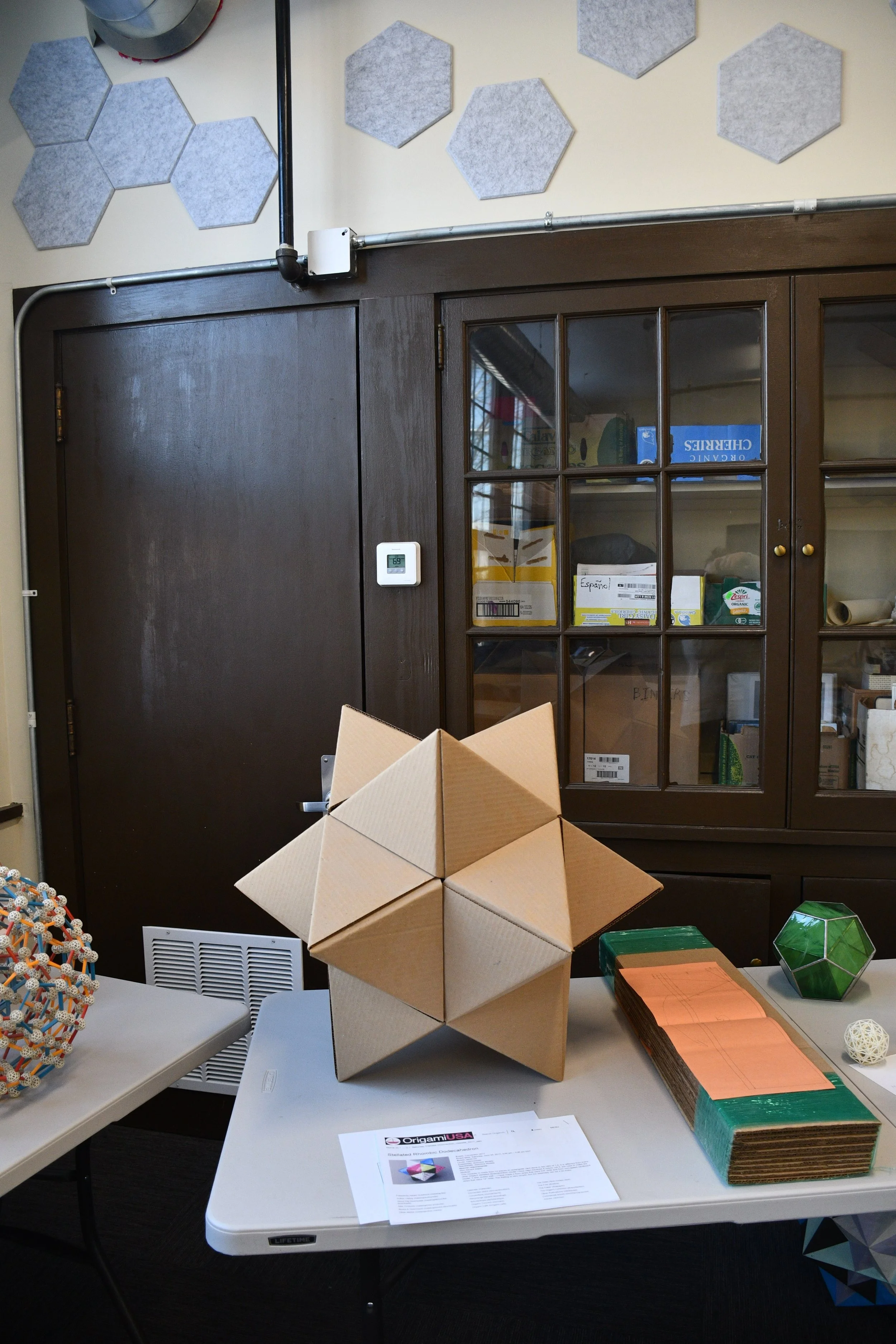
Descriptive Geometry Block
In this course students spend most of their time doing technical drawing: the backbone of every manufactured object. They learn to produce exact drawings of solids using orthographic projection and perfect the fluency of their thinking in 3D. The strength of their spatial imagination is supported by exercises in Dynamic Drawing, cubic sections and relevant movement. The students are also introduced to the history of Descriptive Geometry, initially invented as a military fortification technique, later becoming a foundation for the industrial revolution. The course culminates with students mastering the technique of picturing a 3D object from any point of view.Fundamentals of Algebra
This course allows students to develop a solid skills foundation and confidence to enter high school math. It focuses on building habits and faculties essential for progress in learning math. In addition to reviewing and solidifying main algebra prerequisite topics such as calculation, measurement and geometrical constructions, it offers a gentle introduction to fundamental algebra skills such as working with variables, expressions, equations and coordinates.Algebra I
Students begin by strengthening their foundation in arithmetic as it appears in algebra—working with algebraic terminology, simplifying expressions, and solving linear equations, fractional equations, and systems of equations. They translate verbal statements into algebraic form and create their own word problems before tackling a wider set of applications.As the course progresses, students move into more abstract concepts: exponents and scientific notation, operations with polynomials, and factoring. A study of irrational numbers grows out of geometric exploration, leading to work with radicals, binomials, and algebraic fractions. The year culminates in solving quadratic equations through multiple methods—including deriving the quadratic formula—bringing together the core skills developed throughout the course.
Geometry
This class spends most of its time solving geometric problems – theoretical exercises in pure thought as well as practical exercises stemming from real-life situations. The students learn to see geometry all around them and develop a warm connection to it. They strengthen their ability to move and transform geometrical objects in their imagination. They further develop their reasoning and communication skills, especially their ability to understand other people’s thinking and to express their own logic. Most of the work on the logical part of geometry as well as on construction skills is done in Semester 1. Semester 2 is dedicated to applications of geometry to practical situations and performing calculations using algebra. The year is finished with the review of Algebra I. -
All students are placed into various offered math skills classes according to the results of their placement tests. Over the course of high school our students cover four years of math, culminating either at PreCalculus or Calculus.
Algebra I
Students begin by strengthening their foundation in arithmetic as it appears in algebra—working with algebraic terminology, simplifying expressions, and solving linear equations, fractional equations, and systems of equations. They translate verbal statements into algebraic form and create their own word problems before tackling a wider set of applications.As the course progresses, students move into more abstract concepts: exponents and scientific notation, operations with polynomials, and factoring. A study of irrational numbers grows out of geometric exploration, leading to work with radicals, binomials, and algebraic fractions. The year culminates in solving quadratic equations through multiple methods—including deriving the quadratic formula—bringing together the core skills developed throughout the course.
Geometry
This class spends most of its time solving geometric problems – theoretical exercises in pure thought as well as practical exercises stemming from real-life situations. The students learn to see geometry all around them and develop a warm connection to it. They strengthen their ability to move and transform geometrical objects in their imagination. They further develop their reasoning and communication skills, especially their ability to understand other people’s thinking and to express their own logic. Most of the work on the logical part of geometry as well as on construction skills is done in Semester 1. Semester 2 is dedicated to applications of geometry to practical situations and performing calculations using algebra. The year is finished with the review of Algebra I.Algebra 2/PreCalculus
The aim of this course is to continue to develop and deepen the skills that the students acquired in Algebra I and Geometry, such that their confidence will grow when they encounter real problems that lend themselves to mathematical solutions. Emphasis is placed on independent recognition of solution pathways. The goal of the course is to ensure the student’ ability to continue their math education in Calculus the following year. Students approach mathematics as a human endeavor that calls on the capacity of sense-free thinking. -
All students are placed into various offered math skills classes according to the results of their placement tests. Over the course of high school our students cover four years of math, culminating either at PreCalculus or Calculus.
Projective Geometry Block
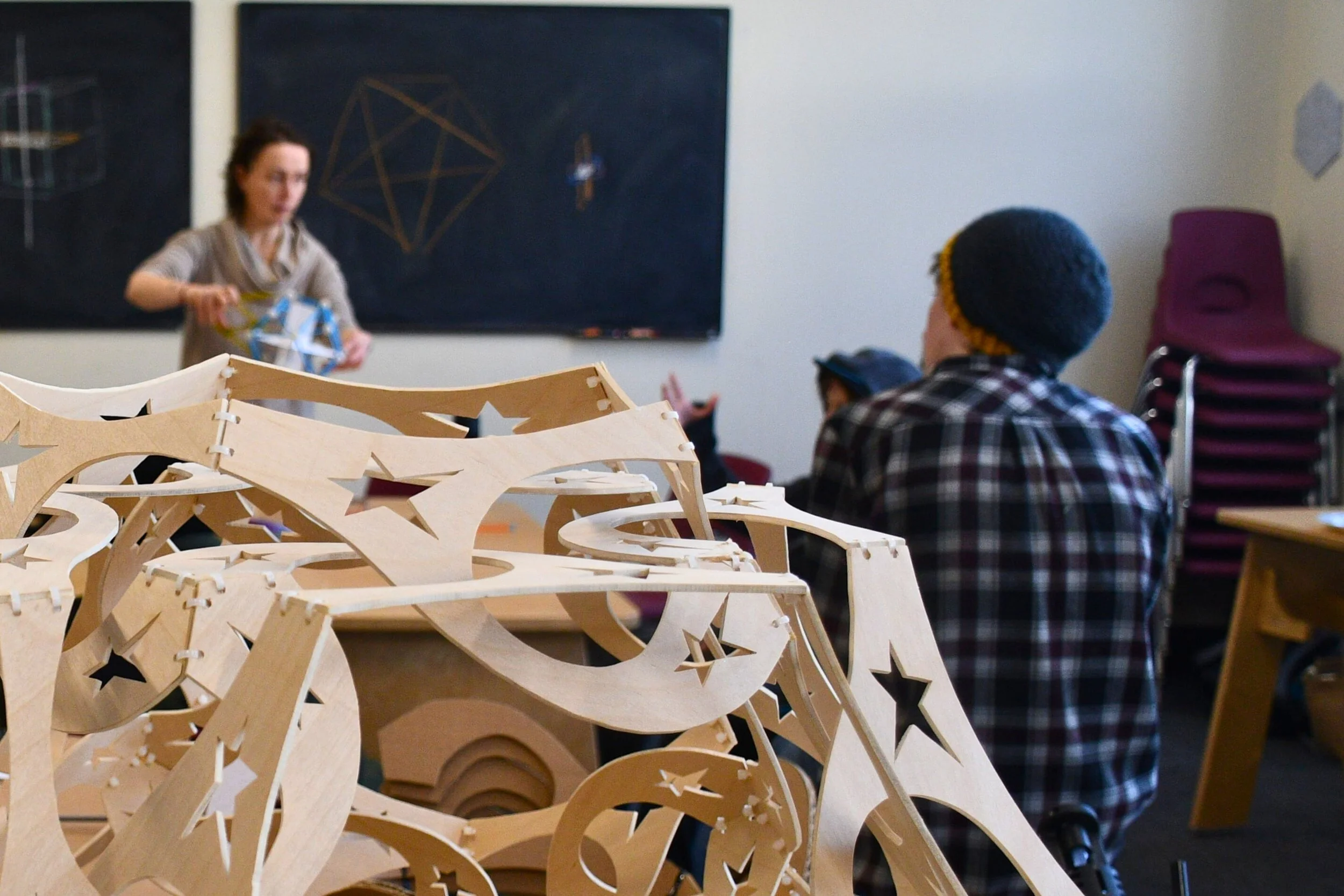
The study of projective geometry leads the student into an experience of mathematics beyond measurement, one of incidence, projection, polarity and duality. Through thought experience and constructions students develop their ability to reason spatially and navigate the realm of pure thought. Students create geometric drawings and bring an artistic interpretation to the theorems. First-hand experience of spatial relationships is gained through daily exercises of Bothmer gymnastics. Students also are introduced to the history and development of non-Euclidian geometries as well as the resistance to embracing them.Geometry
This class spends most of its time solving geometric problems – theoretical exercises in pure thought as well as practical exercises stemming from real-life situations. The students learn to see geometry all around them and develop a warm connection to it. They strengthen their ability to move and transform geometrical objects in their imagination. They further develop their reasoning and communication skills, especially their ability to understand other people’s thinking and to express their own logic. Most of the work on the logical part of geometry as well as on construction skills is done in Semester 1. Semester 2 is dedicated to applications of geometry to practical situations and performing calculations using algebra. The year is finished with the review of Algebra I.Algebra 2/PreCalculus
The aim of this course is to continue to develop and deepen the skills that the students acquired in Algebra I and Geometry, such that their confidence will grow when they encounter real problems that lend themselves to mathematical solutions. Emphasis is placed on independent recognition of solution pathways. The goal of the course is to ensure the student’ ability to continue their math education in Calculus the following year. Students approach mathematics as a human endeavor that calls on the capacity of sense-free thinking.Calculus
In this course students get a unique chance to synthesize all previous math knowledge they acquired to be able to solve problems stemming from real life. The main emphasis of this course is placed on forming a solid understanding of four main concepts of Calculus: limits, derivatives, and definite and indefinite integrals. Formulas of differentiation and integration are derived and proven thus providing students with a strong logical foundation and clarity. In addition to fluency with calculational modelling of physical situations students learn to operate with mathematical realities of infinity and discontinuity thus experiencing new horizons of higher mathematics. -
All students are placed into various offered math skills classes according to the results of their placement tests. Over the course of high school our students cover four years of math, culminating either at PreCalculus or Calculus.
Algebra 2/PreCalculus
The aim of this course is to continue to develop and deepen the skills that the students acquired in Algebra I and Geometry, such that their confidence will grow when they encounter real problems that lend themselves to mathematical solutions. Emphasis is placed on independent recognition of solution pathways. The goal of the course is to ensure the student’ ability to continue their math education in Calculus the following year. Students approach mathematics as a human endeavor that calls on the capacity of sense-free thinking.Calculus
In this course students get a unique chance to synthesize all previous math knowledge they acquired to be able to solve problems stemming from real life. The main emphasis of this course is placed on forming a solid understanding of four main concepts of Calculus: limits, derivatives, and definite and indefinite integrals. Formulas of differentiation and integration are derived and proven thus providing students with a strong logical foundation and clarity. In addition to fluency with calculational modelling of physical situations students learn to operate with mathematical realities of infinity and discontinuity thus experiencing new horizons of higher mathematics. -
Financial Markets
Light and Shadow Geometry
Sacred Geometry & Islamic Design
Sciences
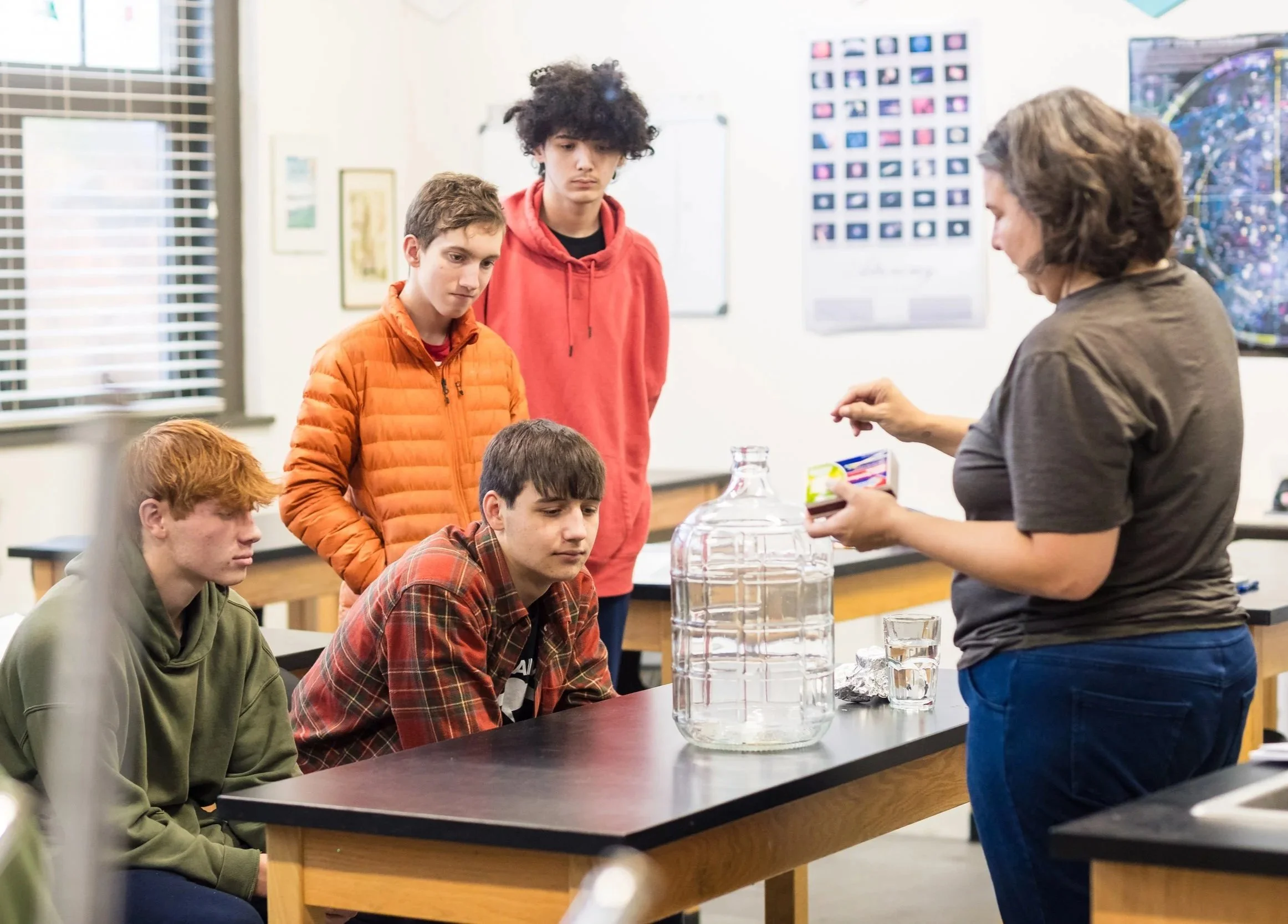
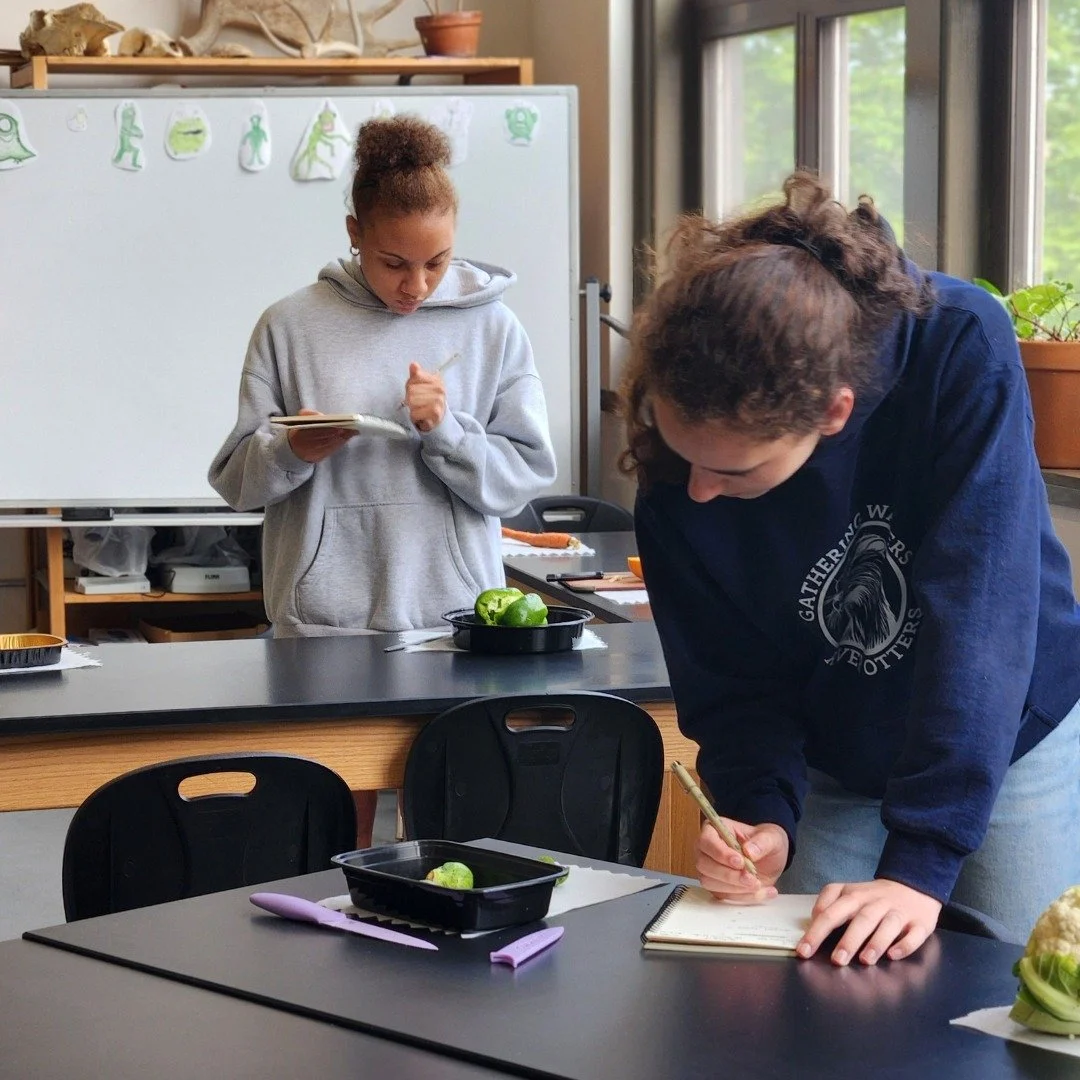
Waldorf high school science takes a phenomenological approach: students experience scientific principles before naming them. Each block begins with hands-on demonstrations and experiments, followed by individual observation, group discussion, creative presentations, and independent projects. Because the sciences run through all four years—not in isolated “biology year” or “chemistry year” tracks—students build a layered understanding of physical, chemical, and life sciences over time.
-
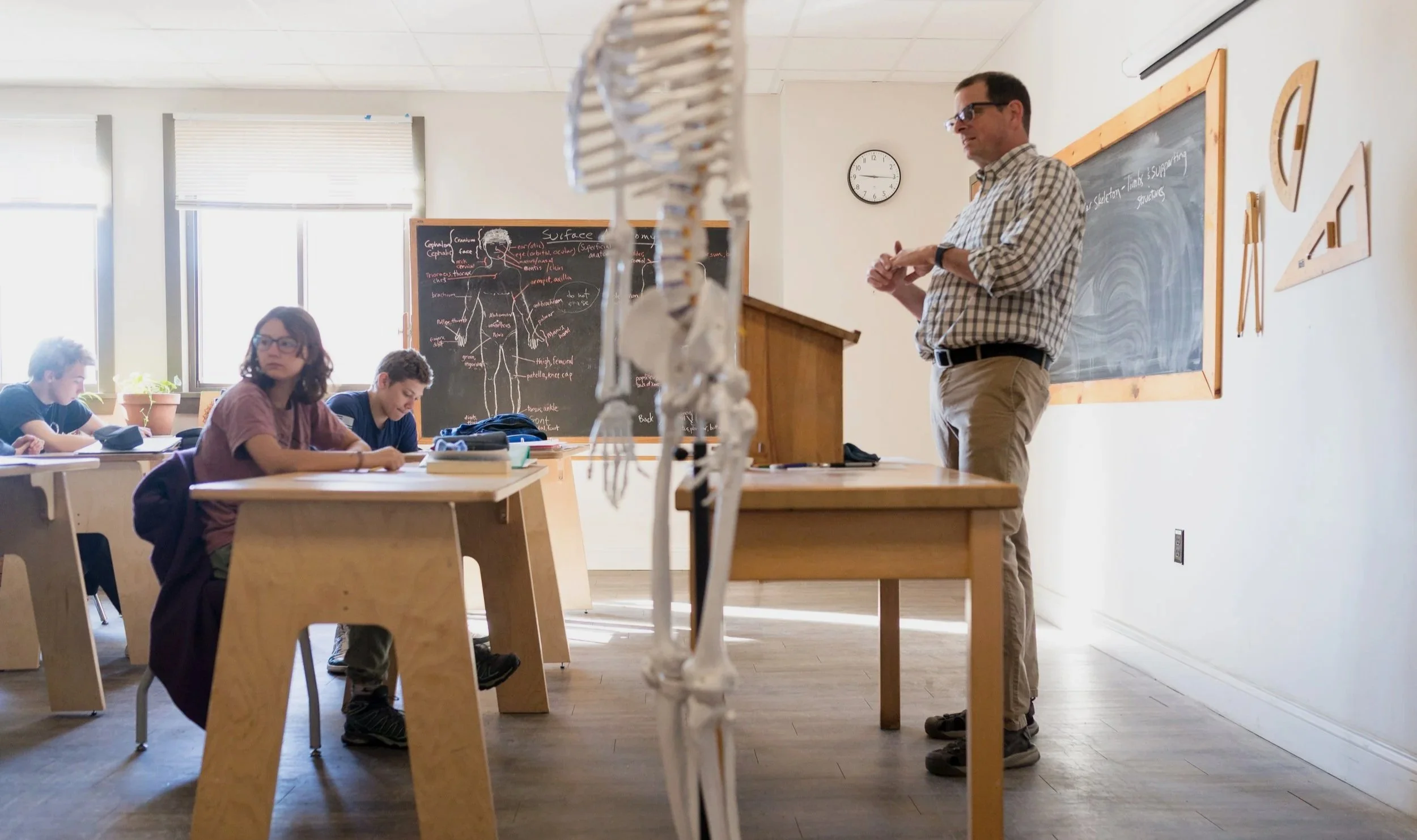
Life Science: Human Anatomy
In this course students study the anatomy of the different systems: sensory-nervous, digestive and excretory, circulatory, and reproductive.Physical Science: Plant Chemistry (Organic Chemistry)
Broadly defined, chemistry deals with the properties of substances and the changes they undergo. The focus of this course is the properties of the substances involved in plant respiration, the properties of substances making up plants, and the properties of plant products. By focusing on these properties, the changes surrounding plant growth and decay become apparent. This look into one of nature’s most amazing transformations (essentially from water and air into plant) lays a foundation for the tenth grade inorganic chemistry block where the focus is the lawfulness surrounding chemical change.Physics: Physics of Heat
In this course students explore some of the basic principles of Thermodynamics. Hot and cold are held up against each other and their effects on the physical world are considered. From this the Zeroth Law of Thermodynamics and the idea of temperature emerge. Heat, as an imagined entity that is exchanged as two objects come into thermal equilibrium, is defined mathematically. The math is used, for example, to figure out the specific heat of an unidentified rock. The utility of heat to produce work occupies the last third of the course. Pulling apart and trying to understand a lawnmower engine is an important part of this. This practical work is supported by discussions around the principles of the First Law of Thermodynamics.Earth Science: Geology
Students explore the story of geology by beginning with William Smith, whose careful observation of rock layers led to the first geologic map and the birth of modern geology. From there, they trace the development of geologic thinking through figures like Nicholas Steno, James Hutton, and Alfred Wegener while building an understanding of geologic time, stratigraphy, and the fossil record. Throughout the block, students study key concepts such as the rock cycle, erosion, sedimentation, metamorphism, deformation, volcanism, plate tectonics, mountain building, and geomorphology. Learning is grounded in local fieldwork—including trips to Mt. Monadnock, regional marble and slate formations, and nearby caves—where students observe features firsthand. Each student keeps a reflective geology journal, creates a hand-drawn Main Lesson book, completes assessments, and participates fully in discussions and field experiences. -
Life Science: Biology—Human Embryology
In the 10th grade we focus on the circulatory system, endocrine system and human reproduction and development in greater depth. We first consider arterial and venous circulation and the different cell types and fragments that constitute blood and their functions. The structure and dynamic role of the heart in human physiology are studied. Students examine their blood under the microscope, design heart rate experiments and type their own blood by testing for the presence of A and B antigens. Students are introduced to hormones and the endocrine system and examine the role of the pituitary gland and hypothalamus in maintaining homeostasis. The second part of the block focuses on human reproduction and development. The anatomy and physiology of reproductive organs is reviewed and then we follow the process of development from a fertilized ovum through birth. Students are encouraged to consider the potential of a single cell to differentiate into the specialized tissues in organs so well adapted to their specific functions. In addition, the concepts of pluripotency and stem cell are introduced and stem cell research is presented from a scientific approach, while students consider the moral and ethical issues involved in this research. Students investigate a health topic of their choice (diseases, medical technology, music therapy, etc.) and write a research paper with citations. They present their topic to the class in the last week of the course.Physical Science: Chemistry Acids, Bases, and Salts
In this course students follow the great paradigm shift that occurred at the inception of modern chemistry at the turn of the 19th century. By using objective measures (such as mass) students are able to quantify chemical reactions and arrive at some of the laws of chemical change including the Law of Conservation of Mass and the Law of Definite Proportions. Lab work gives students an appreciation for the careful experimentation practices and insights of those who were the original discoverers. The students eventually arrive at the realizations of early modern chemists like Dalton; that elements unite in very particular ways to produce the range of compounds that make up our physical world. With this idea in mind and a list of chemical symbols students are in a position to write balanced chemical equations for the reactions observed in class (“stoichiometry”). A major component of the course is an individual project that has students observing, recreating, and trying to understand a chemical reaction that occurs in the world around them. It entails all aspects of the course – carefully listing properties of reactants and products, quantifying as much as possible, getting to the important substances (the reactants and products), and creating a chemical equation describing the reaction they observed.Physics: Principles of Mechanics and Motion
In this course students are met with an orderly world; a lawful universe. They discover and apply simple mathematical equations and rules of logic in an attempt to describe how the universe works. The result is a set of rules that allow you to work out A when you know B; blueprints for a deterministic universe. Topics include simple machines, mass, center of gravity, motion in a straight line, inertia, force, acceleration (a=f/m), rotational motion, gravity, projectile motion, and celestial kinetics. Skills that are developed are objective observation, modeling the physical world using mathematics, the scientific approach, and practical skills as they make machines of their own.Earth Science: Meteorology/Hydrology, Weather and Climate
Students are introduced to atmospheric phenomena and water circulation on and near the earth’s surface. We will examine the interplay of properties such as density, temperature and pressure with the forces of gravity and the Coriolis “force” to build a picture of the atmosphere and terrestrial water. We will explore various forms of precipitation, bodies of water and clouds and look at patterns in global wind and ocean currents. Week three of the block will be spent observing weather and ground water flow in the White Mountains in northern New Hampshire. This will give us the unique opportunity to experience very clear and potentially extreme examples of some of the phenomena that we will have examined in the class room. Students will make daily entries into a weather journal diligently noting their observations. The Late Summer/Early Autumn weather will give students opportunity to observe/experience the atmosphere in its most active phase. -
Life Science: Cell Biology
Cell theory is introduced and students identify differences between plant cells and animal cells (their own cheek cells) under the microscope and in prepared slides. Correct microscopy and staining techniques are emphasized. Cell organelles and their functions are characterized and the students examine chromosomes during cell division in onion root tip. The stages of mitosis and meiosis are studied. In addition, they study Gregor Mendel’s work with inheritance in garden peas, and the principles of independent assortment, dominance, incomplete dominance, codominance, and sex-linked inheritance. Modern genetic theory is introduced and students analyze genetic problems from plants, animals and human studies.Biology: Botany
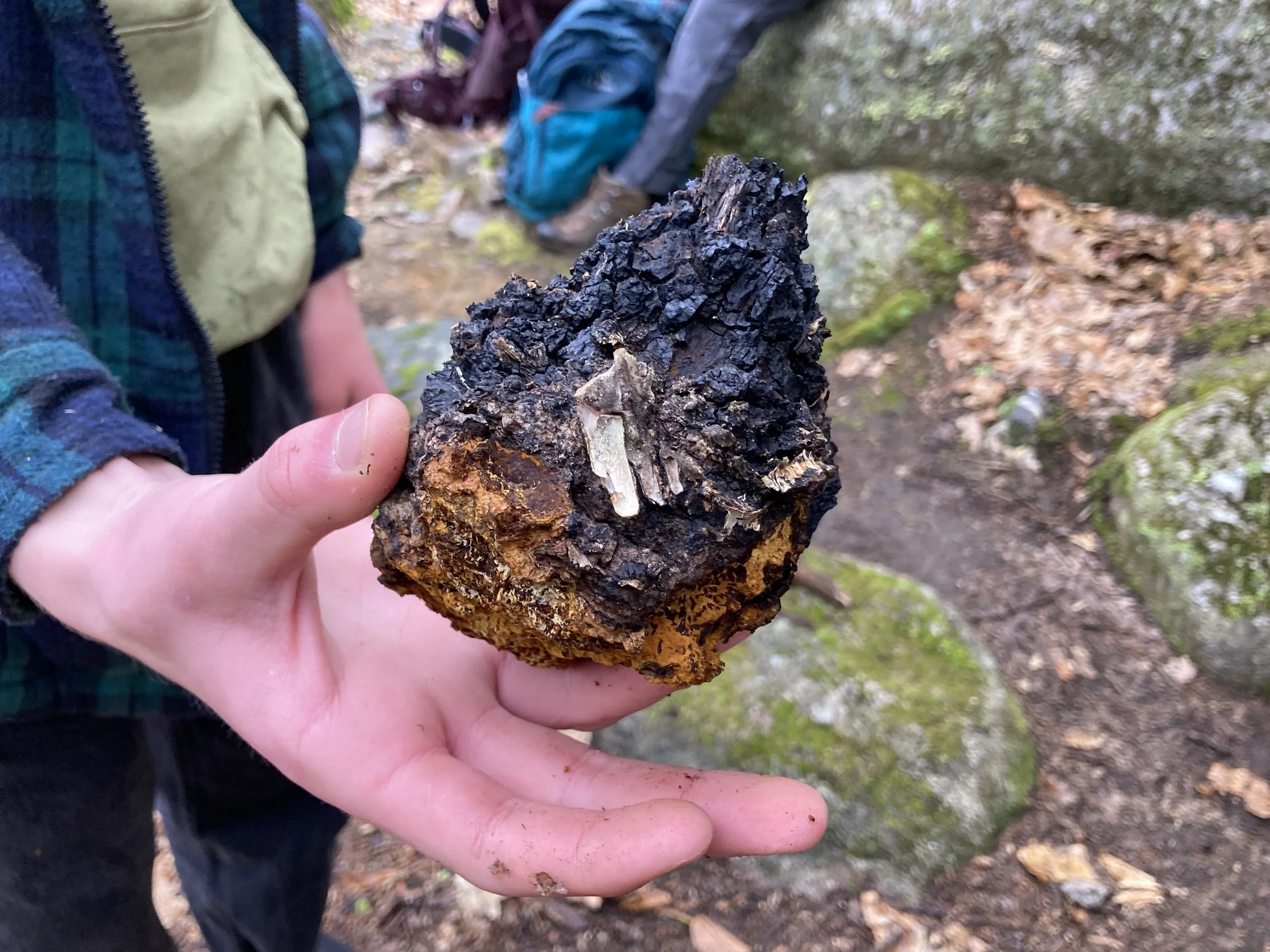
Students consider the classification and nomenclature of living organisms including the taxonomy system developed by Carolus Linnaeus in the 18th century and the present classification system of kingdoms: Monera (Eubacteria and Archaebacteria), Protista, Fungi, Plants and Animals. They look at the incredible diversity and form of plants, focusing on the ferns, equisetum, club mosses, gymnosperms and angiosperms. The emphasis is on reproduction, analyzing different forms of flowering and seed dispersal. Students become proficient in using a dichotomous key to identify native wildflowers and illustrate their own wildflower field manual. Students research a medicinal plant and prepared a presentation that includes an overview of the form, growth and habitat of the species as well as the healing qualities of the substances derived from the plant.Physical Science: Atomic Chemistry
This course focuses on two questions: (1) Is the world made up of tiny, invisible bits? And (2) If so, what are they like? Students come to their own answer to the first question by looking deeply into experiences they have already had and by considering some new experiences they have in class. Although it is easy to ascribe an atomic explanation, it is recognized that this is not the only explanation. The historical development of the modern atomic theory is presented as an accompaniment to the students’ own explorations. The question of the nature of atoms is approached historically, using experiment, and by exposure to modern technologies that are based on modern subatomic models. Students will make a trip to UMass Lowell where they tour a nuclear reactor lab and an electron microscope lab. Student projects include an essay on whether atoms are real, an investigation of a chemical element of choice, and an artistic presentation inspired by the strange qualities of the modern electron.Physics: Electricity and Magnetism
In this course students are given the chance to form meaningful relationships with the essentials of electricity and magnetism. They develop the tools that will allow them to further navigate this important topic (due to the prevalence of electronics and electromagnetic radiation) in the future. Students approach electricity and magnetism by breaking down the phenomena they experience into their essential parts and forming working models. Their own investigations are supplemented by historical perspectives (e.g. the findings and ideas of Faraday, Franklin, et cetera). An important component of the students’ work is to understand some electrical device at their disposal by pulling it apart and analyzing the components. Subject areas include electrostatics, chemical batteries, electrical circuits, electric and magnetic fields, magnetism, the electric motor, and electric generators. -
Biology: Zoology and Evolution
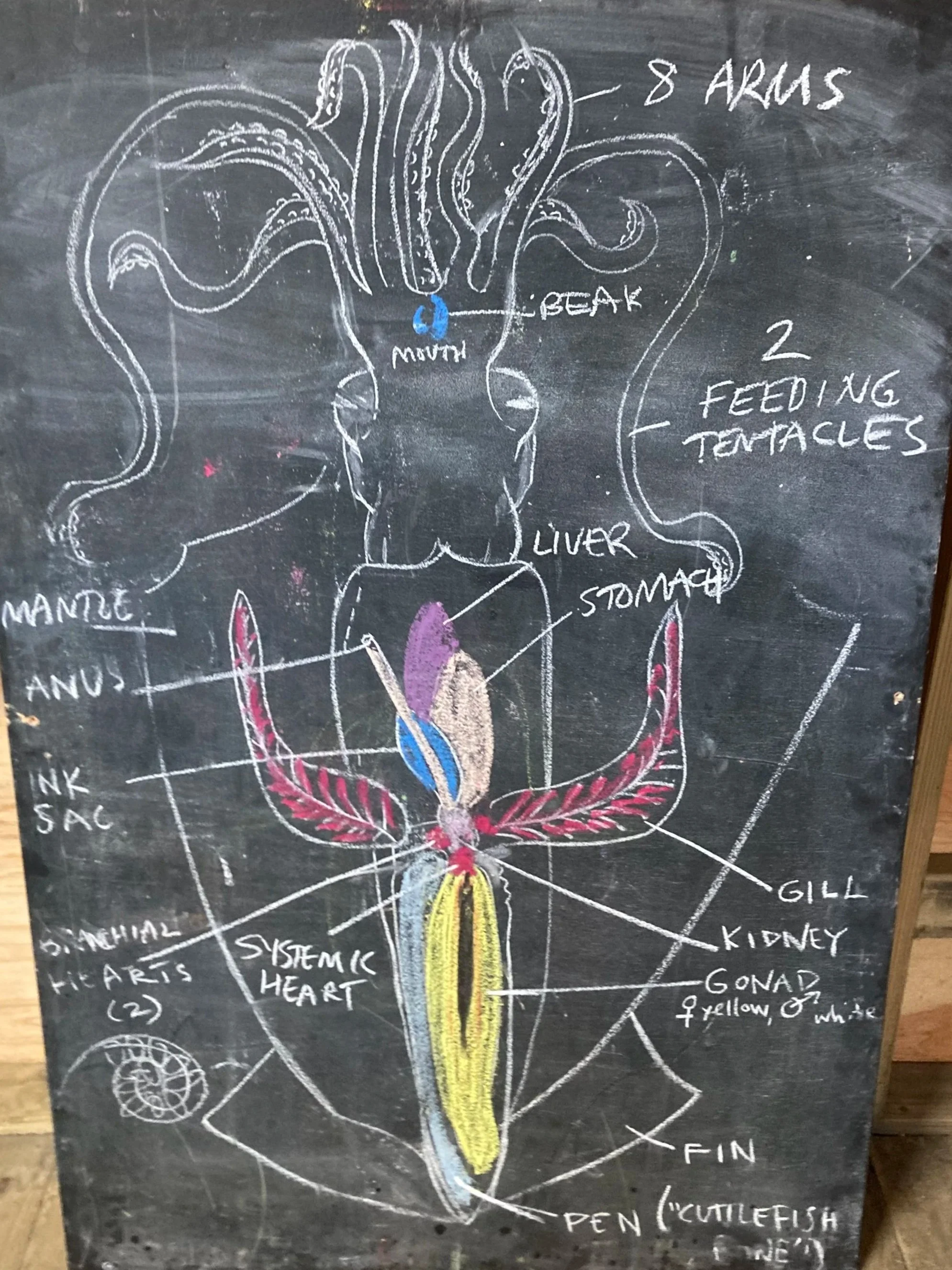
In the senior biology course, students study anatomy, physiology and behavior of the major animal phyla. They will travel to Hermit Island Maine for a weeklong study of marine invertebrates and coastal ecology. Students observe the characteristics, qualities and the physiological processes of the invertebrate in their natural habitats. Every morning for two hours students tide pool along the algae covered rocky coast observing sea stars, sea anemone, tunicates, crabs and other invertebrates in their natural habitats. Students research an animal species and prepare an oral presentation that includes an overview of the behavior, anatomy and physiology and habitat of the species in relationship to the animal’s environment. We then consider the observations of the natural world and subsequent questions that led to the development of the theory of evolution in the 19th Century by Charles Darwin and others. We discuss new observations and investigative tools, especially those from the study of inheritance, which contributed to the twentieth century synthetic theory of evolution. We examine and contrast the form of animals and of man. Finally, students are encouraged to contemplate the role man plays in protecting animal species and our unique place in the world.Physical Science: Organic Chemistry
Students study processes and substances in living organisms, with a focus on synthetic and metabolic activities. The properties of the chemicals of life- lipids, phospholipids, esters, steroids, nucleic acids and enzymes and other proteins, will be investigated in the lab and in readings. We thoughtfully consider and discuss the nature of these substances and the transformational processes in plants, animals and humans. In this course we also study transcription, translation, and the field of epigenetics, as well as the amazing process of protein folding. Students will be asked to find relationships between an organism and its physical environment and to understand how the organism transforms these materials, and lastly to explore the role of these activities in the biosphere.Physics: Optics and Waves
Students explore the nature of light and to take a peek into the physiology and psychology of vision. In working with light itself students explore various theories and develop their own informed views. They discover that light escapes our attempts to understand it via analogy; that perhaps it should simply be understood in terms of the phenomena it displays. Reflection, refraction, diffraction, color theories, lenses, Maxwell’s Equations, and special relativity are all topics that receive considerable attention. The last half of the course deals with our involvement as cognizant human beings in the process of vision. Students discover for themselves that their minds are active participants in the process of building up pictures of the world during vision. A current theory of perception is presented (Bayesian model of perception) and a range of visual and multisensory illusions are explored in light of this theory and considering the experiences that are had in and out of class. We learn about applications in optical instruments such as corrective lenses, cameras, telescopes--ideal for integrating numerous topics in this block. -
Coral Reef Exhibit/Oceanography
Fine & Practical Arts
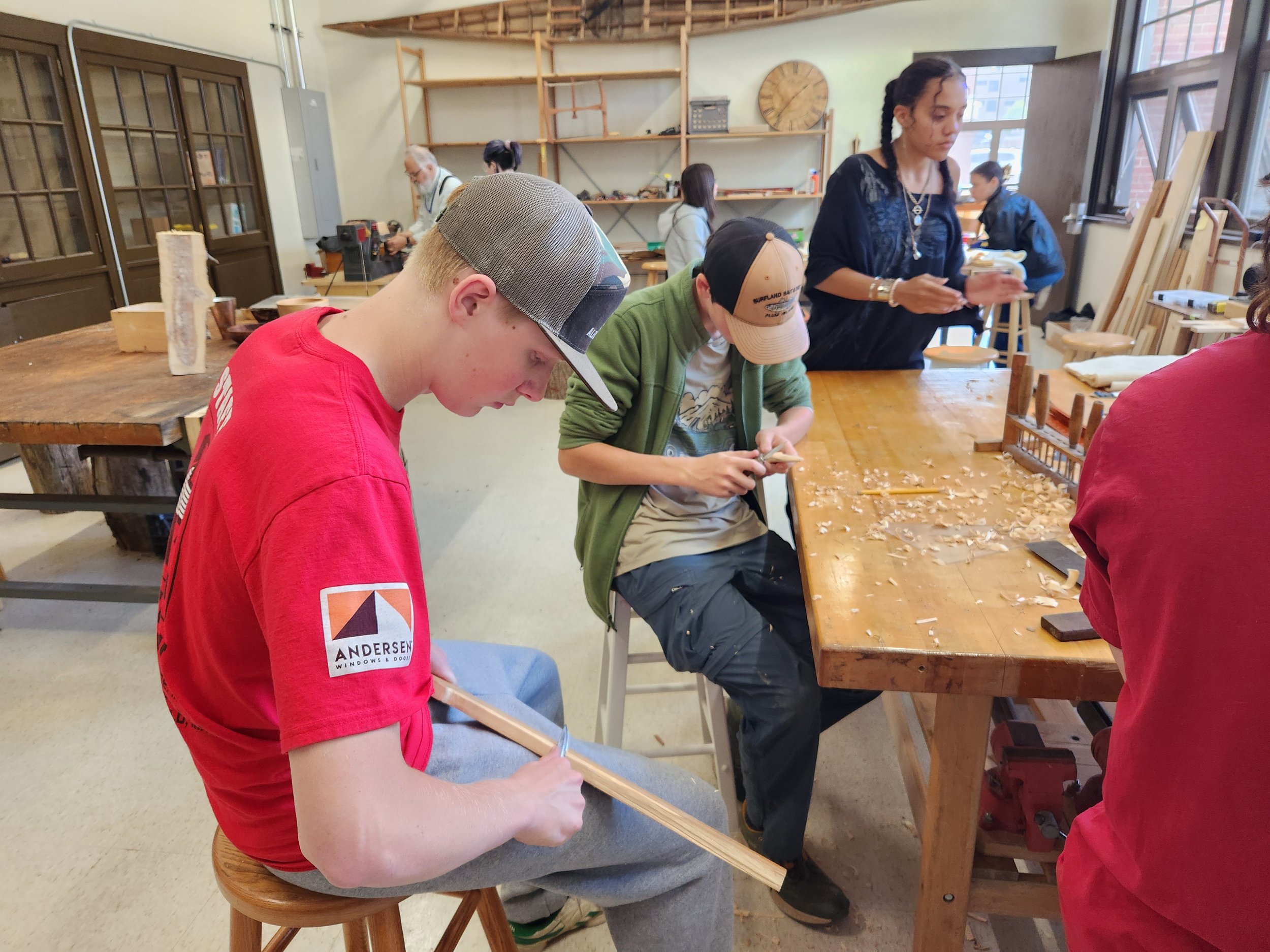
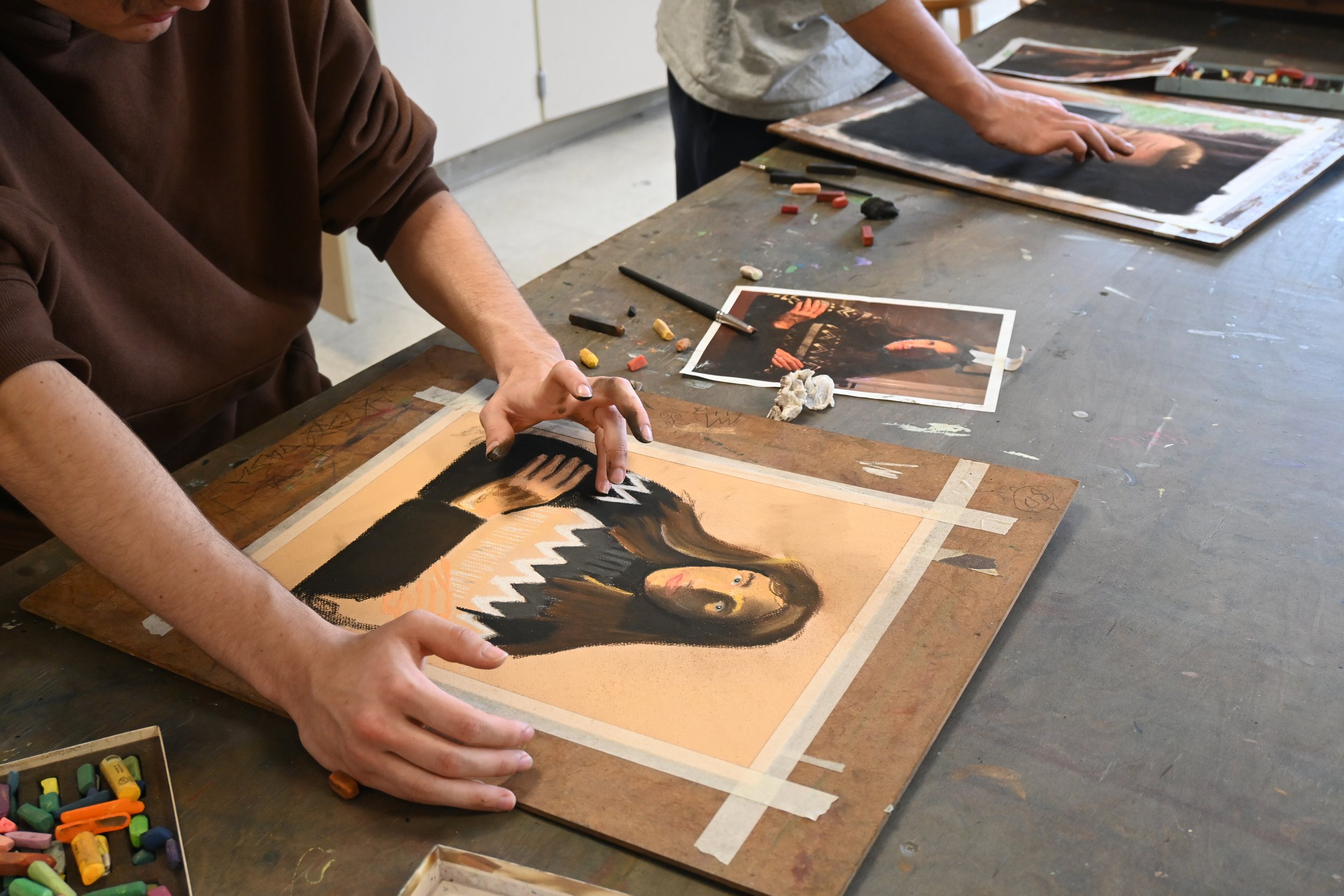
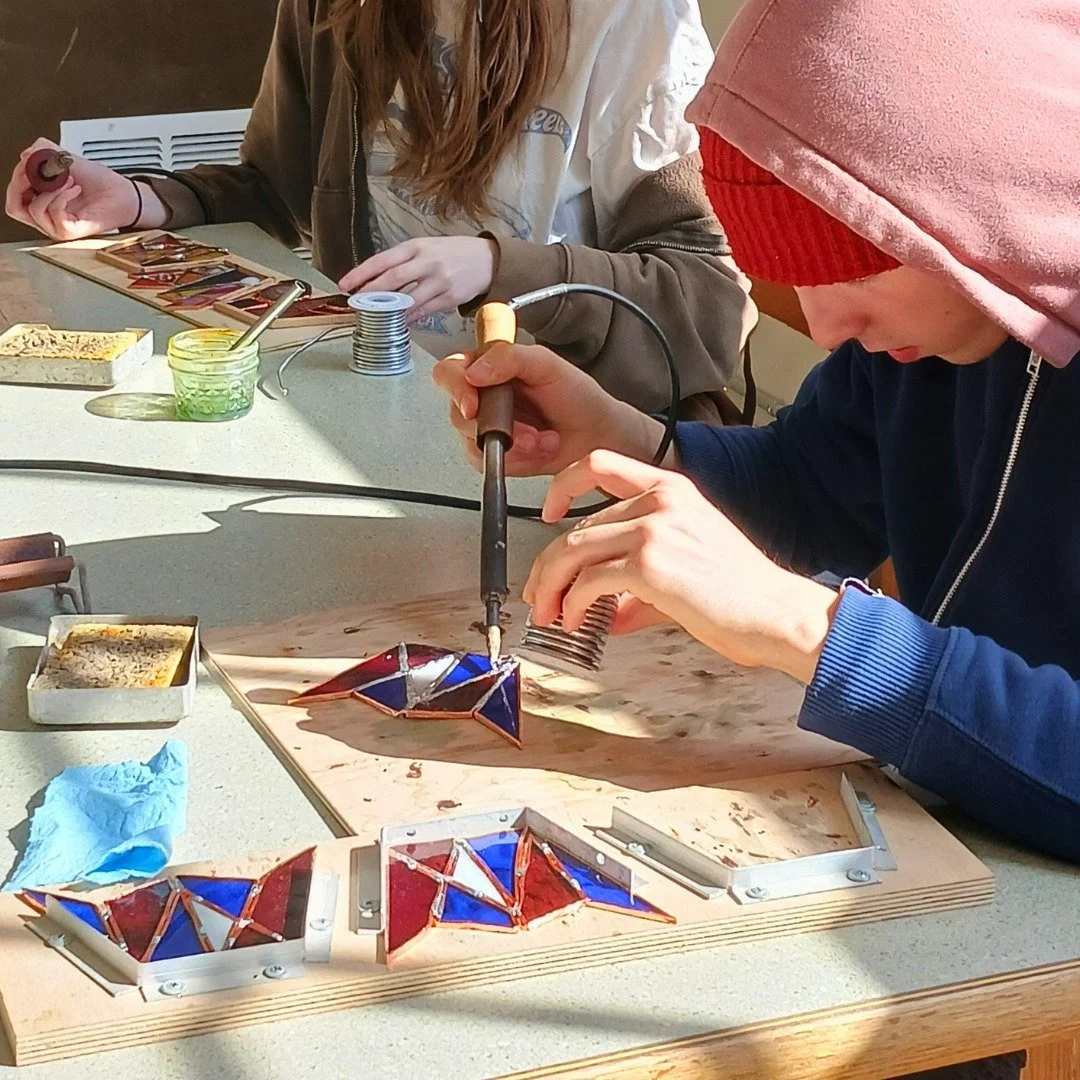
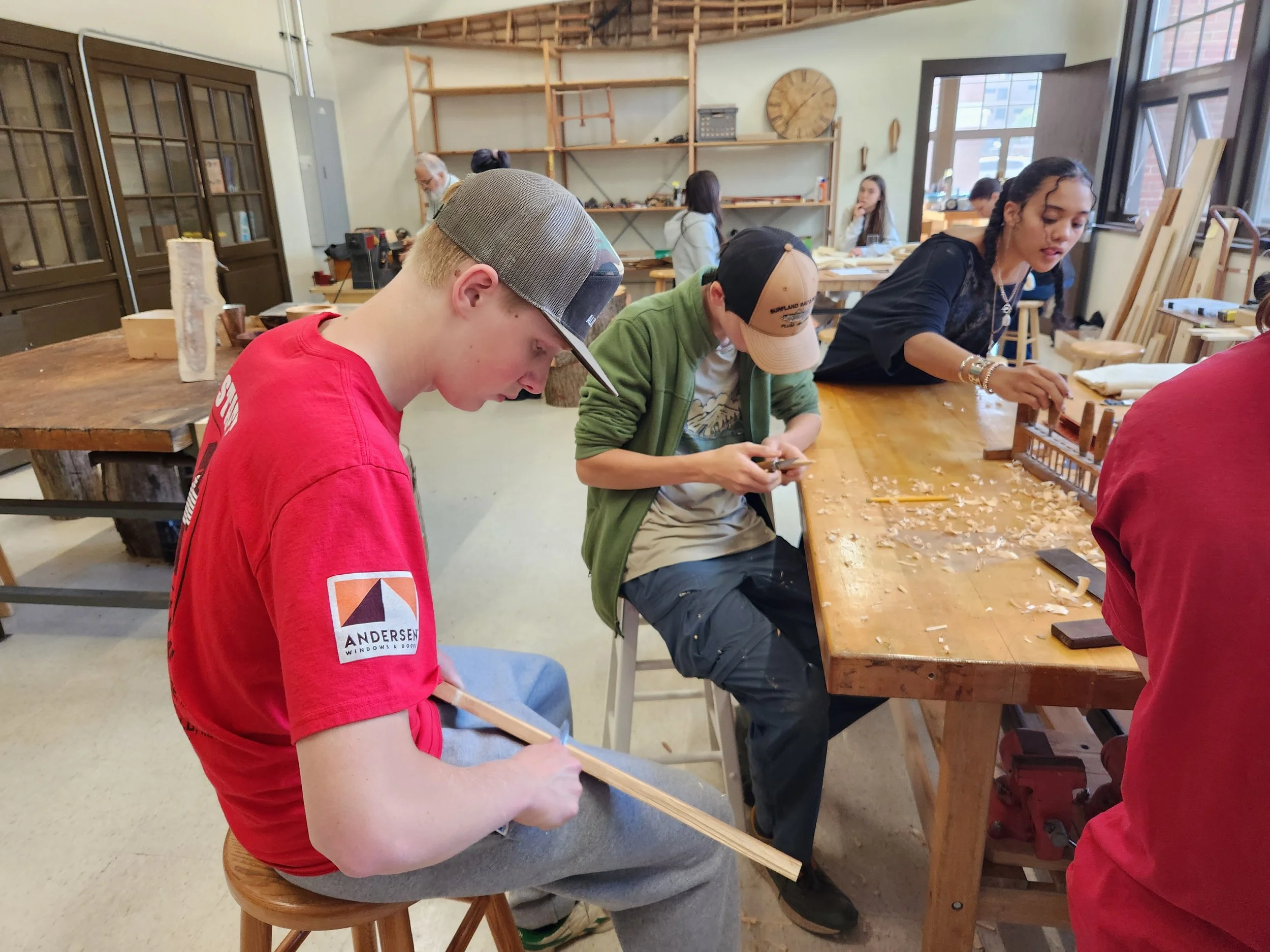
In high school, the Fine and Practical Arts help students develop strong skills in observation, craftsmanship, and creative problem-solving. Through painting, drawing, sculpture, handwork, and woodworking, students learn to work with focus, refine their techniques, and complete well-made projects. These courses build confidence, independence, and an appreciation for thoughtful, hands-on work.
-
The high school art curriculum leads students through a rich four-year progression that builds skill, observation, and cultural understanding. Students begin by exploring why humans create art, studying major artistic periods from prehistory through the Renaissance and visiting the Museum of Fine Arts to see these works firsthand. Alongside this, they develop strong drawing foundations through detailed black-and-white studies of form, light, and shadow inspired by master artists.
As they advance, students work deeply with color—first through exercises grounded in Goethe’s color theory, then through Painting from Nature, where they learn watercolor and oil techniques, study color mixing, and spend significant time painting outdoors. Their sense for how art reflects human experience expands in the History of Architecture block, which traces the evolution of building forms and asks students to document and interpret key developments through drawings and a culminating project.
The program culminates in Self-Portraiture, where students study facial proportion, refine observational drawing, and complete a final oil-painted self-portrait that brings together accuracy, expression, and personal style.
Across all courses, students learn to look closely, work skillfully, and understand art as a window into both the outer world and the inner life—core aims of Waldorf education.
-
-
-
Masks & Makeup
Crankie Movies
Mini Animal Crafts
Mandalas
Upcycling, Mending, and Sewing
Documentary Filmmaking
Music & Theater
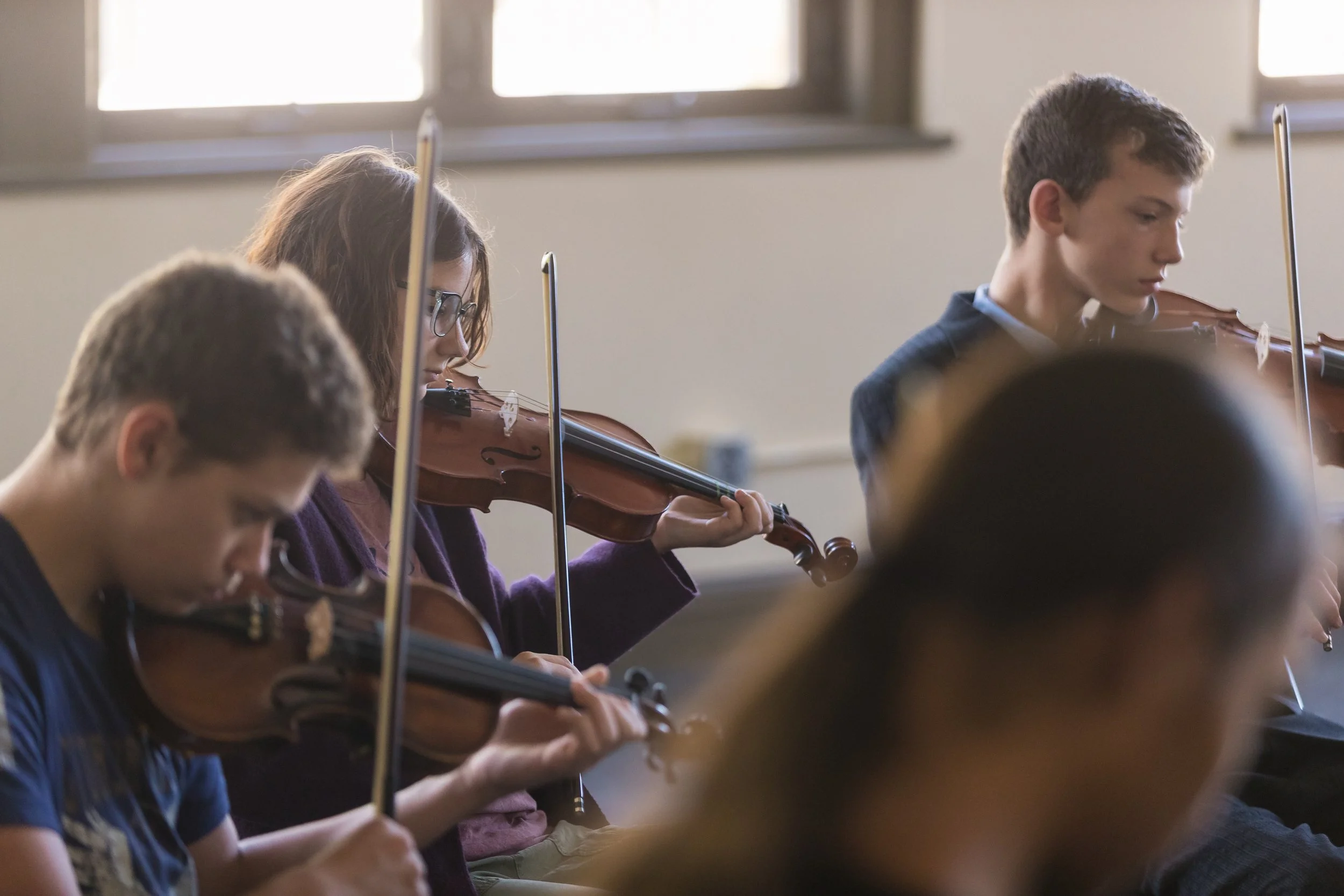
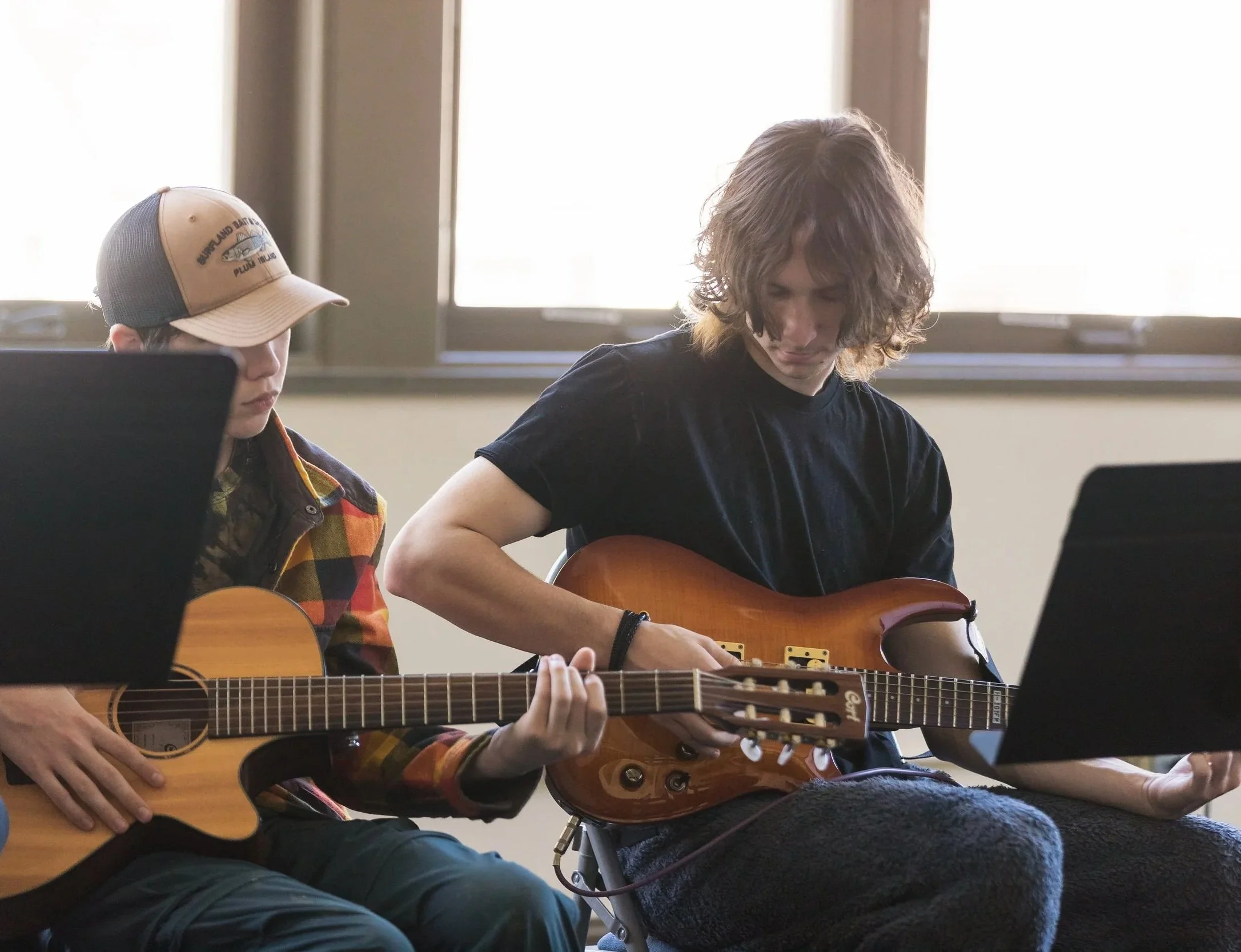
Music and theater remain an essential part of high school life in a Waldorf-inspired school. All students sing, play instruments, and collaborate in ensembles, building confidence and artistry—no matter their skill level. Theater gives students a chance to step into new perspectives through class plays, movement, and improvisation. These creative experiences strengthen public speaking, teamwork, and self-expression—skills they carry into every part of their future lives.
-
-
-
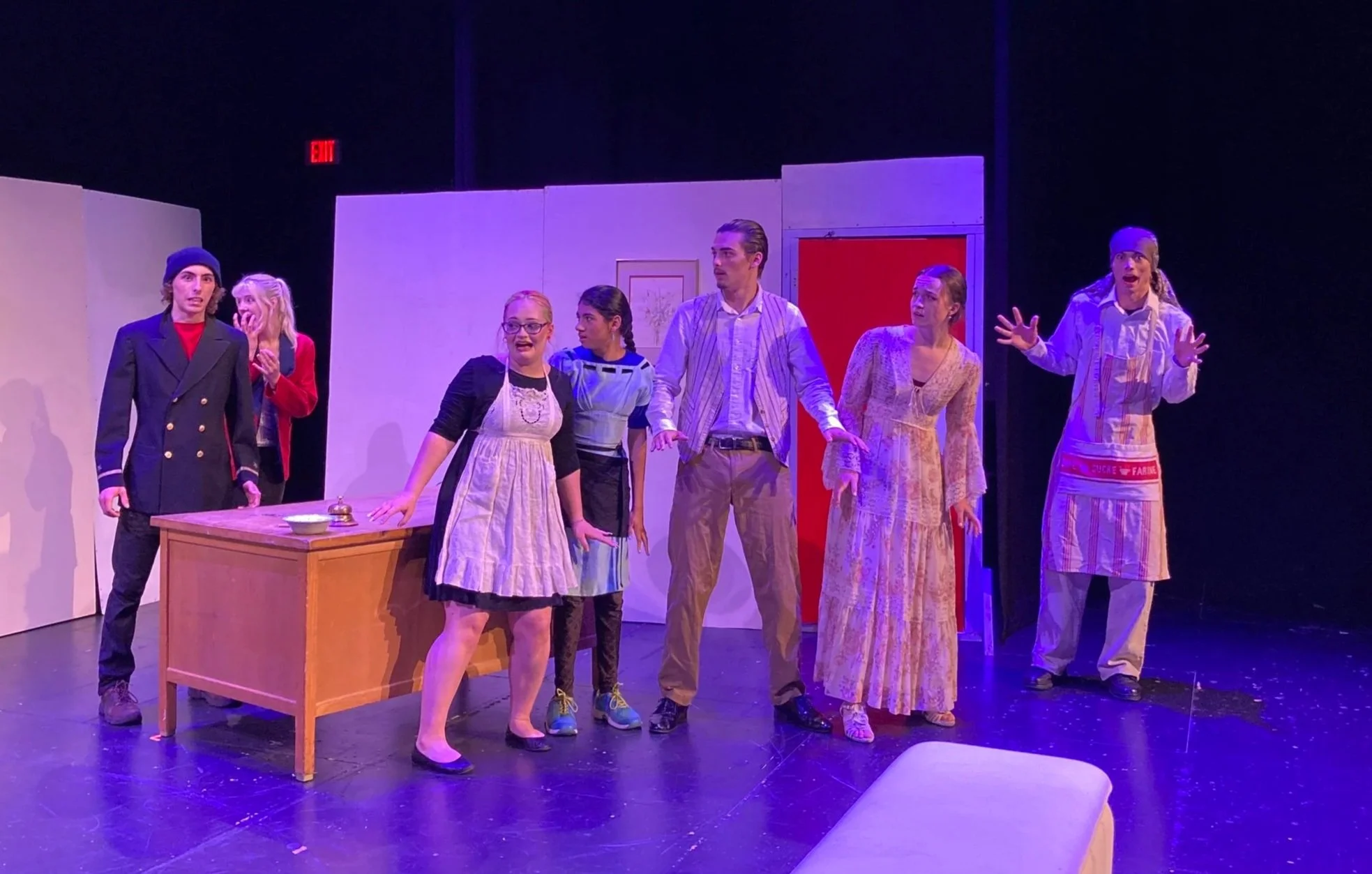
Theater is a cornerstone of the Waldorf high school experience—an artistic, social, and deeply human endeavor that supports adolescents in developing confidence, imagination, and individuality. In both 10th and 12th grades, students participate in a full play production, an intense but rewarding 3½-week process that brings an entire class together in shared creative work.
Drama invites students to step beyond themselves, inhabit archetypal characters, and discover truths about human nature through the “illusion” of the stage. It is inherently collaborative, requiring trust, humor, flexibility, and commitment. Students cast themselves, engage in exercises that strengthen the ensemble, and take on responsibilities that grow significantly between 10th and 12th grade—from acting and improvisation to stage management, costumes, props, lighting, and sound.
By producing a play as a community, students experience the joy of collective artistry and the satisfaction of accomplishing something uniquely challenging. Theater becomes both a pedagogical tool and a rite of passage, helping young people meet the developmental tasks of adolescence with creativity, courage, and a strong sense of belonging.
-
-
Acrobatics & Physical Theater
Morris Dancing
Commedia dell'Arte
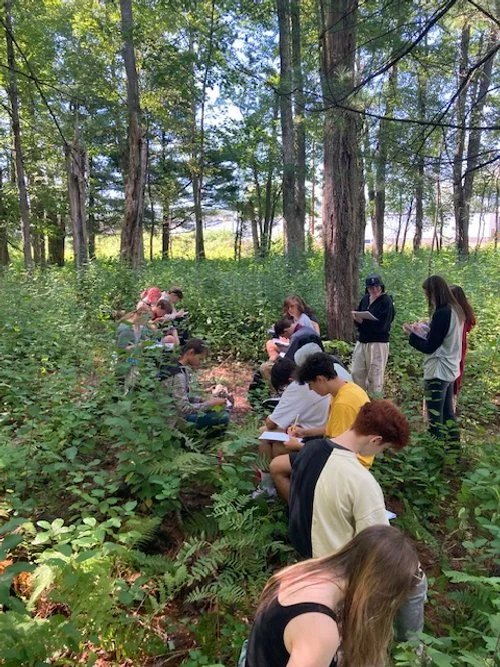
Learning to Lead from Within
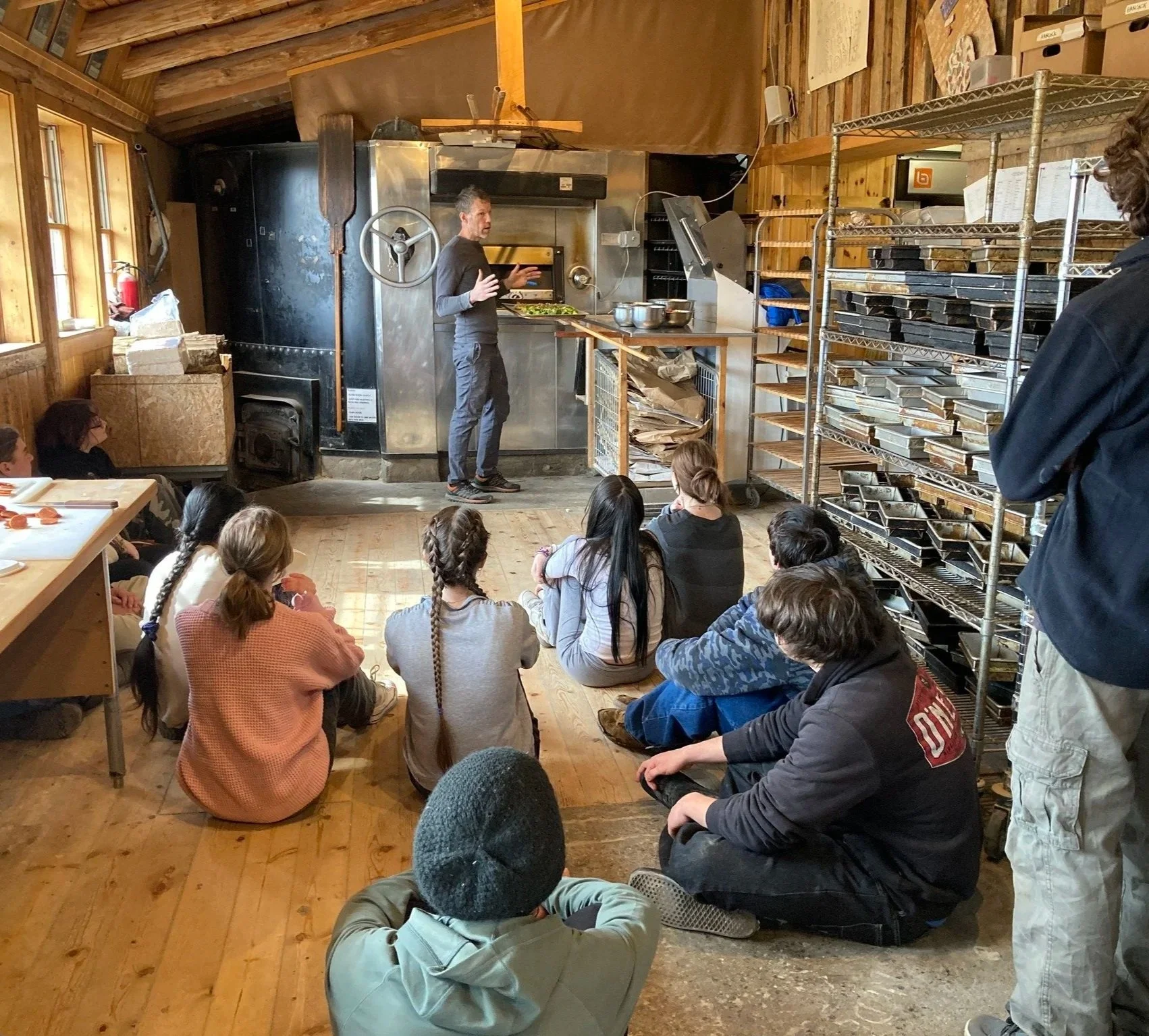
At Gathering Waters, students practice the kind of awareness that helps them look beyond their own perspective and understand what a moment or a group truly needs. Through experiences and stories that illuminate courage, empathy, and practical skill, they build genuine self-leadership: the ability to slow down, read a situation with clarity, and respond with care.
Over time, students learn to hold both their own goals and the needs of others, growing into young people ready to meet the wider world with responsibility, compassion, and confidence.
-
-
-
Our high school computer science program helps students understand the technology that shapes modern life—both how it works and how it affects human thinking and connection.
9th Grade: Computer History, Structure & Anatomy
Ninth graders explore the evolution of communication technologies, from early semaphore systems to today’s laptops and smartphones. They study what a computer is—a programmable machine built from logic gates, memory, and processing hardware—and learn how binary numbers, circuits, and components such as displays, keyboards, networks, and radio transceivers function. Alongside this practical understanding, students examine how digital tools shape perception, communication, and community. This course fulfills the New Hampshire technology requirement and aligns with NH Computer Science Standards I and II.11th Grade: Computer Programming
In eleventh grade, students shift from understanding machines to creating with them. They learn HTML and JavaScript, study core principles of logic and programming structure, and apply these skills to design and build an original interactive game within a web page. Assessment is based on skill development, thoughtful participation, and the creativity and effort demonstrated in their final project.Together, these courses give students a grounded, meaningful relationship with technology—its inner workings, its human impact, and its creative possibilities.
-
Student Council gives teens a real voice in shaping school life. Representatives work together to listen to their classmates, plan events, and bring ideas forward that support the well-being of the whole community.
It’s a place to practice leadership, collaboration, and thoughtful decision-making. Through their work, Student Council members help create a vibrant, connected school culture that reflects the values of the student body.
-
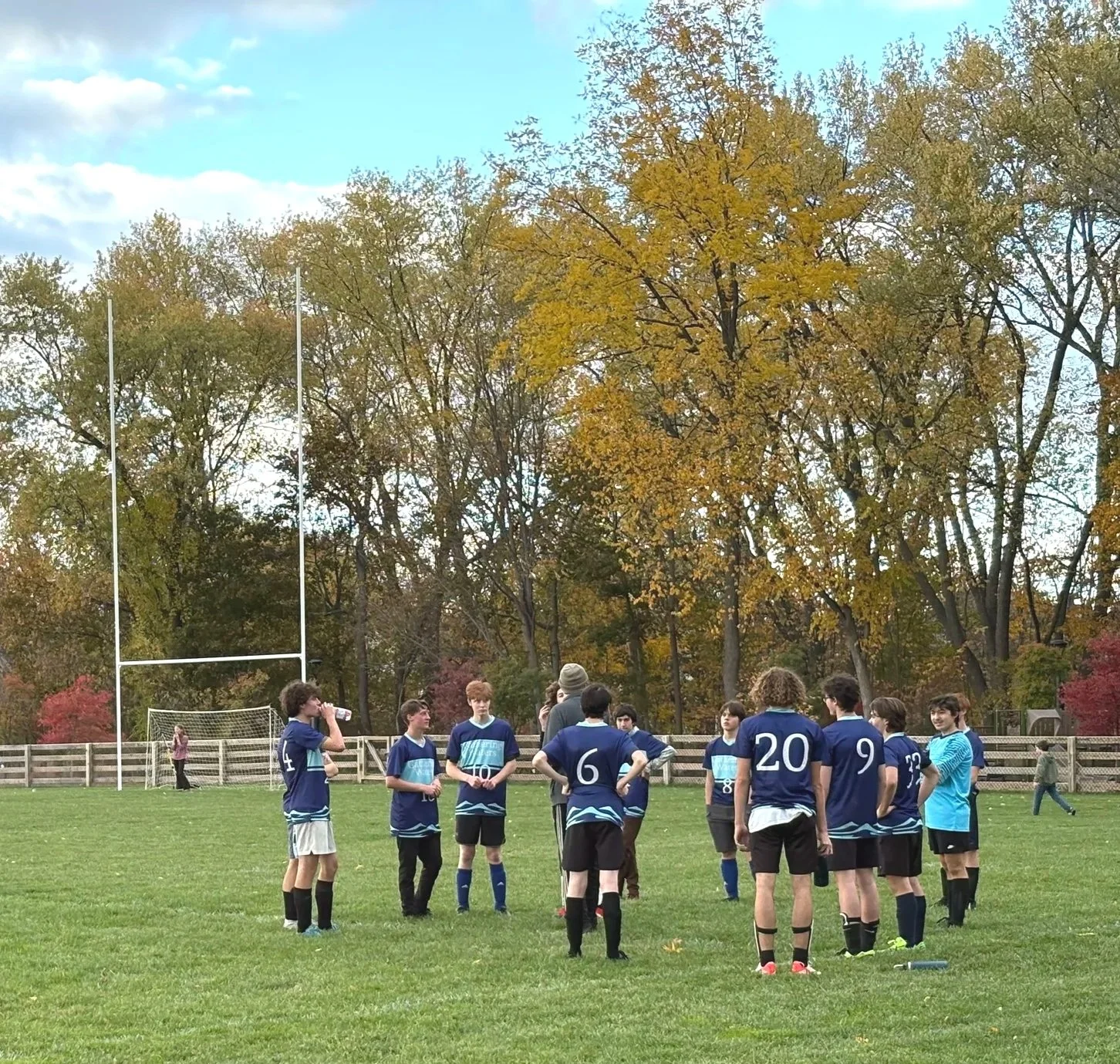
Athletics and clubs are all about healthy movement, friendship, and finding joy in shared interests.
Our sports focus on teamwork, skill-building, and staying active. Students of all experience levels are welcome.
Soccer
Basketball
Track & Field
Clubs like Math Club and Dungeons & Dragons give students space to explore what excites them, try new things, and connect with peers who share their passions. Students are always welcome to form a new club!
-
Community service is an integral component of the curriculum and essential for students to enter into new relationships with their community, especially neighboring local businesses and service organizations. In order to connect with and honor the wider world around them, over their four high school years Gathering Waters students fulfill a minimum of 30 hours of community service with organizations of their choice.
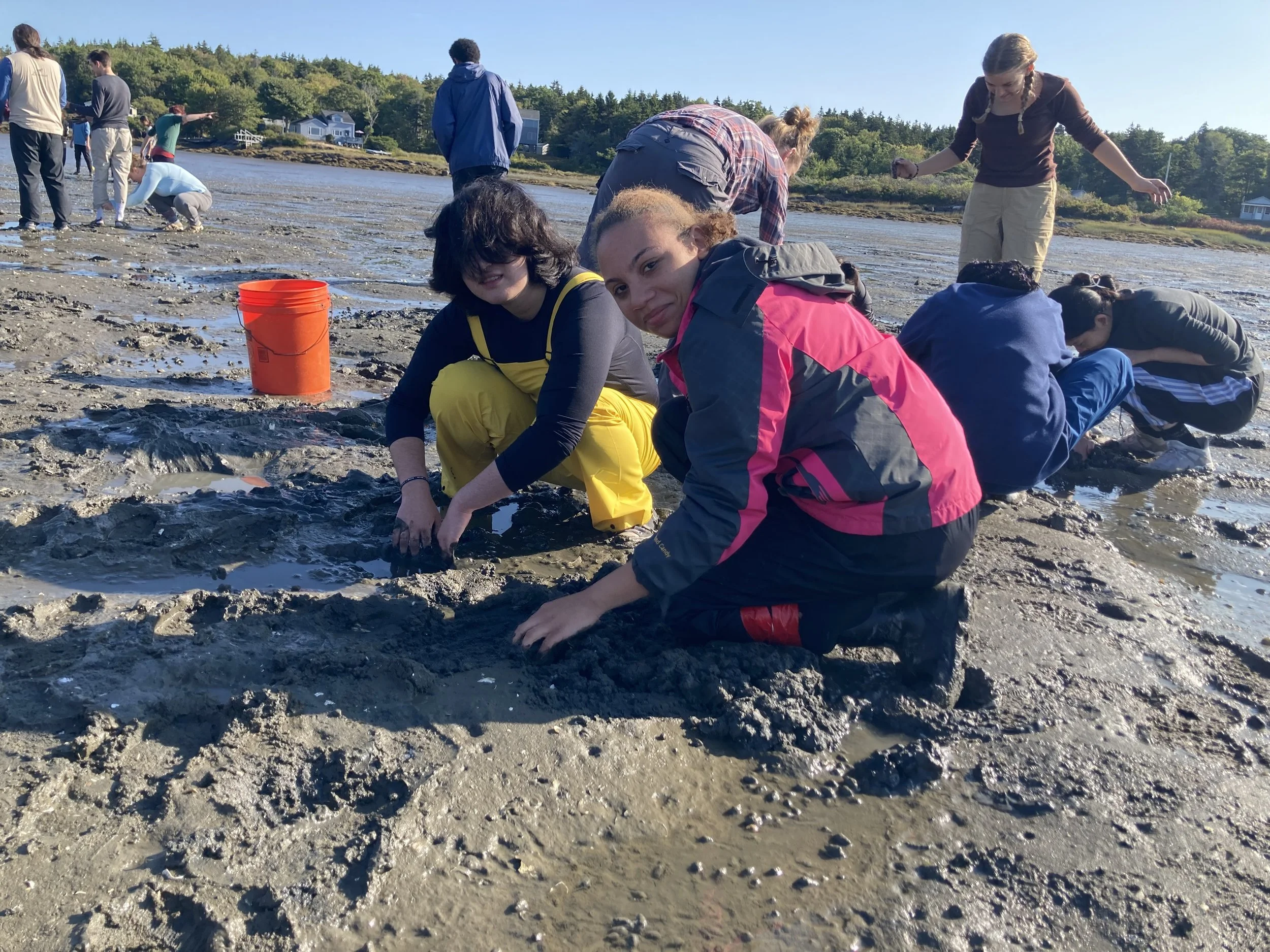
A service component is also part of several of our courses, for example, visiting a special needs community in the Parzival block, tending the grounds of a Benedictine Monastery on the Medieval History trip, or cleaning beachfront on the Maine coast Zoology trip.
-
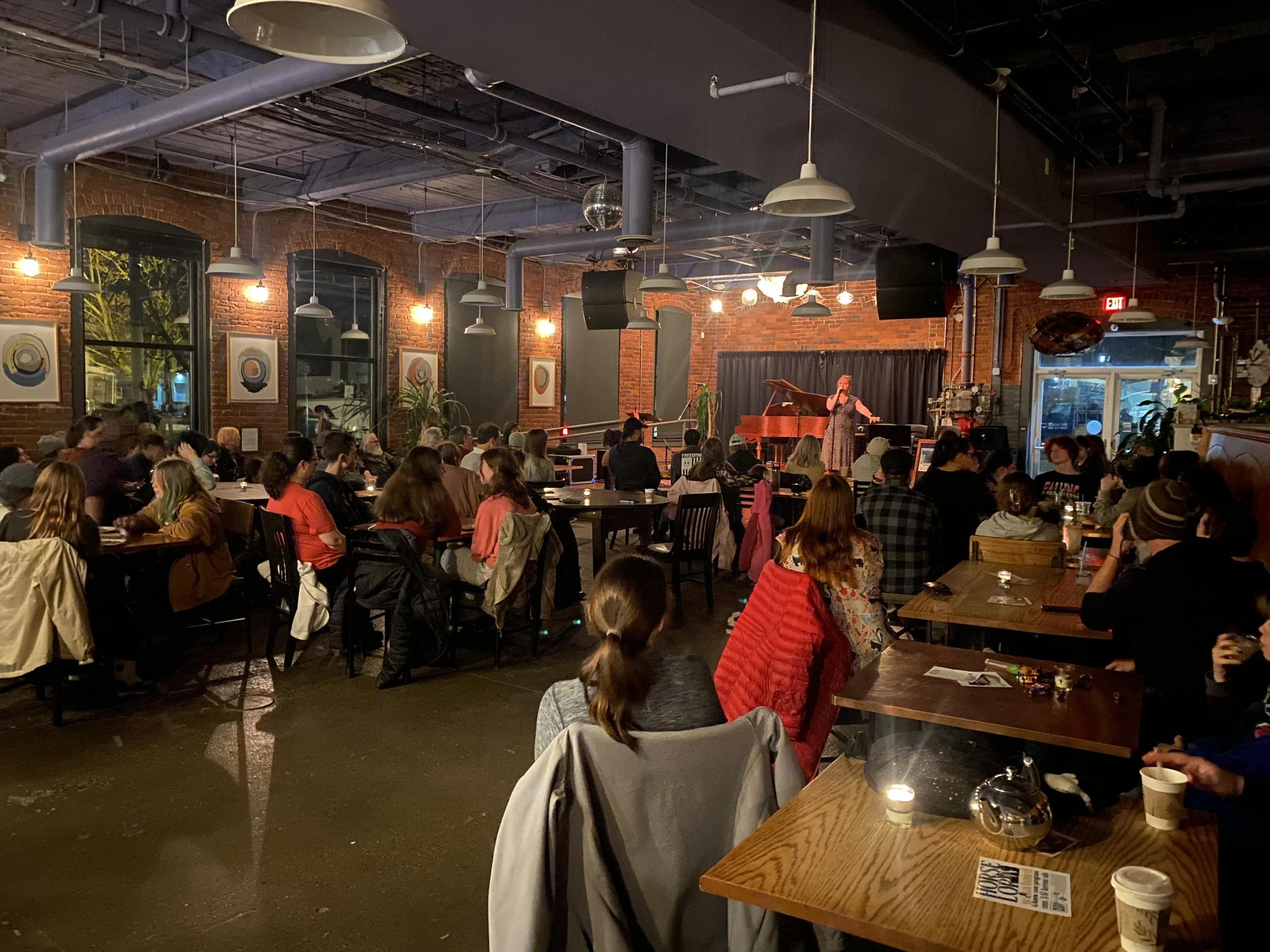
School festivals are a meaningful part of life at a Waldorf high school. They mark the seasons, highlight traditions, and offer a break from routine to come together as a community. In the high school years, students take a bigger role—shaping the music, art, performances, and activities that make each festival unique. These celebrations give students a chance to contribute, lead, and enjoy time together in a way that strengthens the whole school community.
“Gathering Waters is an amazing example of what can be achieved in a high school when the challenge is delivered by qualified teachers, and received by attentive, dedicated students.”
— Teresa M., Parent
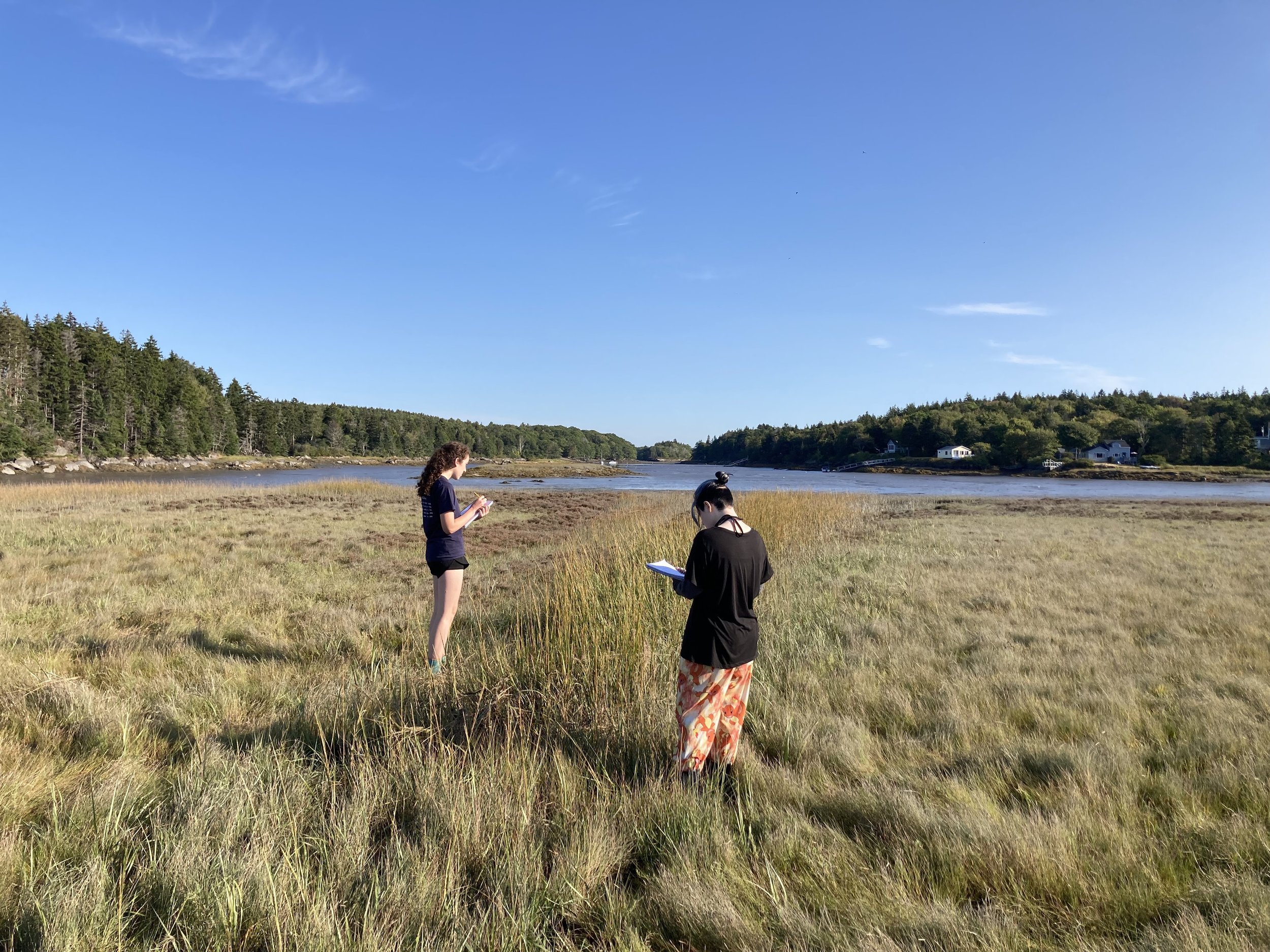
Stepping Into the World with Confidence
LIFE AFTER HIGH SCHOOL
Students leave Gathering Waters with a strong sense of who they are and how they can contribute to the world. Their grounding in clear thinking, creative work, and responsible community life prepares them for college, trades, gap years, or their own ventures and supports them in the wide range of relationships and responsibilities ahead.