
Movement in Education
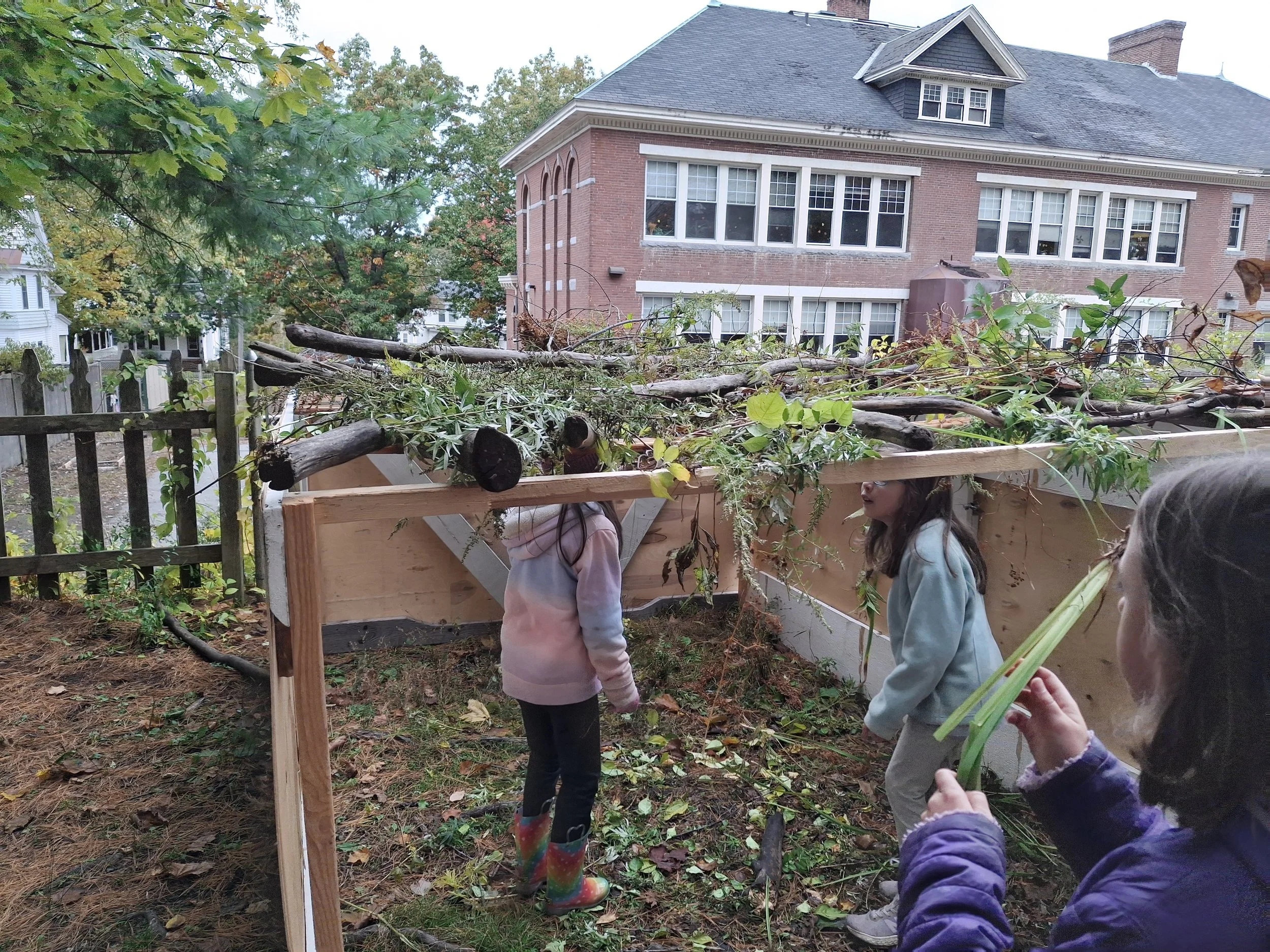
At Gathering Waters, movement is not a break from learning—it IS learning!
Walk through the halls or step onto the playground at Gathering Waters Charter School, and you'll quickly notice something: the children are moving! Whether clapping rhythms during a math lesson, skipping, leaping, and bounding in a circle game, or hiking in the woods, movement is not a break from learning—it is learning itself.
This reflects the heart of Waldorf education, where movement is considered a fundamental aspect of human development and is woven into nearly every subject and activity throughout the school day. What your child may call Games, PE, or Movement class is actually a rich, intentional space where the language and art of movement support the unfolding of new developmental capacities—including communication, intellectual growth, spatial and physical awareness, social and interpersonal skills, psychological development, and the emergence of individual identity.
The Waldorf movement curriculum is thoughtfully designed to meet the child at each stage of development. In the early years, imaginative and purposeful movement lays the foundation for body awareness and coordination. As children progress into the middle elementary grades, cooperative games and group activities support growing social understanding. In the upper elementary years, students engage in more structured and intentional movement—both individually and in groups—working toward personal excellence.
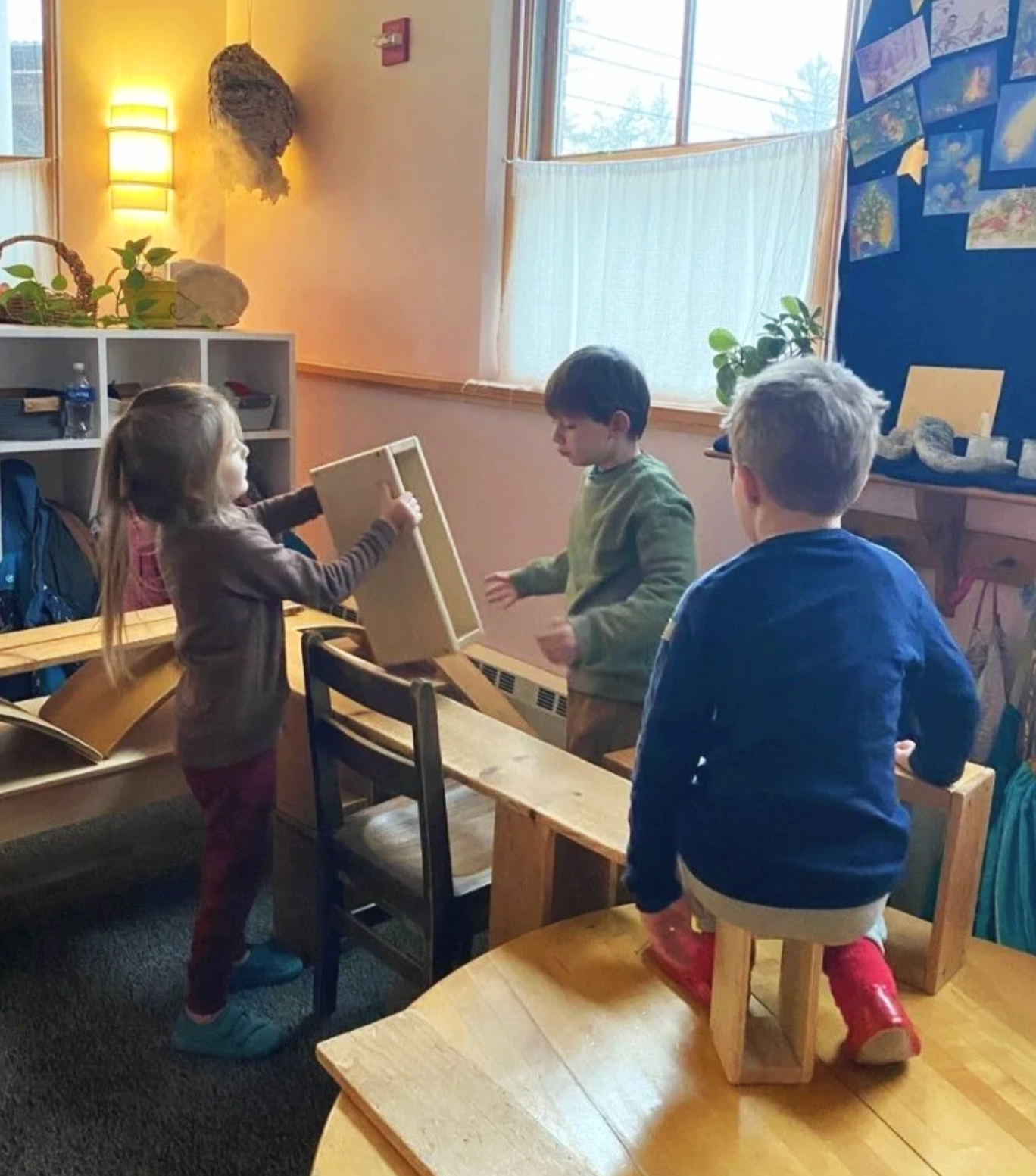
Free play in kindergarten is the foundation of learning and social emotional development.
Laying the Groundwork in the Early Years:
In the early grades at Gathering Waters, movement classes are full of joy and imagination. Students participate in circle games, skipping patterns, song, story, and guided play. These activities build rhythm, balance, spatial awareness, and body confidence—all foundational for later academic and emotional development.
These early experiences help the child feel at home in their body and in their classroom community. Movement also strengthens the will and supports inner capacities such as focus, perseverance, and emotional regulation—skills that will serve the child throughout life.
The Middle Grades: Form, Challenge, and Striving:
In the middle grades, games and activities hold clear structure, reflecting the child’s developing need for form, challenge, and purpose. Cooperative games, group challenges, and team games encourage students to engage with fairness, empathy, and a growing sense of responsibility to one another.
In fifth grade, students reach a significant milestone in their movement journey: the Pentathlon. Inspired by the ideals of Ancient Greece, this multi-day event combines athletic skill, aesthetic grace, and inner uprightness. Events such as javelin, discus, running, and long jump are introduced not as competitions, but as opportunities to strive for beauty, form, and personal excellence.
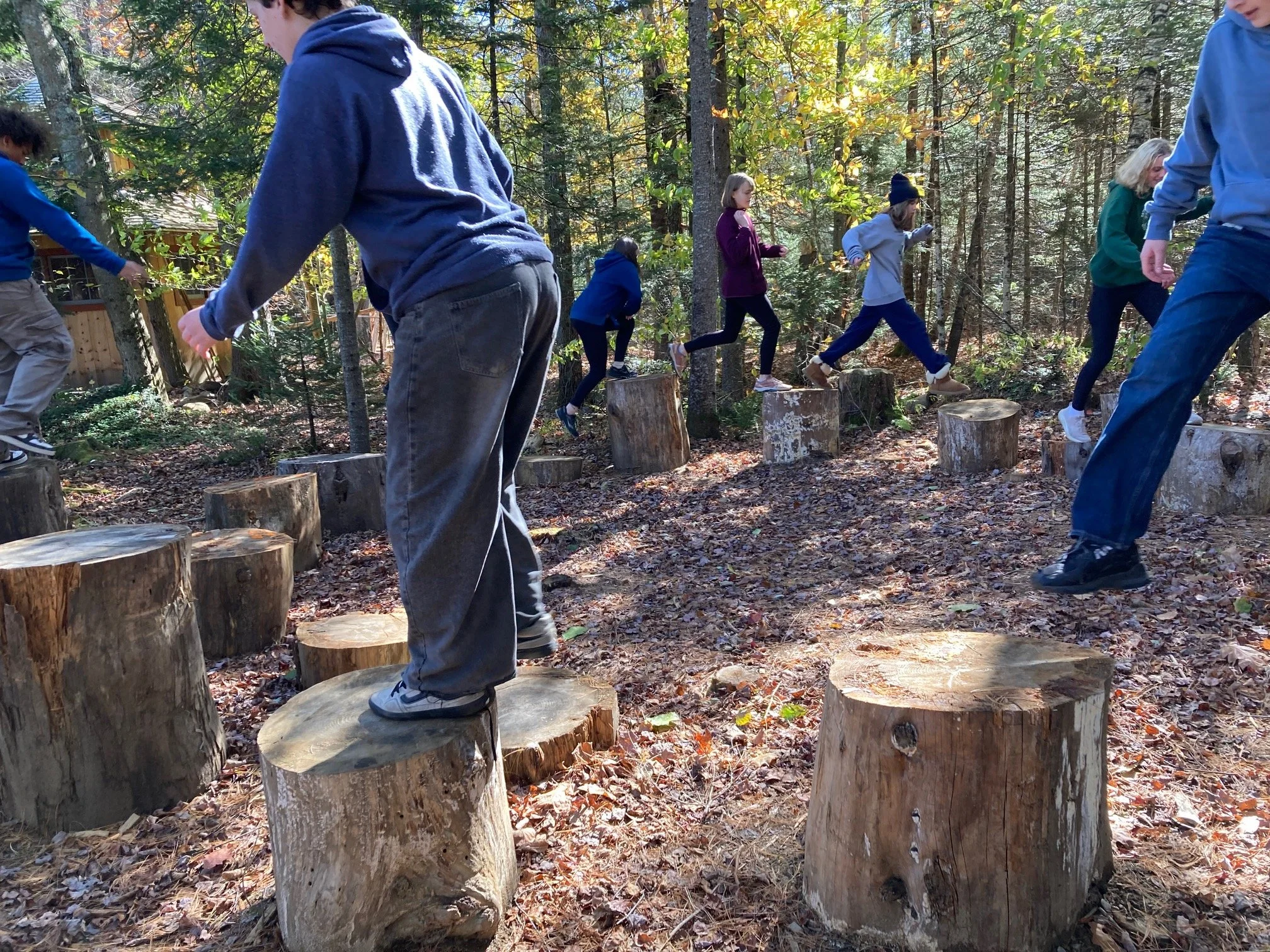
Moving as a group while moving as an individual is a deep exercise in interdependence.
Movement as Personal Exploration:
By middle school, movement becomes a more individual and expressive journey. Students explore a range of blocks, including yoga, dance, fencing, outdoor education, and circus arts. These experiences invite students to meet their growing sense of self with intention, discipline, and creativity.
Through backpacking trips, orienteering, and after-school sports, students engage with movement that challenges their strength and will while nurturing teamwork and inner resilience. These activities become more than physical exertion—they become a means for young people to test boundaries, build trust, and experience the world with reverence and joy.
High school students are also introduced to Spacial Dynamics® and Bothmer Gymnastics®, movement approaches developed specifically from Waldorf Education. These modalities deepen awareness of how we move through space; physically, relationally and spiritually.
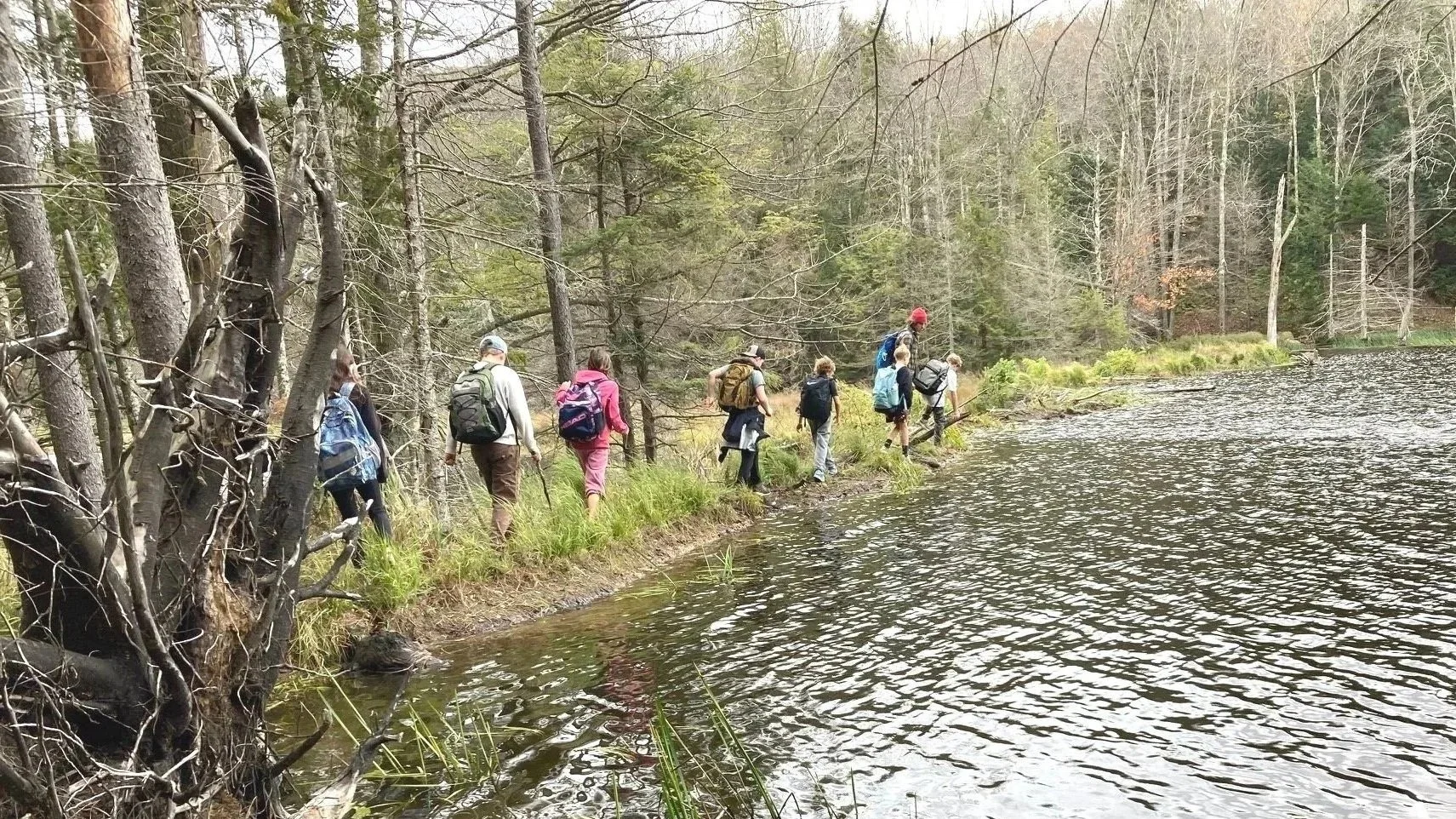
6th grade out for an immersive day with Kroka.
What Is My Child Gaining from This?
Movement at Gathering Waters nurtures the will—the part of the human being that acts with purpose and resolve. It helps students become more fully themselves, cultivating the strength and grace to meet life’s challenges with presence and courage.
Whether through a skipping game in first grade or a fencing class in high school, movement education at Gathering Waters is alive with meaning. It supports the unfolding of each child’s individuality while connecting them to something greater: the rhythm of nature, the strength of community, and the joy of purposeful movement.
– Jan T. Lyndes, Movement Teacher