
Head, Heart, and Hands: The Threefold Nature of Learning in Waldorf Education
In Waldorf education, learning is not confined to the intellect alone. Instead, it is a holistic experience that engages the whole human being—head, heart, and hands. This threefold approach recognizes that true education touches our thinking, feeling, and willing; it shapes not only what a child knows, but how they relate to the world and what they are empowered to do within it. Each of these aspects are worked with in different ways at different stages of development.
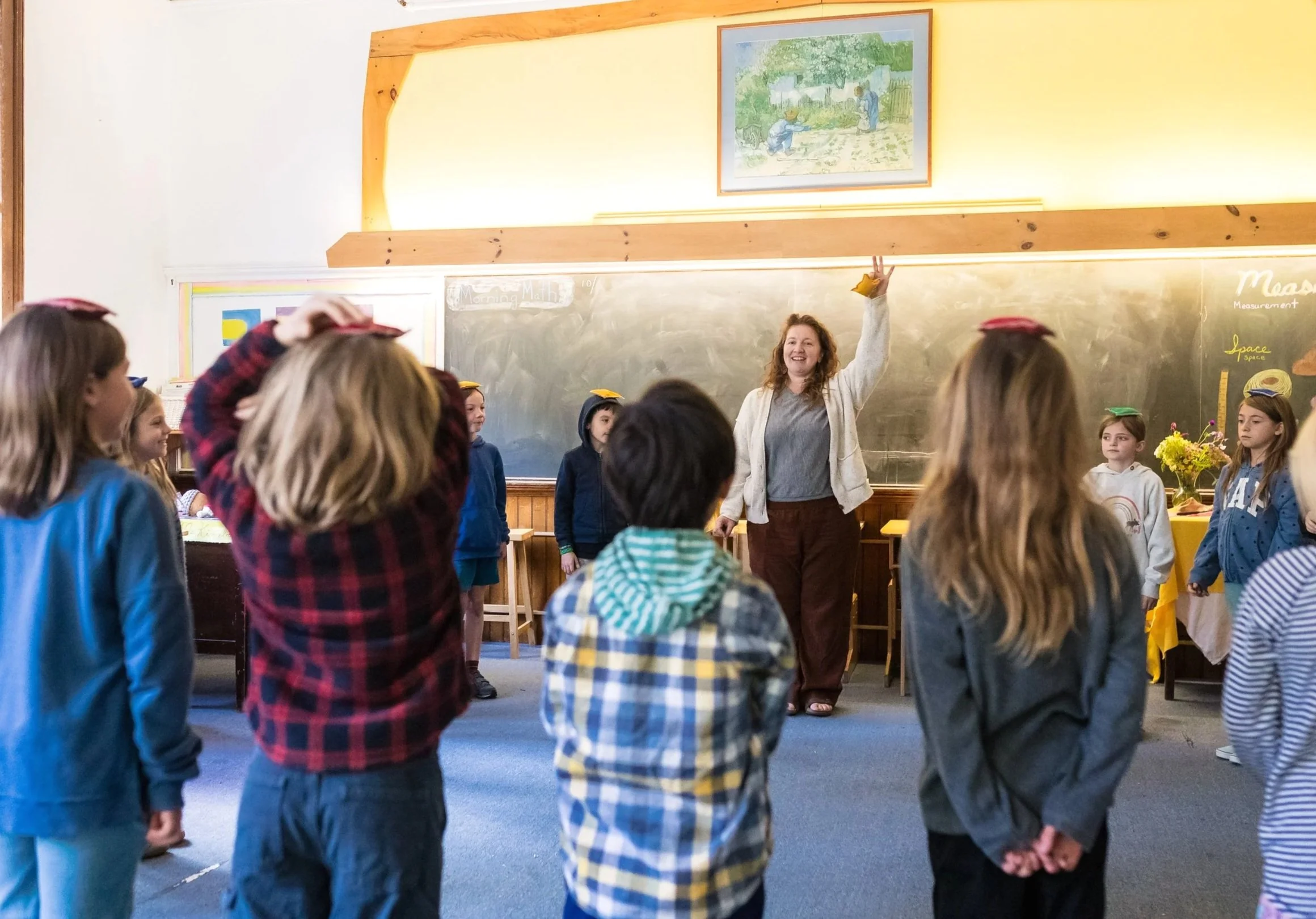
3rd grade engaged in morning circle practicing math with bean bags, rhythm and song.
Thinking (the “head”) is cultivated through rich academic content—math, language, science, and history—presented in imaginative, meaningful ways. Rather than memorizing facts, students are encouraged to explore ideas deeply, make connections, and develop their own insights.
Feeling (the “heart”) is nurtured through the arts, music, storytelling, and the beauty woven into every lesson. These experiences awaken empathy, emotional intelligence, and a sense of wonder. When children connect emotionally to what they learn, the knowledge becomes lasting and personal.
Willing (the “hands”) is developed through practical work, movement, and purposeful activity—handwork, gardening, woodwork, games, and movement classes. These experiences support coordination, perseverance, and a sense of capability. They also ground learning in action and responsibility.
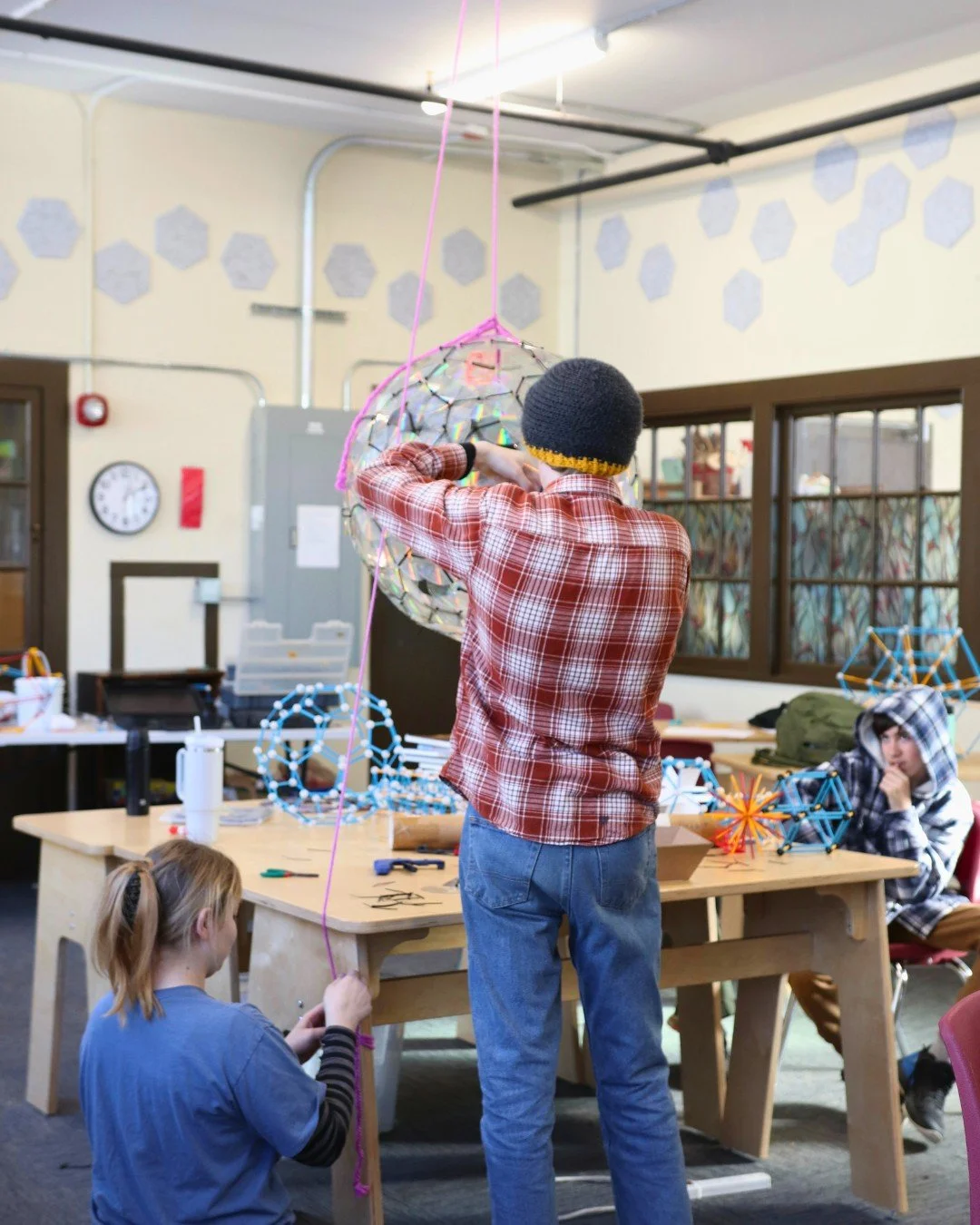
10th grade exploring geometry through mathematical sculpture.
This threefold model aligns with a child’s natural stages of development. In early childhood, learning is primarily through doing. In the lower grades, feeling and imagination lead. And as children mature, intellectual thinking emerges as a central force. By integrating all three aspects throughout the curriculum, Waldorf education supports the balanced development of the whole child.
In a world that often emphasizes test scores and outcomes, Waldorf schools offer something deeper: the formation of free, compassionate, and capable human beings who can think clearly, feel deeply, and act with purpose.
– Dan Foster, Waldorf Class Teacher